


Session One: July 5-23
Session One is a three week long program, running Monday to Friday, starting July 5 and ending on July 23. The July Family Festival Weekend takes place July 17-18. Learn more about the weekend.
There's a whole lot to discover, here are some helpful links!
We have carefully crafted an unparalleled experience for children (and their families)!
Register nowA look back at our third summer, the moments that mattered, what children and families shared about their experiences, and what we’re learning along the way.
With just 25 campers per session, spaces are limited. We would love for your family to be part of Summer 2027.
The Gedi team is made up of passionate educators who are dedicated to developing an inspiring, safe, empathic, and empowering community of kids and their families.”
Ashley Baylen, Camp Director & Gedi Village Co-Founder
I’ve been fortunate to work with Camp Gedi since our first summer in 2024. It’s been so special to watch this project grow from a small, committed team into an expansive, thriving community.
Every summer, I’ve seen campers make huge strides over the course of a session. They overcome fears, make new friendships, learn new things, and grow confidence in their social-emotional and communication skills.
Gedi has impacted me as an educator because now I really see that I can make a difference. What makes Gedi stand out from other learning environments is how it empowers children to be leaders in their communities and in their own lives. When kids are asked what they want to make happen, versus being told what to do, the results are so much more creative — it feels magical.”
Fun with a purpose, built around your child.
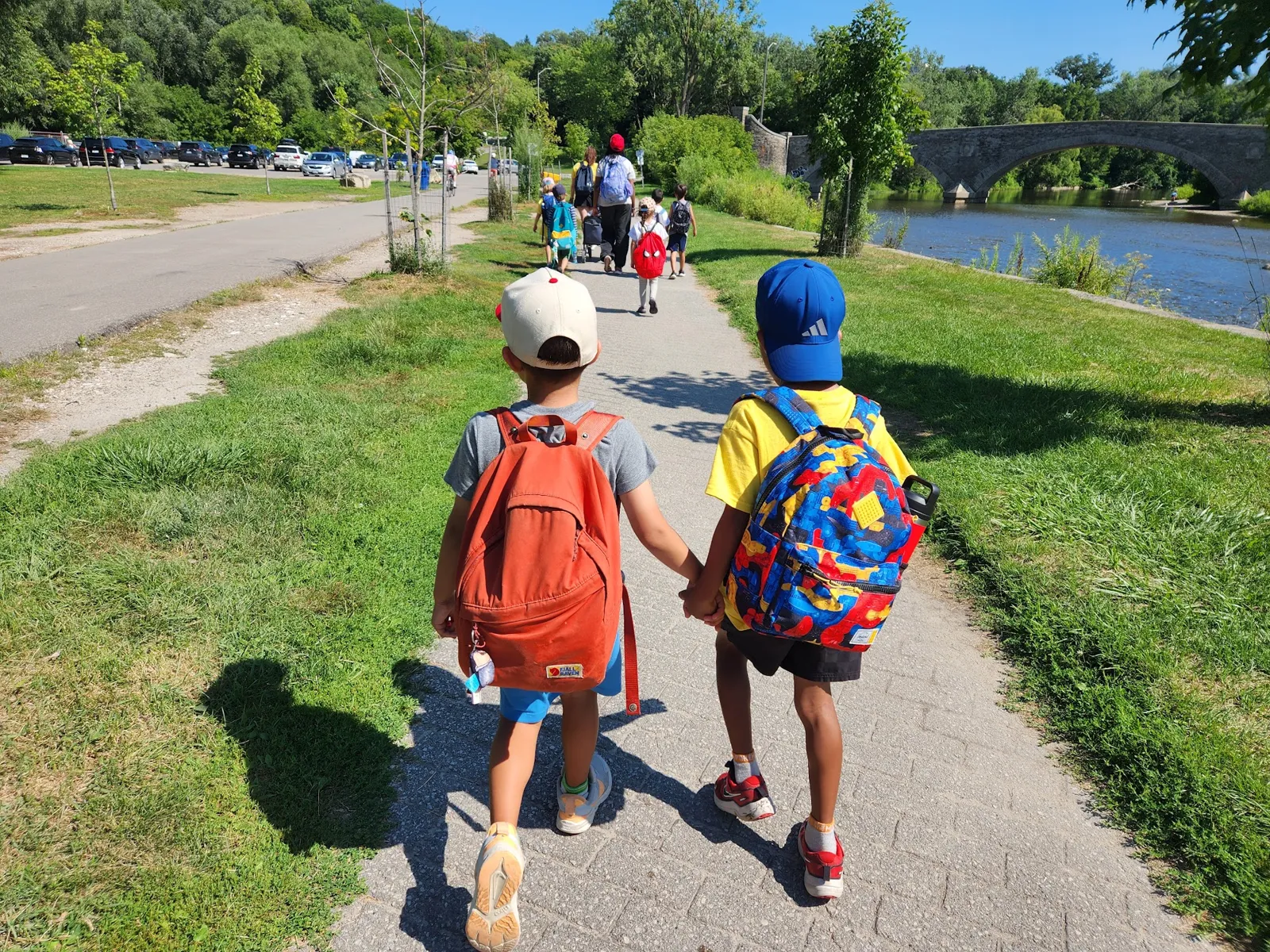
Camp Gedi’s primary home is Étienne Brûlé Park in Toronto’s west end, with a safe indoor space for inclement weather. During Community Week, we explore the city by TTC. Each three-week session also includes a Family Festival Weekend at Haute Goat Farm in Port Hope, Ontario.
$1550* per session, including Festival Weekend
*This is the suggested cost. We use the Pay What Feels Good model, so all families are welcome to register and pay any amount that feels good to them - even if that’s zero!
Children entering SK through Grade 8 (born 2014–2022).
Maximum 25 campers per three-week session.
Session One
July 5-23 with Festival Weekend from July 17-18
Session Two
August 3-20 with Festival Weekend from August 14-15
Our camp team are fully certified in CPR, First Aid, and EpiPen administration. In addition, every member has successfully completed a Vulnerable Sector Check.
Each three-week session begins with two weeks of building community through nature exploration, creative projects, play and shared experiences. In our third week, Community Week, we venture beyond the park to explore Toronto’s neighbourhoods, connect with local businesses and artists, and discover all the ways we can learn from the people and places around us.
Two exciting weeks of team sports & games, nature exploration, orienteering, Social-Emotional Learning (SEL) activities, meditation and collaborative creative projects including filmmaking, photography, drama, visual arts and music.
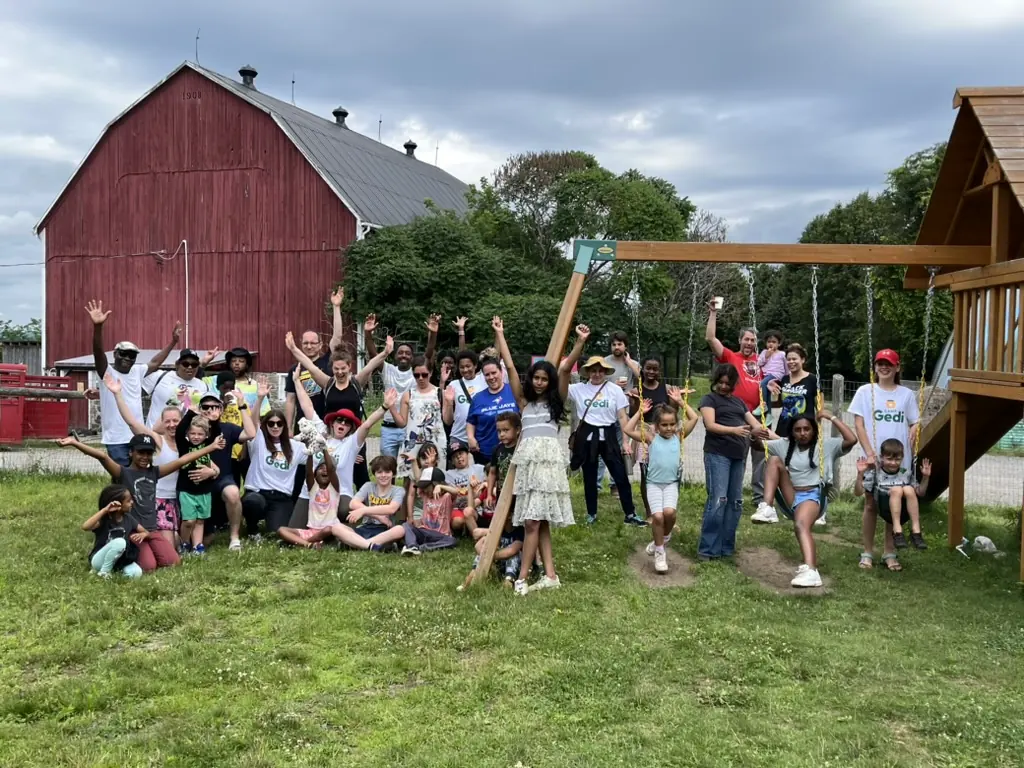
Families join their campers for 2 days/1 night at Haute Goat Farm, experiencing the community their children have built through animal activities, shared meals, a creative showcase and parenting workshop.
Each day, campers venture out to a different corner of the city, getting to know neighbourhood businesses and organizations and sharing in unique activities and experiences.
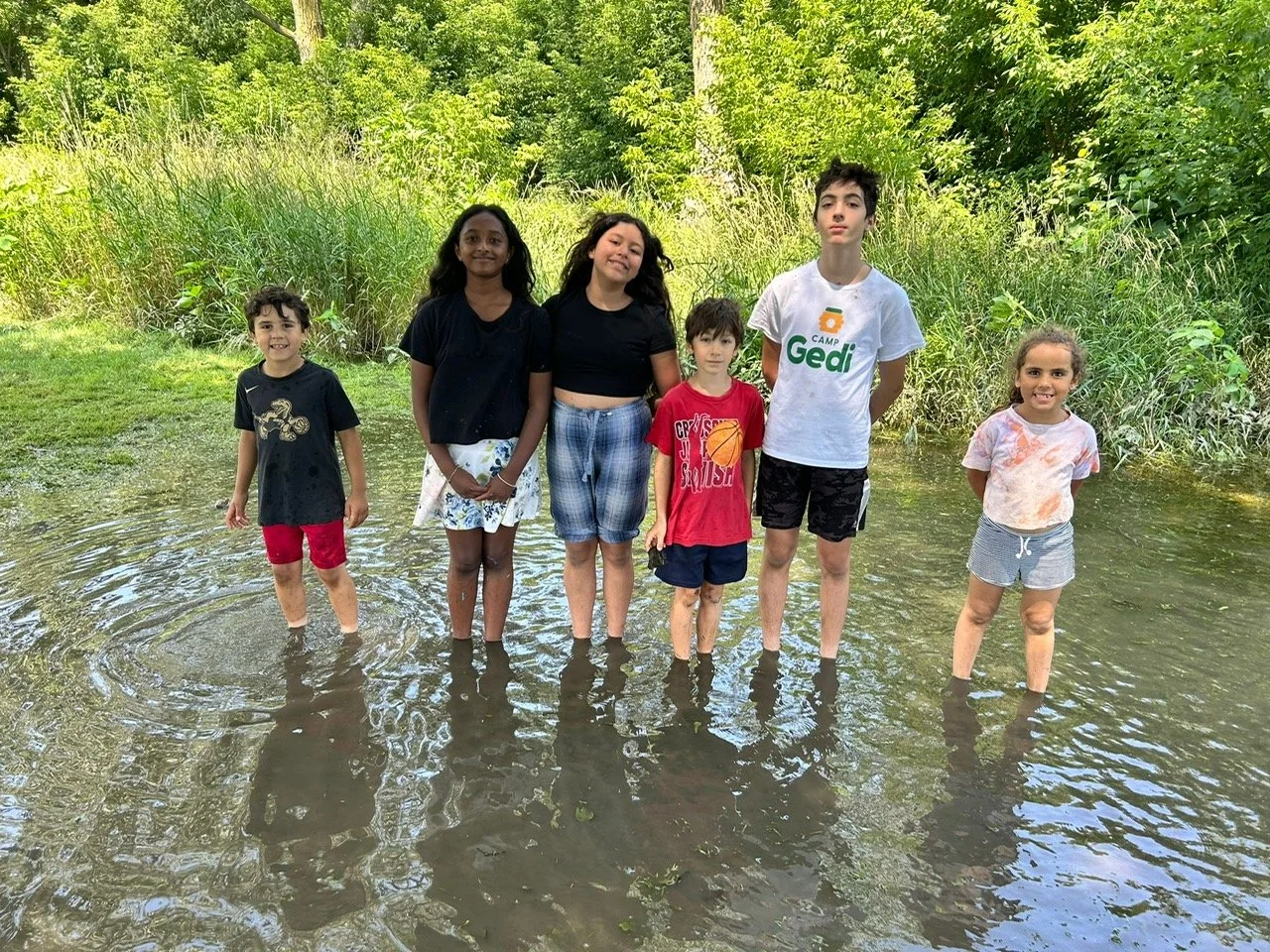
July 5–23, 2027
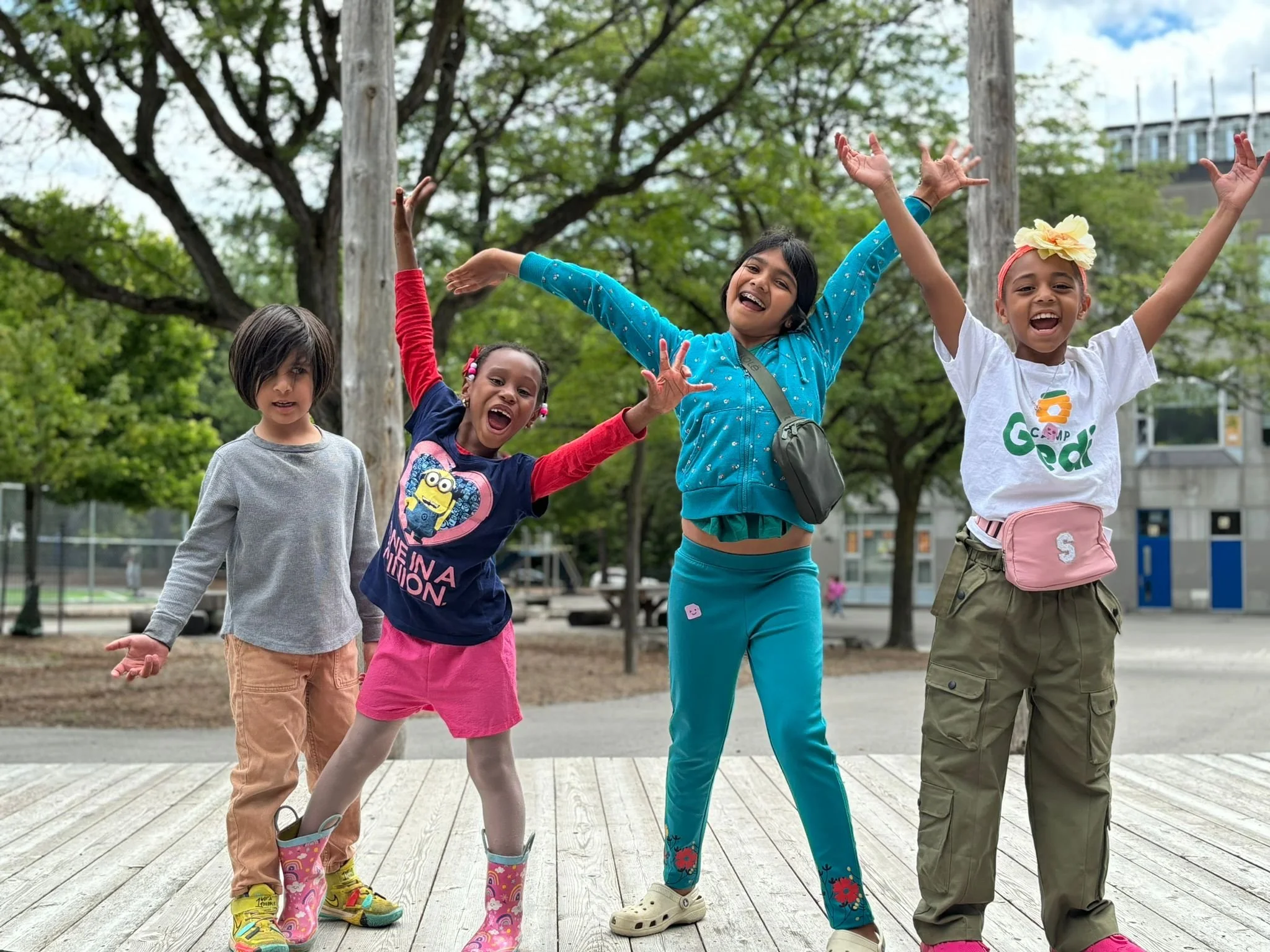
August 3–20, 2027
Camp Gedi has been part of our family’s summers for three years now, and it has been truly remarkable. I still remember how anxious both my children were before their first summer, nervous about starting camp and joining a new group. That changed so quickly. By the end, they were crying because they didn’t want it to be over. They loved the experience and the special bonds they formed, and we’ve kept coming back.
The family festival weekend was another wonderful part of our experience. The Gedi community created such a special gathering for campers and their families at the beautiful Haute Goat farm. We met the animals up close, joined group activities and a parent workshop, enjoyed delicious farm-to-table meals, and hiked the gorgeous grounds. Camping under the stars, breathing in the fresh air, and spending quality time together made it all the more memorable.”
Registration for Summer 2027 is now open!
Camp Gedi welcomes children entering SK to entering Grade 8.
Honey Bees, our youngest campers, are the reason the Hive exists. Scout Bees, our oldest campers, take on greater responsibility, helping younger campers feel welcome, supported and included. Builder Bees, our high school volunteers, help strengthen the community and bring everyone together. Forager Bees and Guardian Bees, our assistant and head teachers, nurture curiosity, connection and a sense of safety. And our Beekeeper, the Camp Director, helps the whole Hive thrive.
Everyone has an important role to play, with opportunities for leadership and responsibility growing along the way.
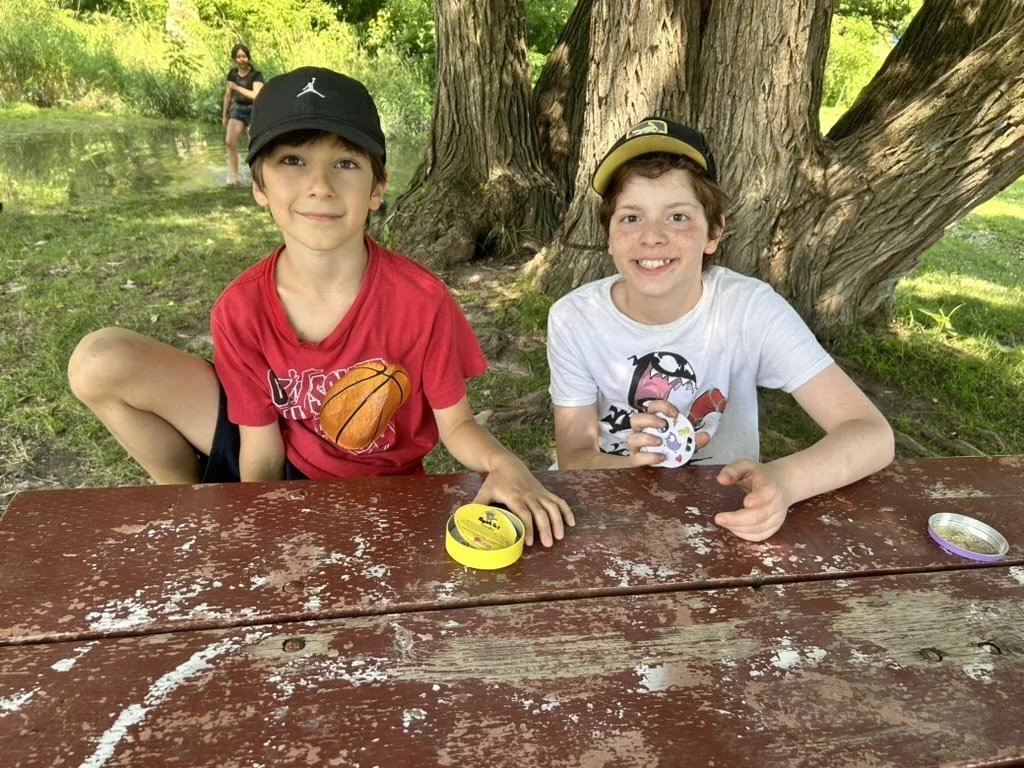
The first two weeks give campers the opportunity to explore team sports & games, nature exploration, orienteering, Social-Emotional Learning (SEL) activities, meditation and both individual and collaborative creative projects including filmmaking, photography, drama, visual arts and music.
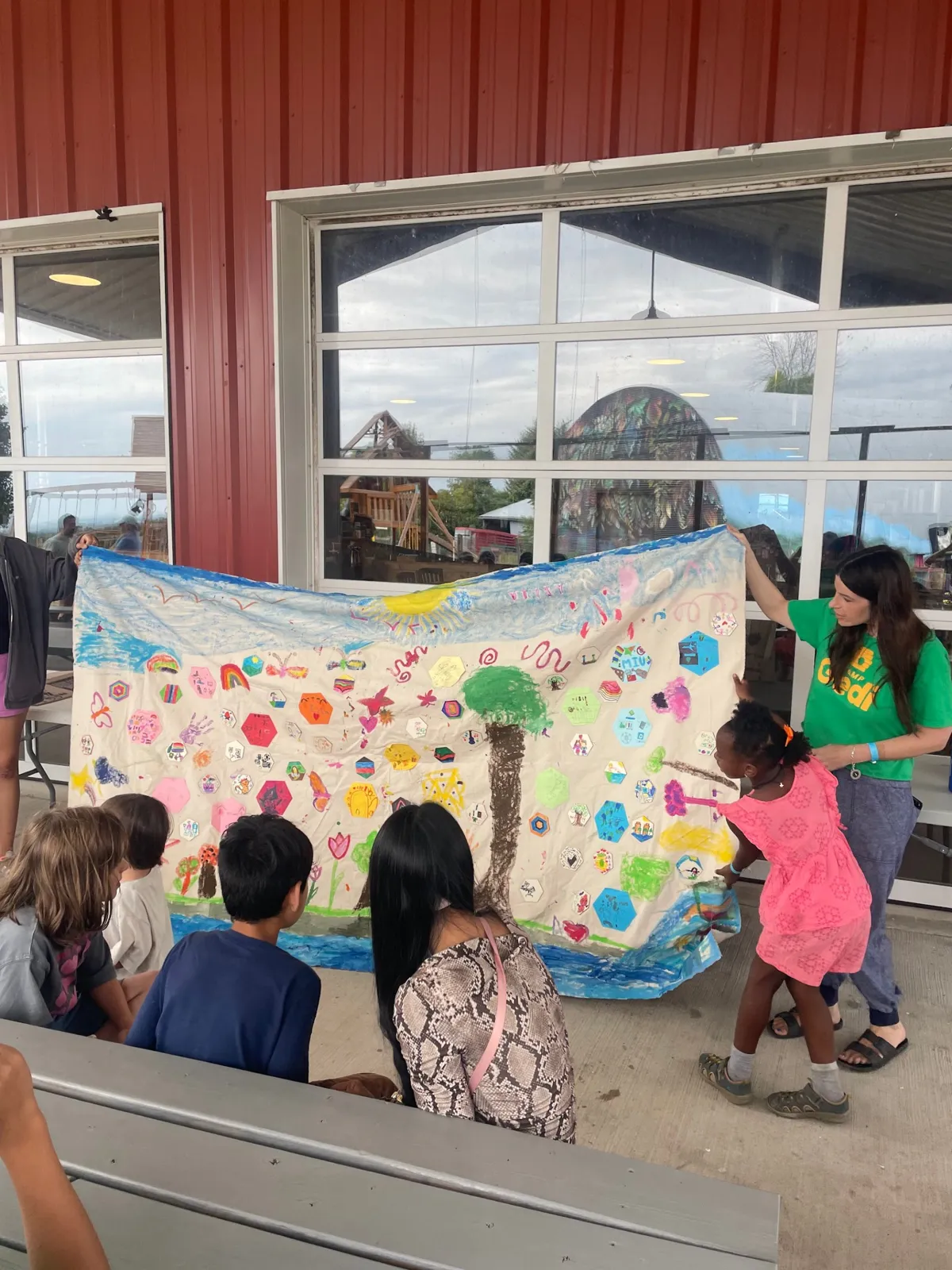
At the end of week two, families join the community by coming to our Family Festival Weekend! We will all be staying for 2 days/1 night at Haute Goat Farm. Farm to table meals, sleeping under the stars and animal experiences - what more could you ask for?! You can find out more here.
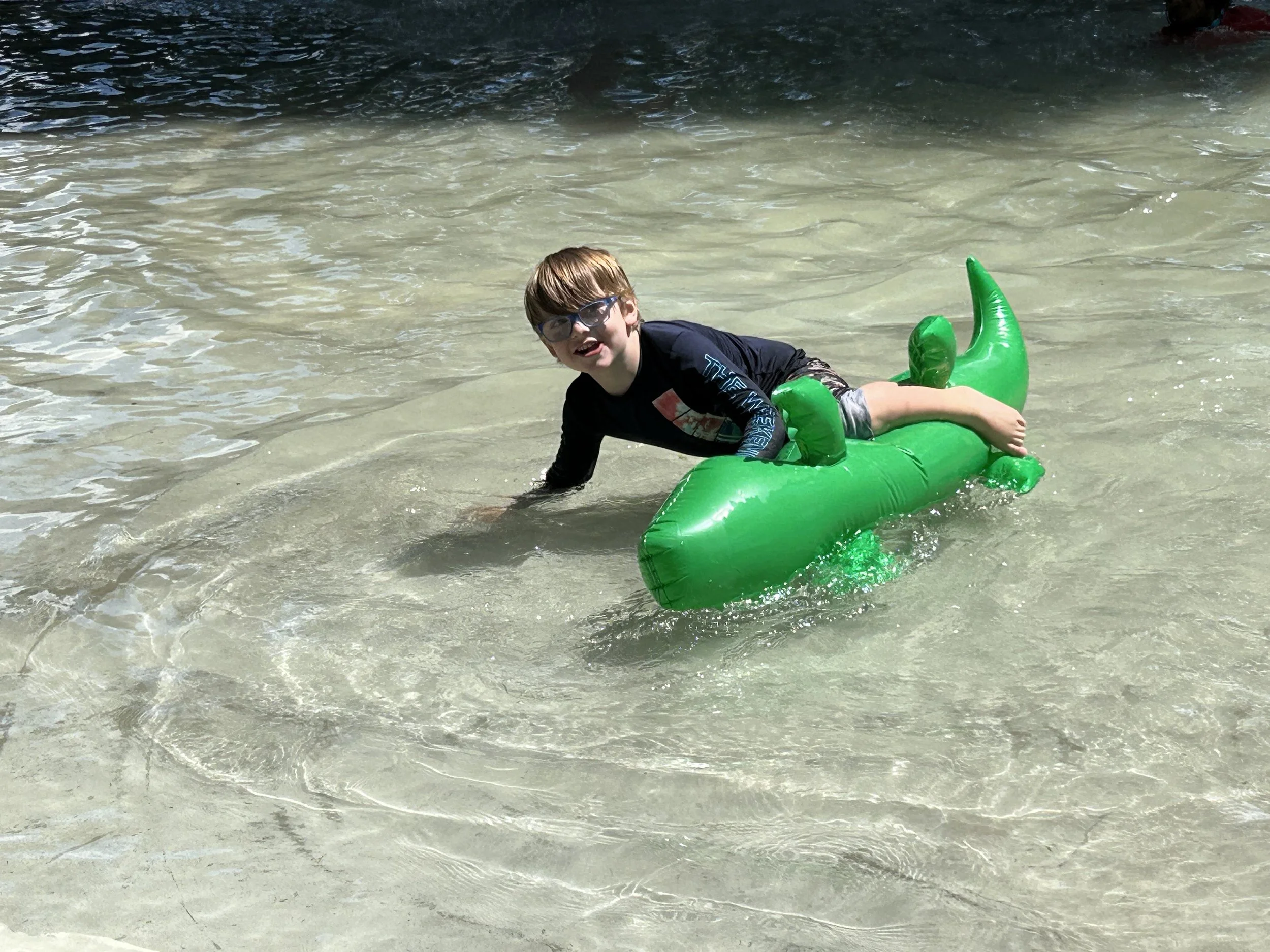
Each day, campers venture out to a different part of the city, exploring neighbourhoods, sharing in unique activities and experiences, and volunteering with community organizations and events.
Join us for three weeks of friendship, discovery and community. Register for a July or August session and give your camper a summer to grow, explore and belong.
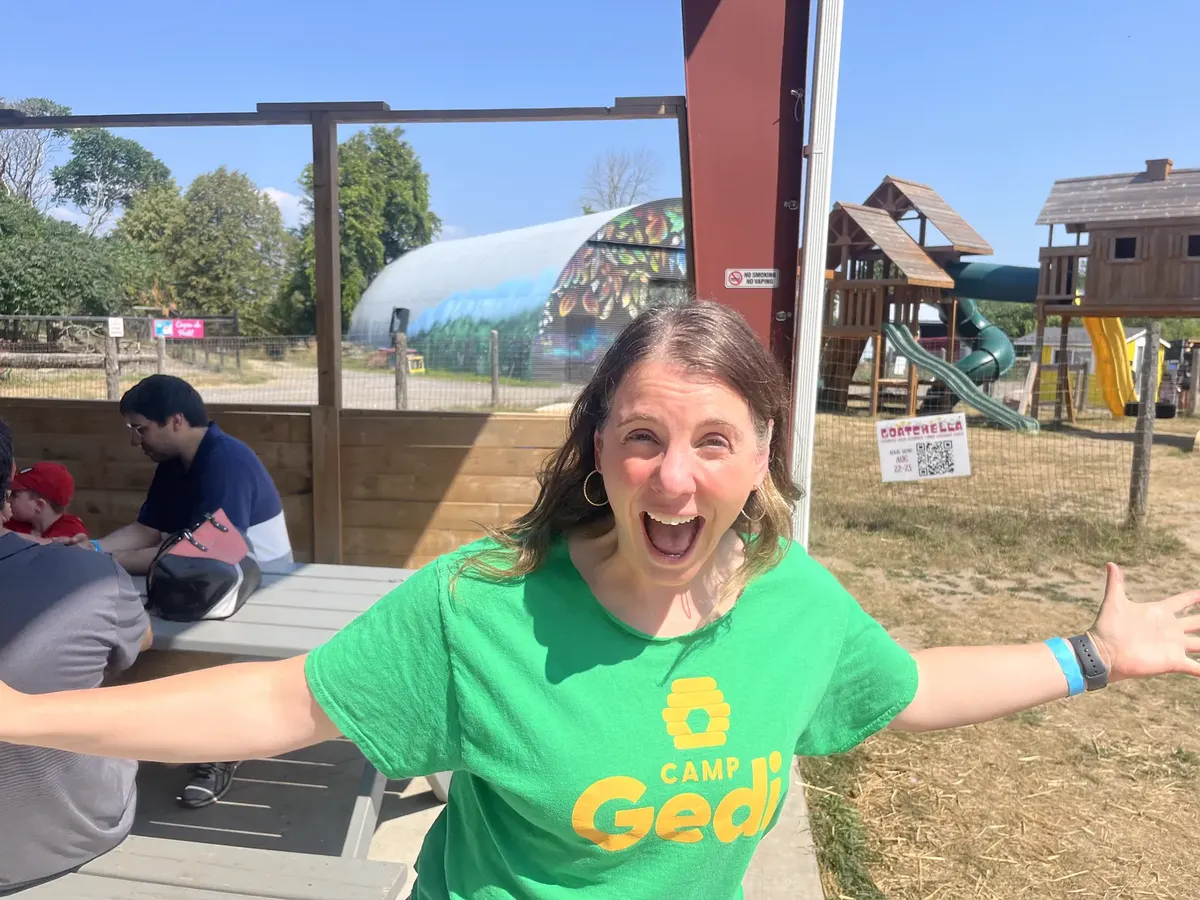
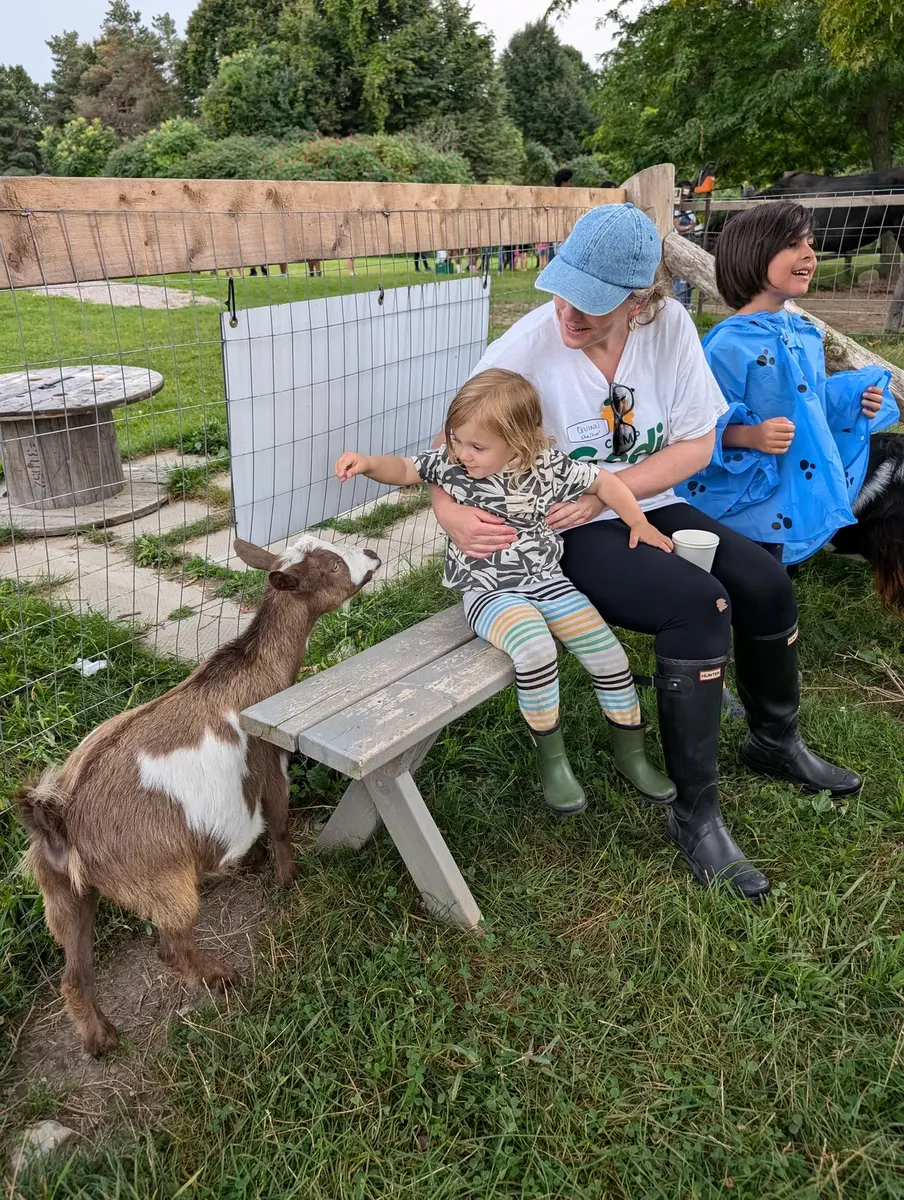
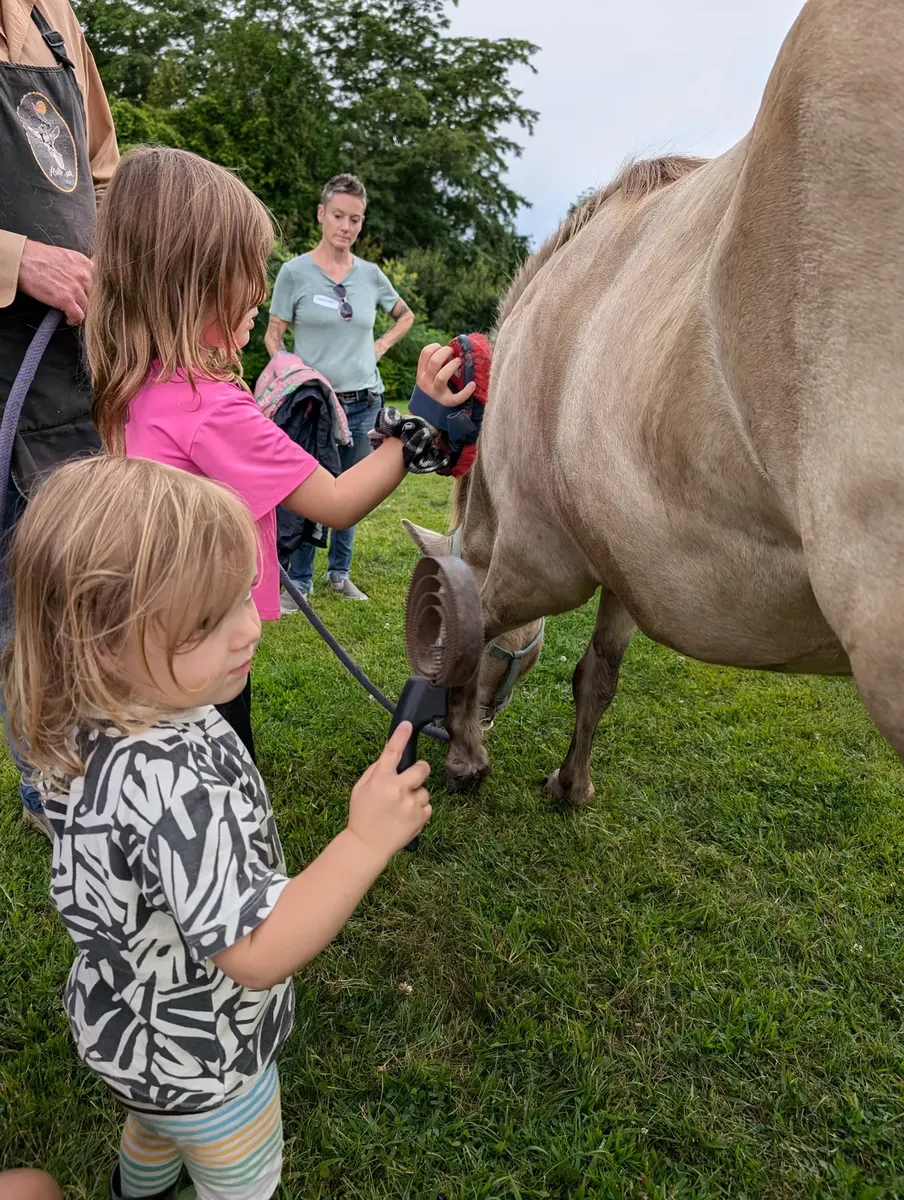
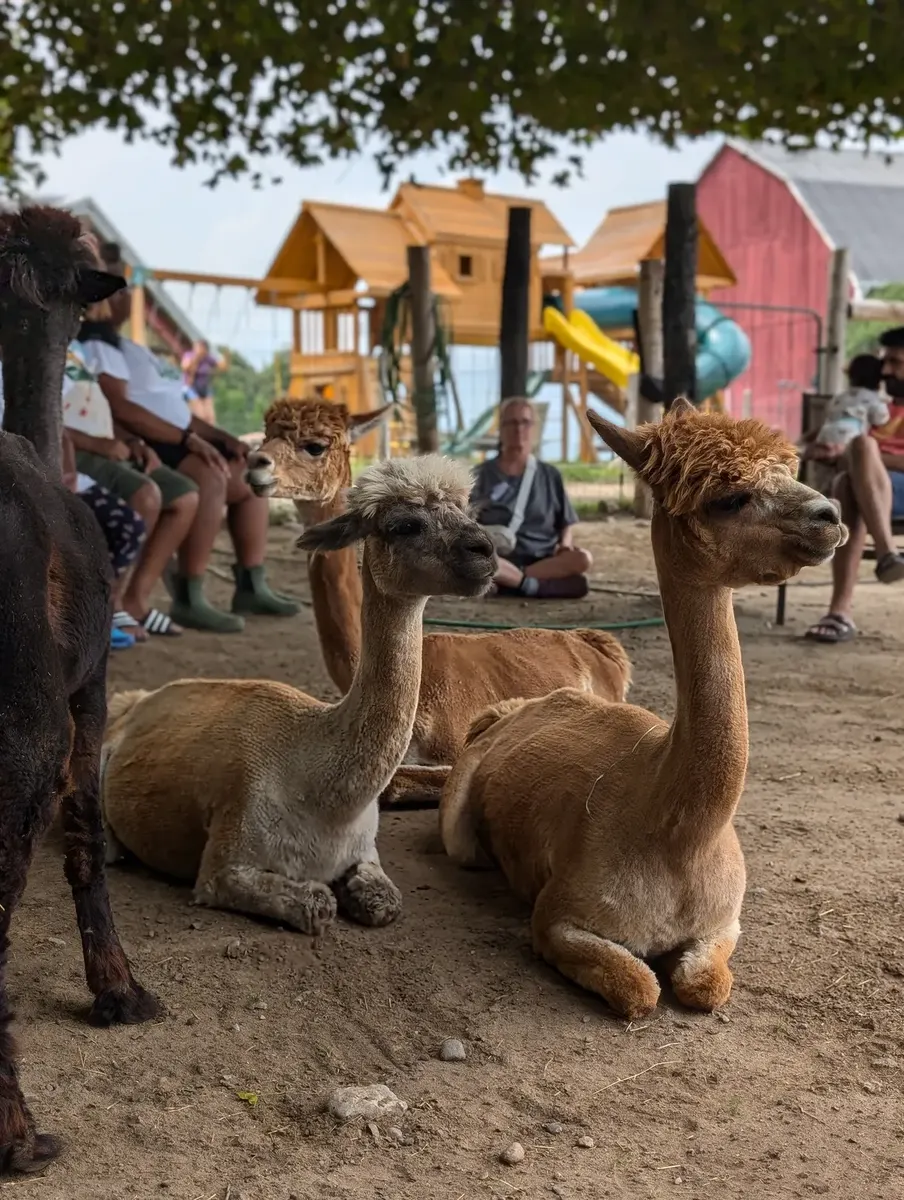
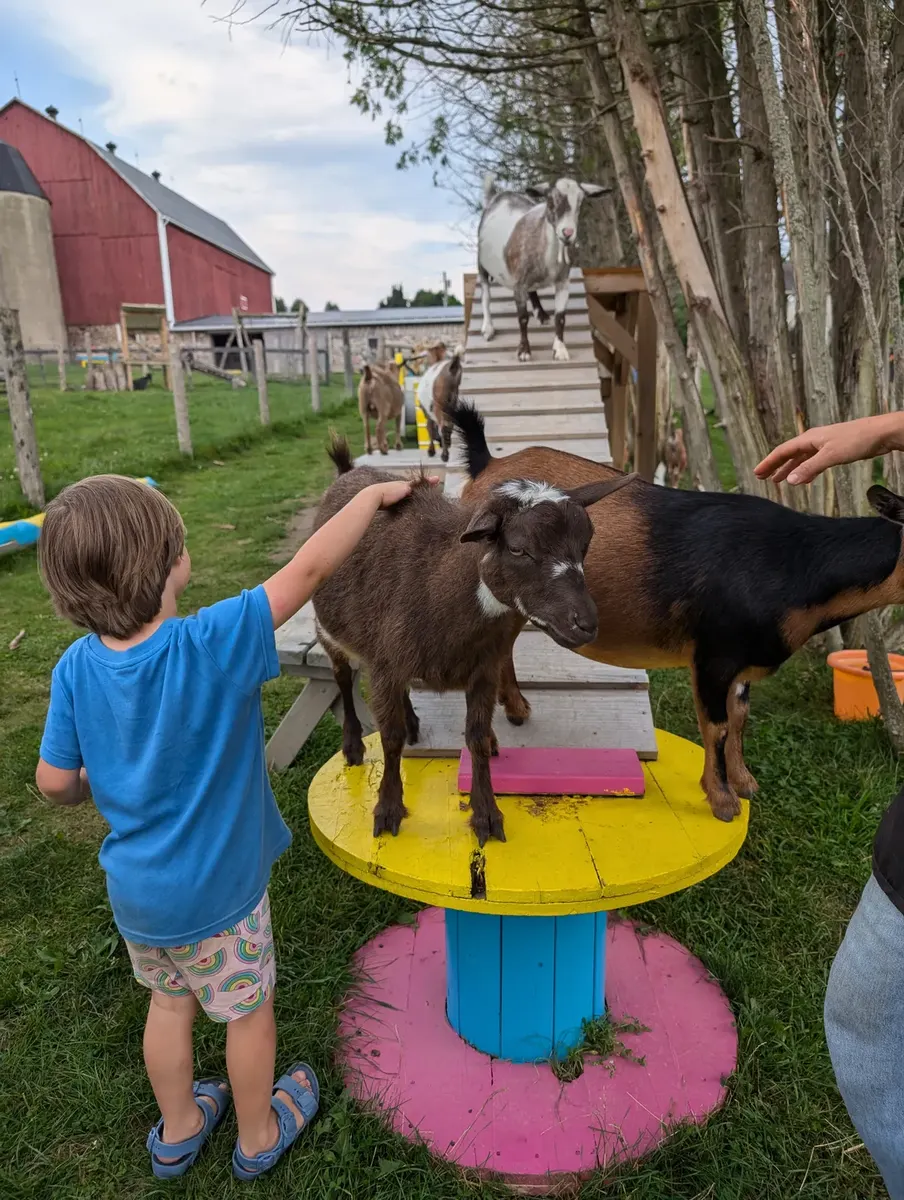
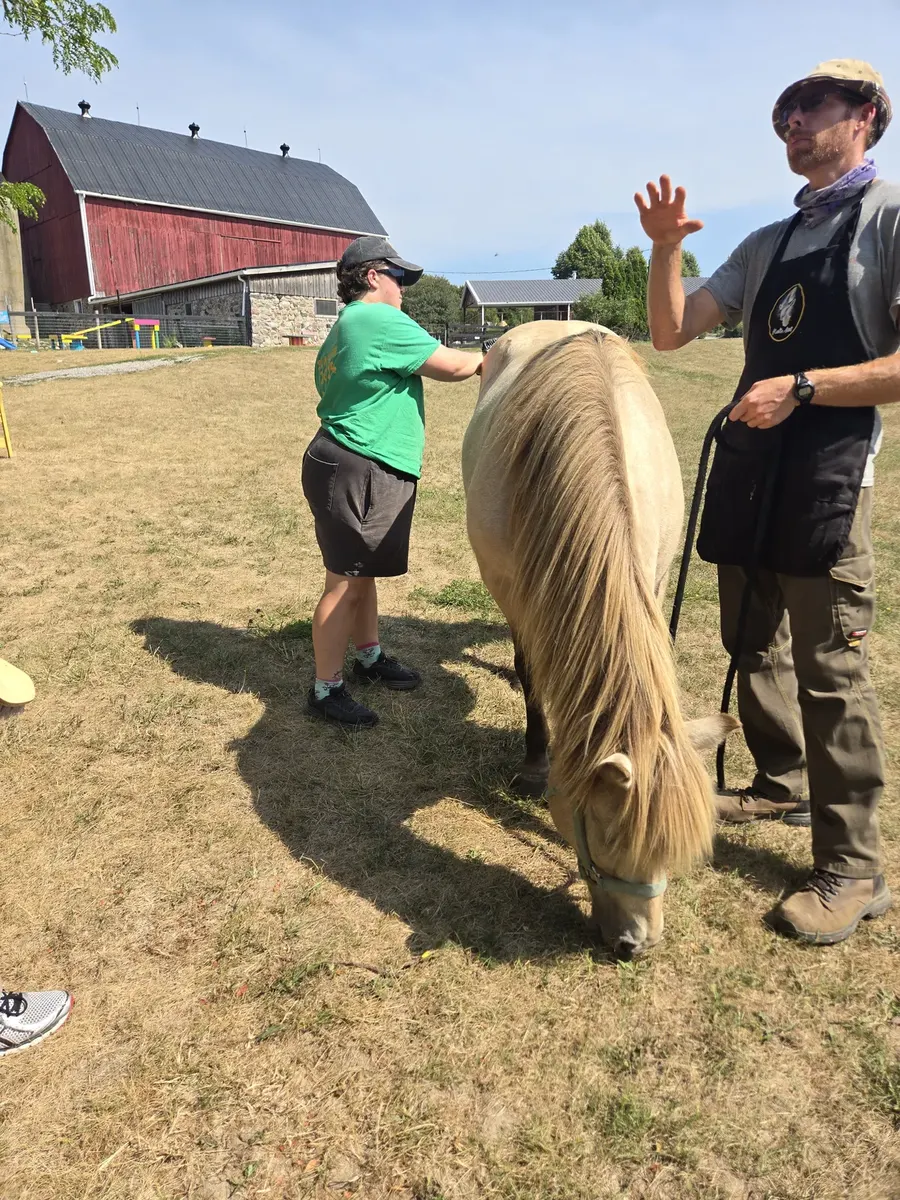
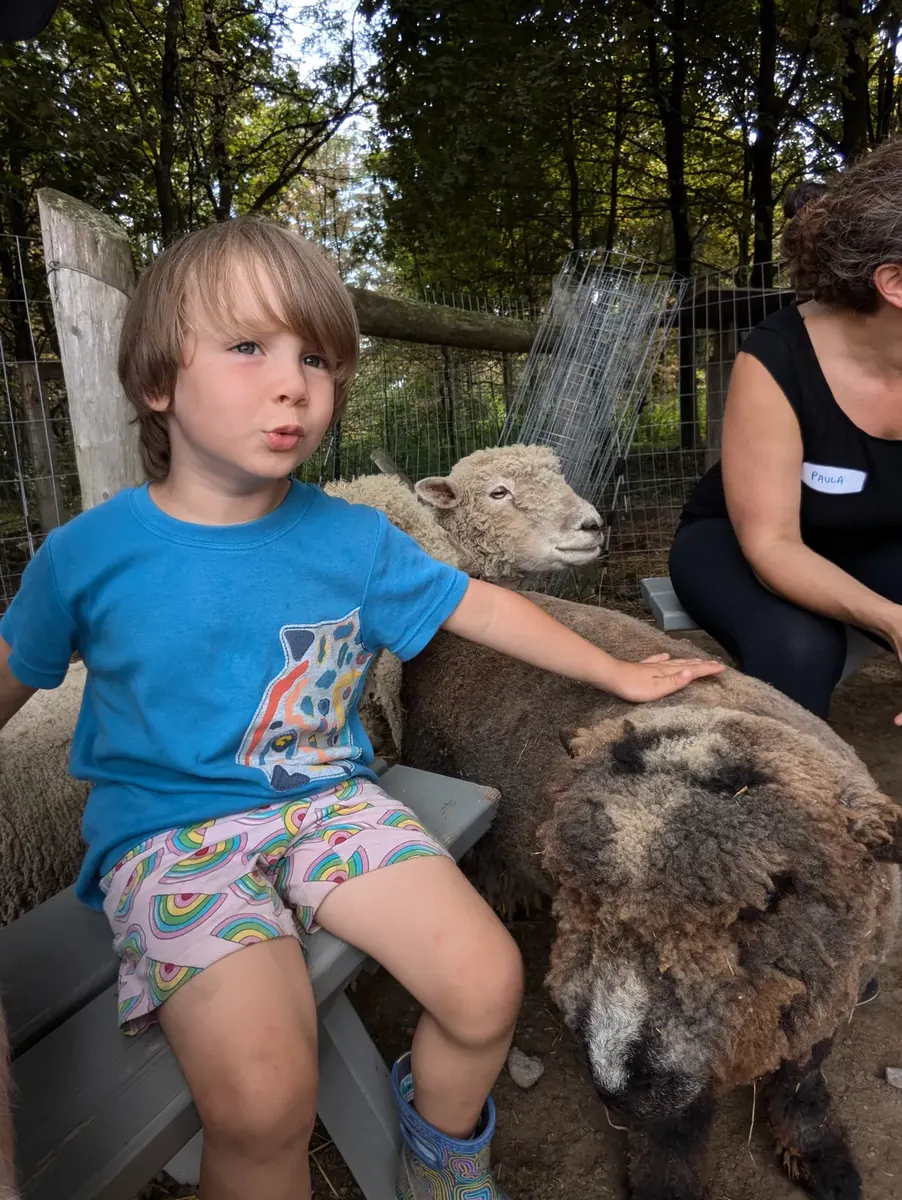
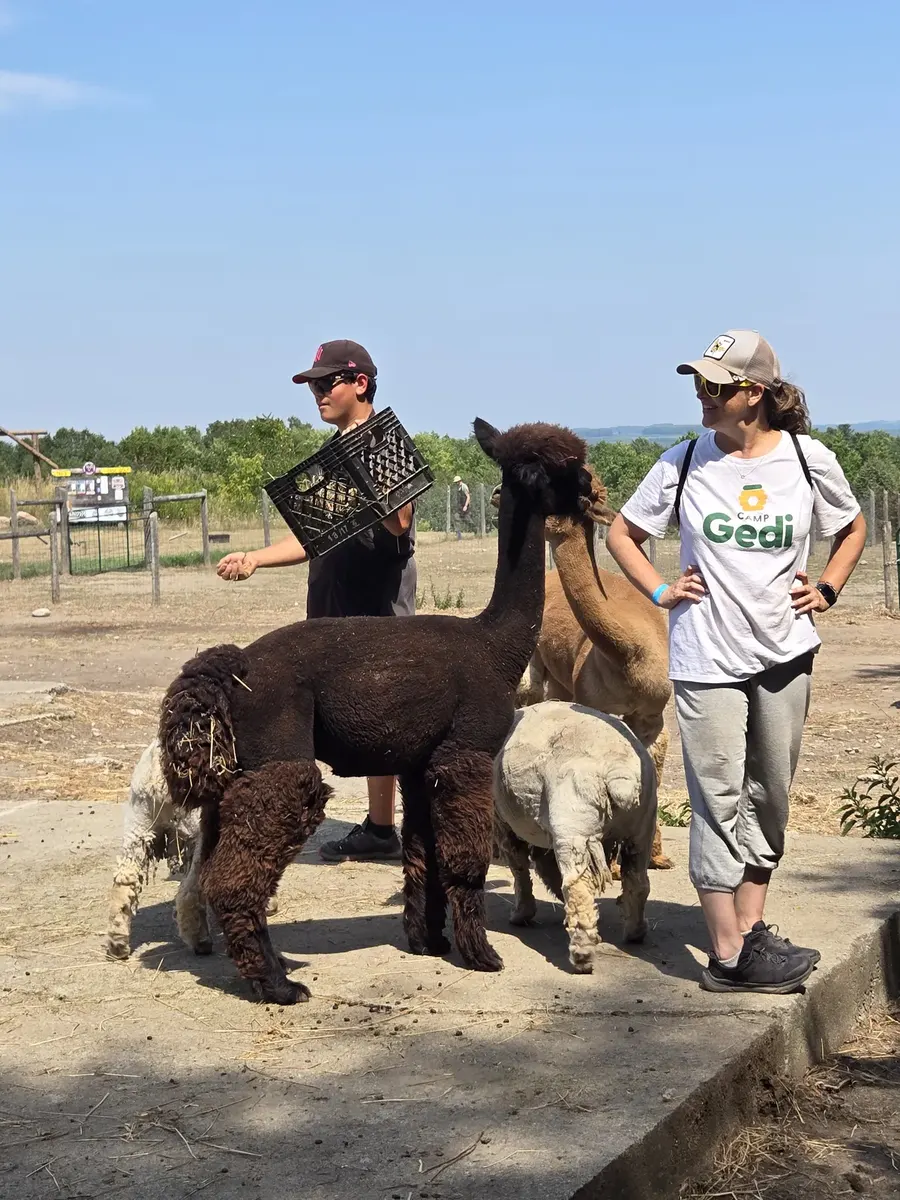
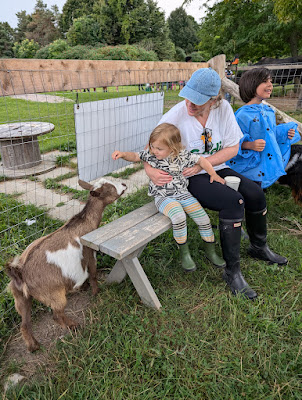
Join us at Haute Goat Farm in Port Hope, where we’ll build connection and learn as a community. Our Festival weekends are the perfect way to recharge with your loved ones while eating farm-to-table meals, camping under the stars and connecting with goats, alpacas, horses, and of course, other camp families.

Savour delicious meals catered by Haute Goat farm, made with fresh, locally sourced ingredients.

Sleep in tents under the starry sky, sharing stories around the campfire, and forging lasting connections with other families.

Experience a shared learning festival where children and families create together, and parents and caregivers participate in a guided coaching workshop.
Embrace the spirit of intergenerational learning and experience the magic of Camp Gedi! Children, parents, and teachers come together to share valuable wisdom, engage in Social and Emotional Learning (SEL) activities, and collaborate on exciting projects. Parents participate in a coaching workshop and learn the skills their kids are enjoying throughout the session. It's a unique journey where knowledge knows no age limits!
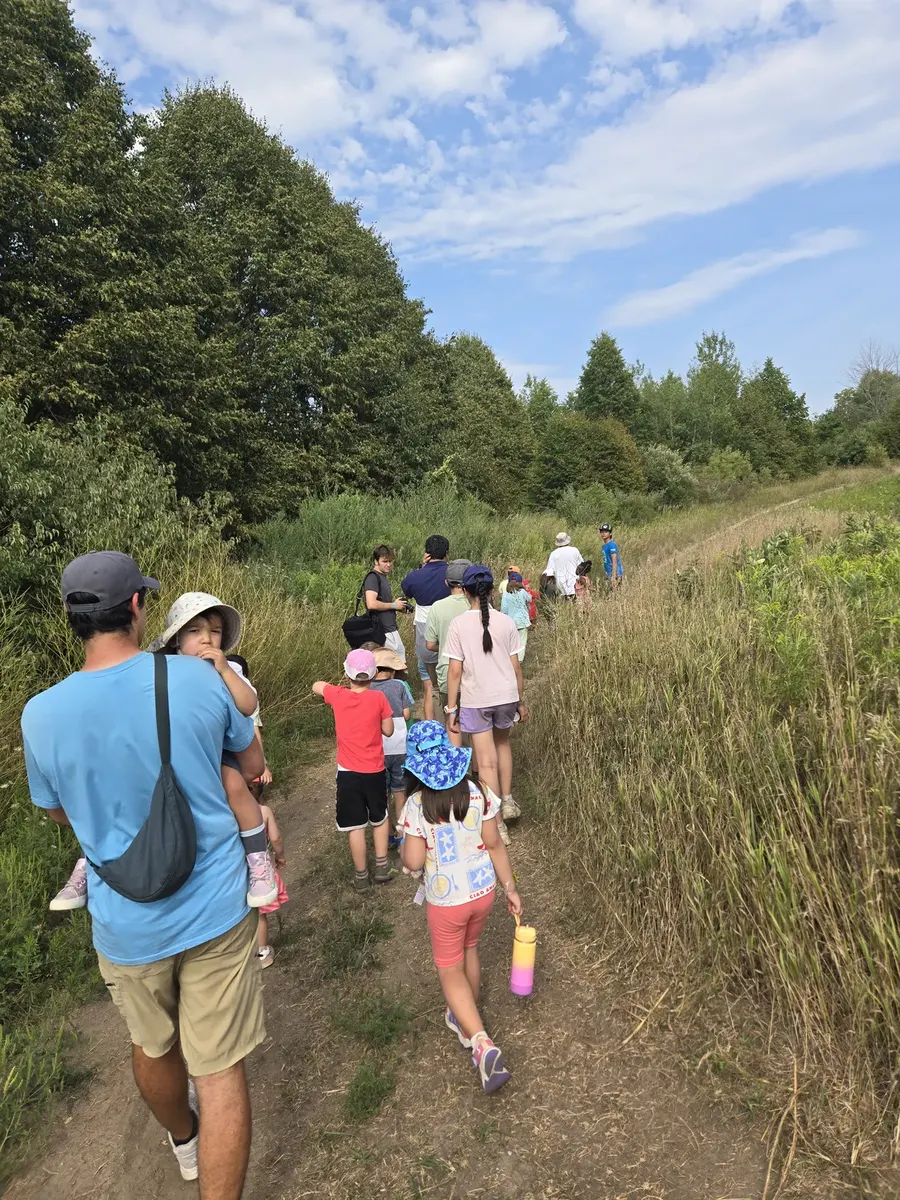
The weekend begins when everyone arrives on Saturday morning ready to pitch tents and get mucking around the farm.
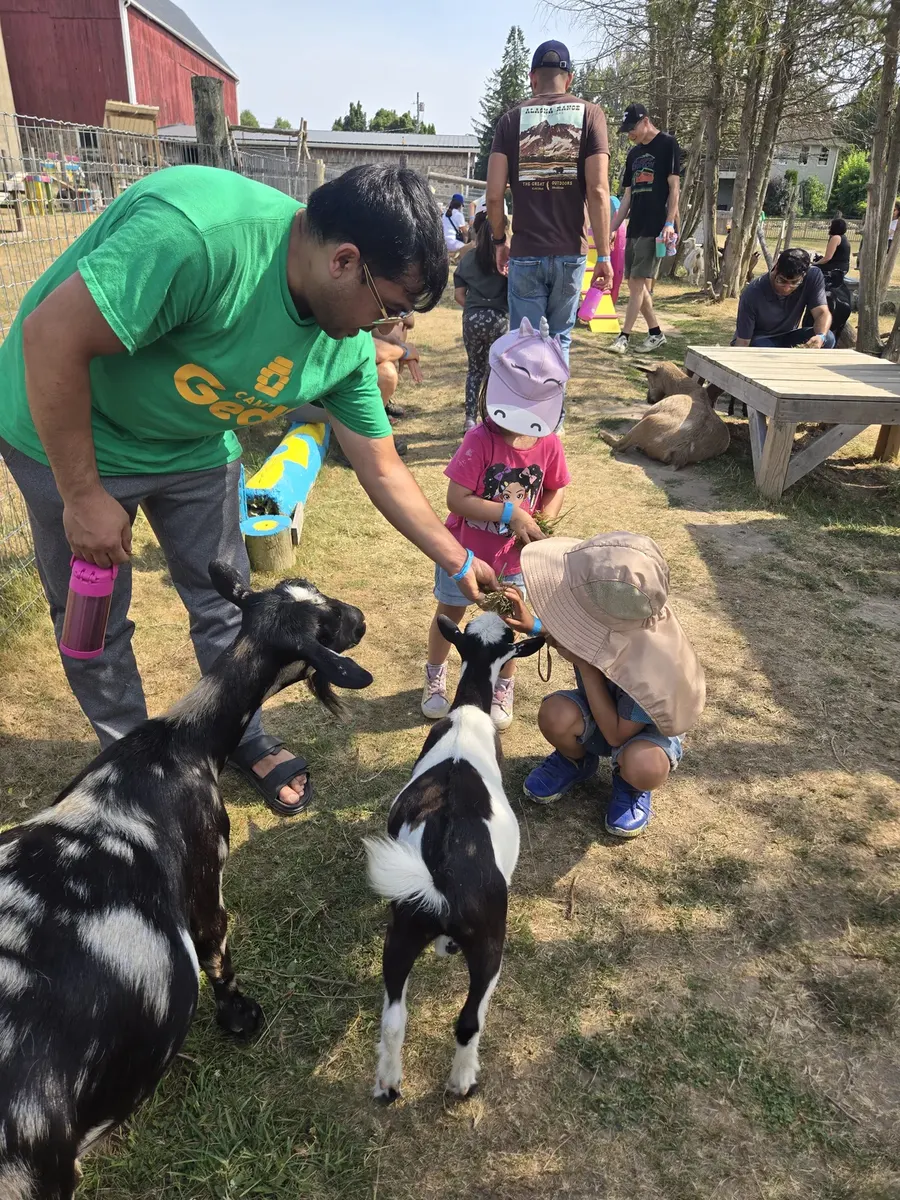
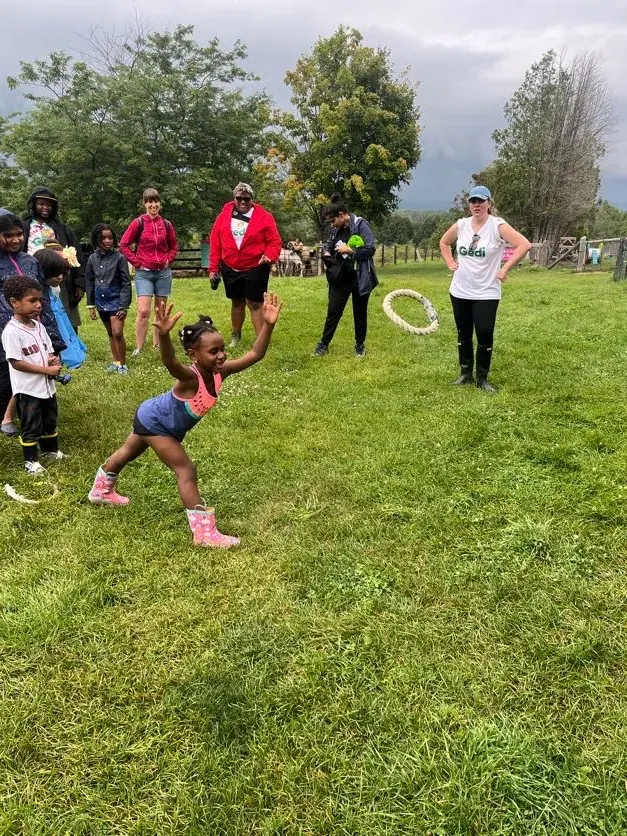
Go on a nature walk, play with the alpacas, groom horses, enjoy goat yoga and participate in Camp Gedi’s unique programming.
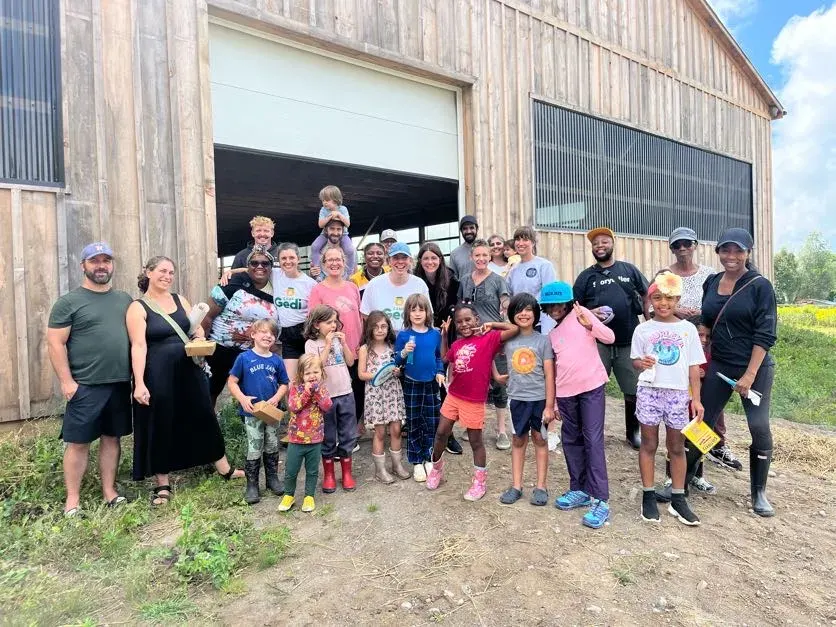
The weekend will end after a delicious farm to table lunch when we all gather for one last time in community and say goodbye.

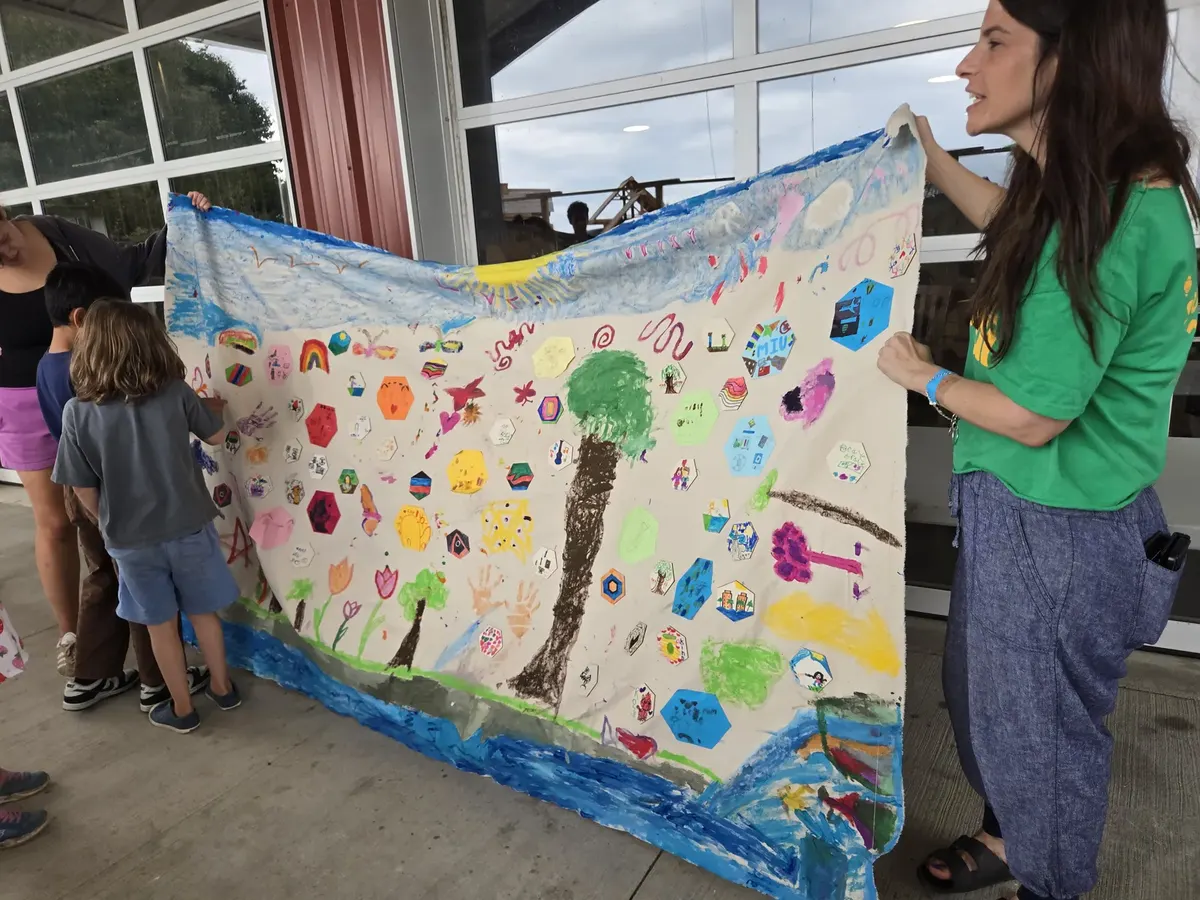
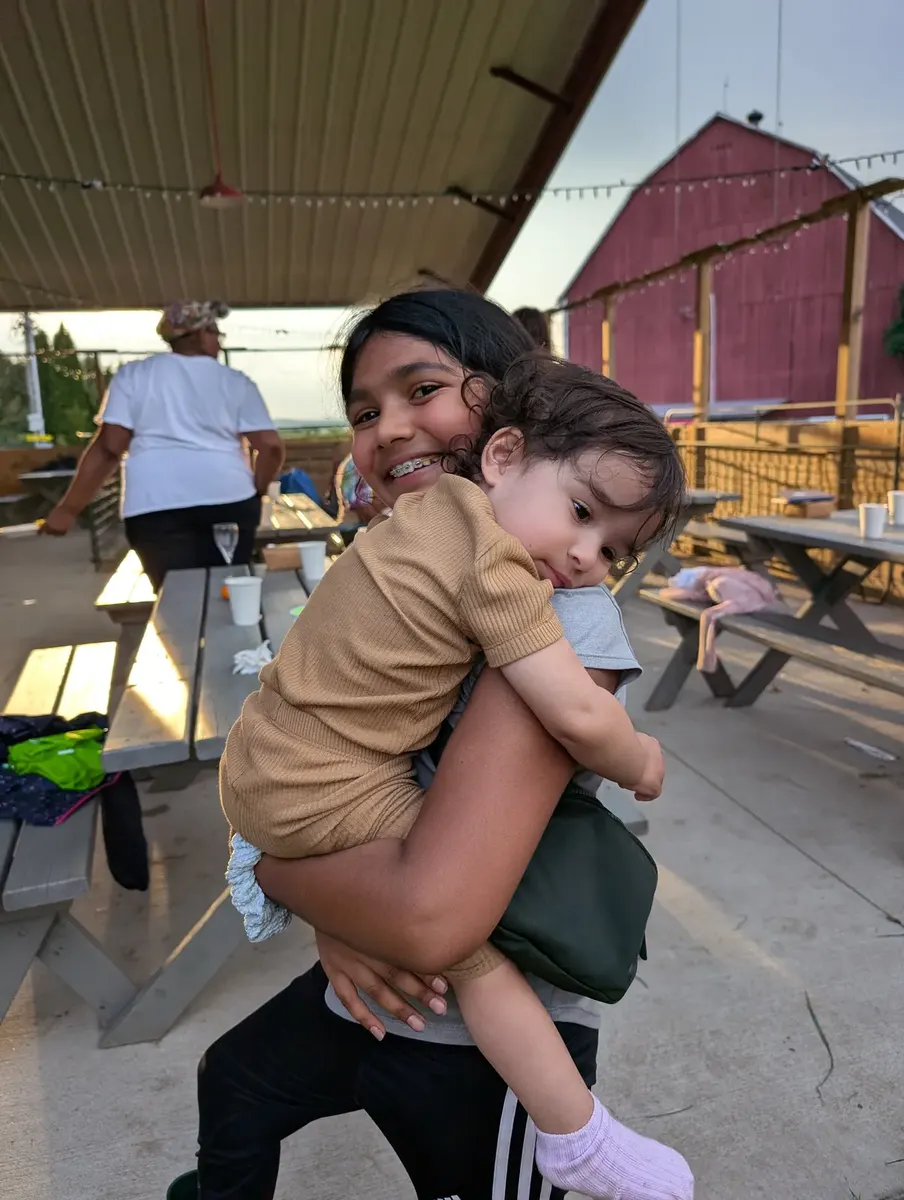
Goats, alpacas, campfires, a giant painted mural and a lot of families who arrived as strangers and left as a village.
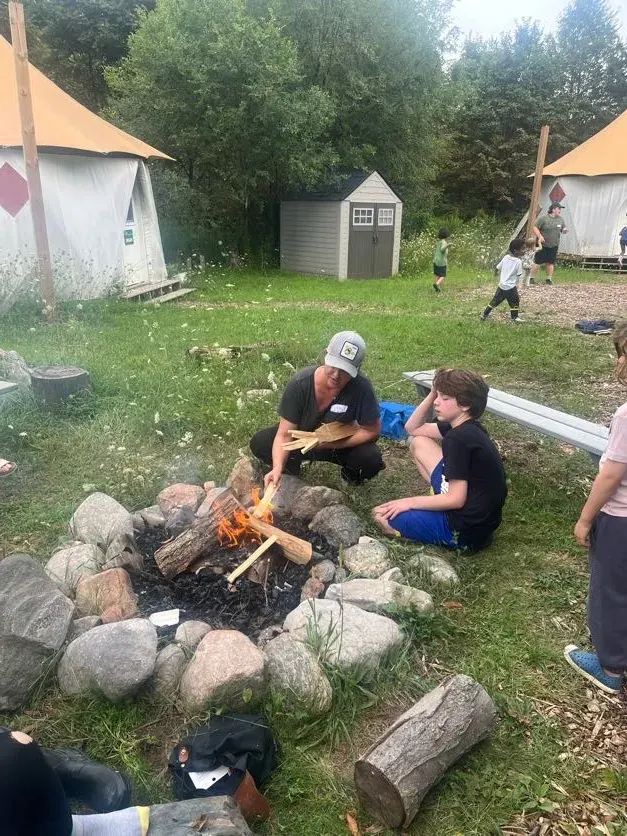
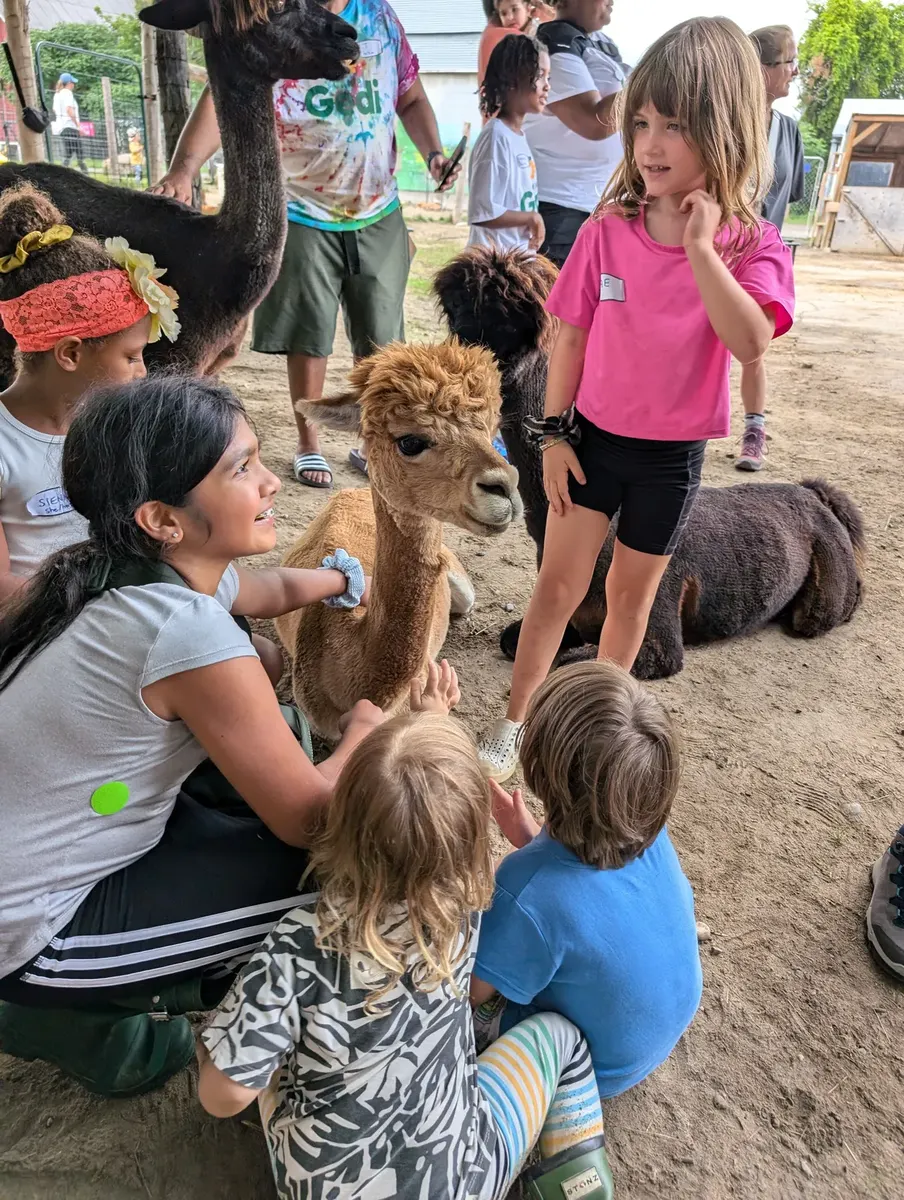
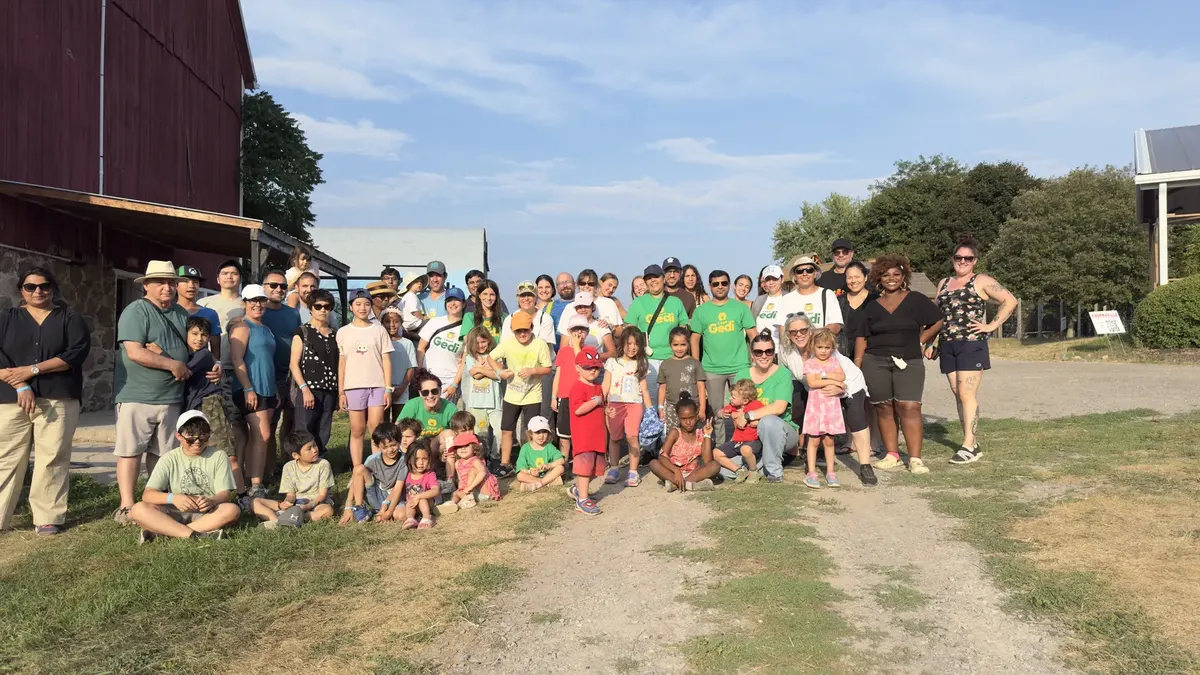
July 17–18, 2027 · Session One
August 14–15, 2027 · Session Two
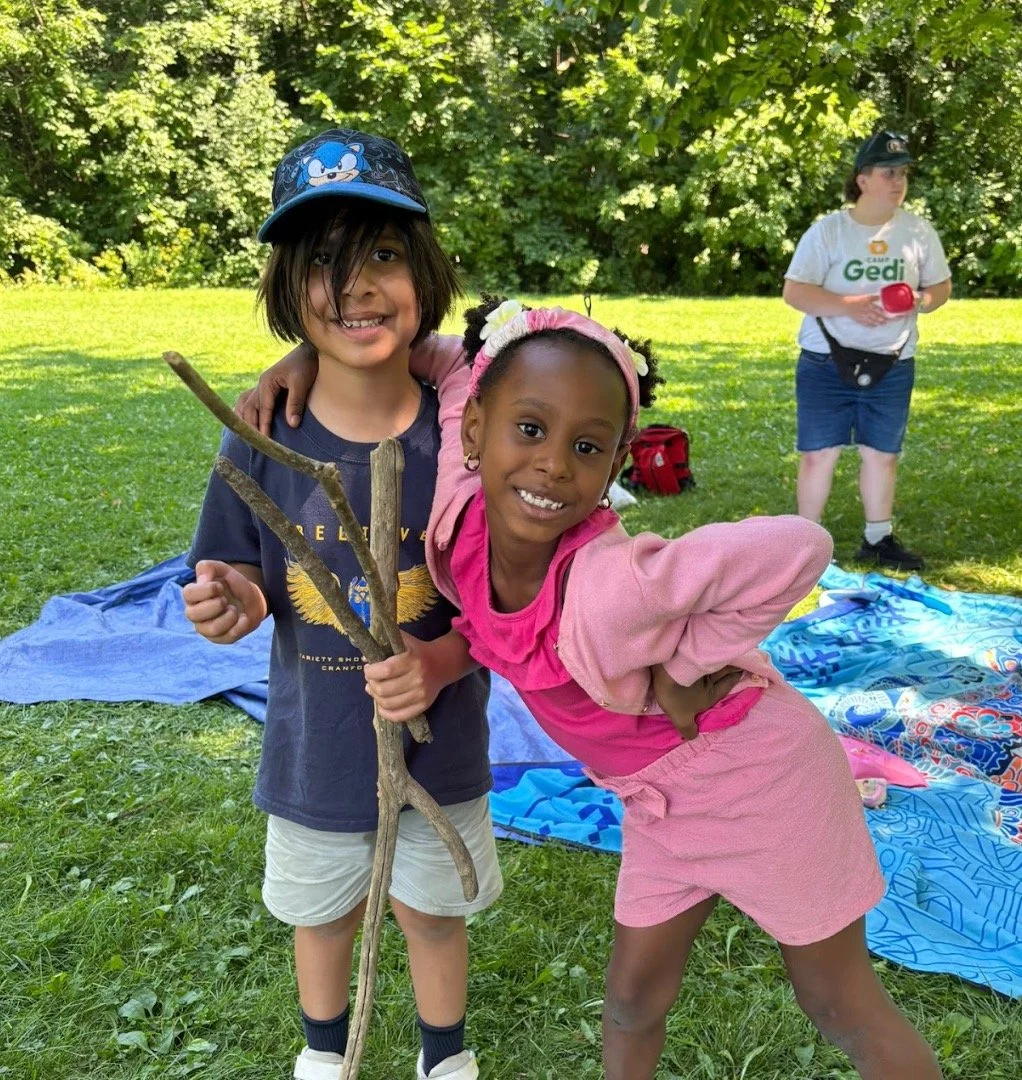
Built around the values of Radical Empathy, Intergenerational Community, Compassionate Inquiry, Experiential Learning, and Collaborative Partnership, Camp Gedi offers fun with a purpose: a space where every child is seen, heard, and supported.
Through hands-on activities, nature exploration, and creative projects like collaborative art and filmmaking, campers build emotional awareness, deepen their sense of responsibility to others, and discover the joy of learning together. Each day is designed to spark curiosity, build confidence, and nurture the kind of leadership that is grounded in kindness, collaboration, and a vision for a better world.
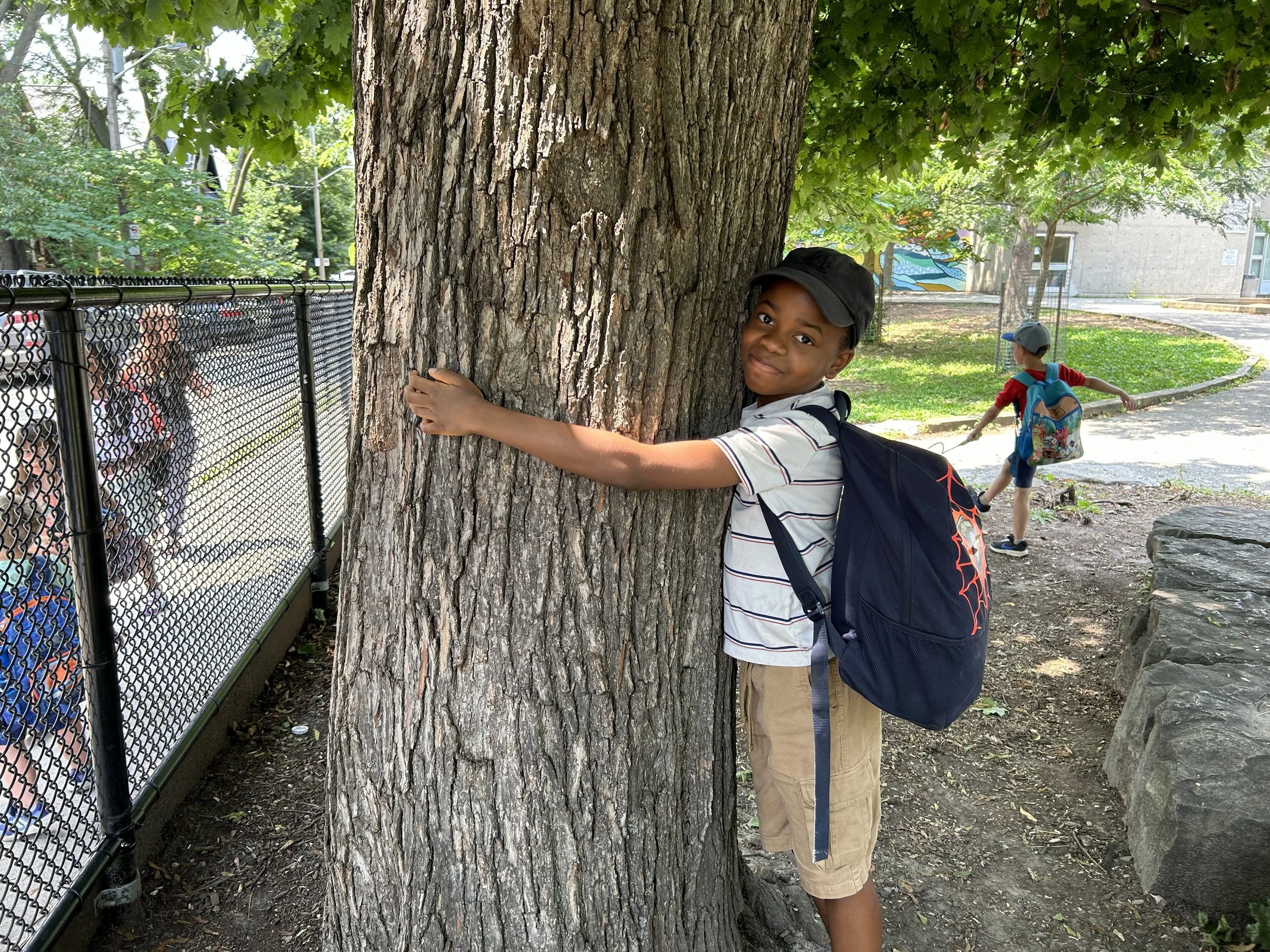
Fostering deep compassion and understanding for oneself and others. We lead with curiosity before judgment.
Your child will be met with understanding, not judgment. Through daily SEL activities and our Gedi Gathering circle, campers learn to name their own feelings and make room for someone else’s.
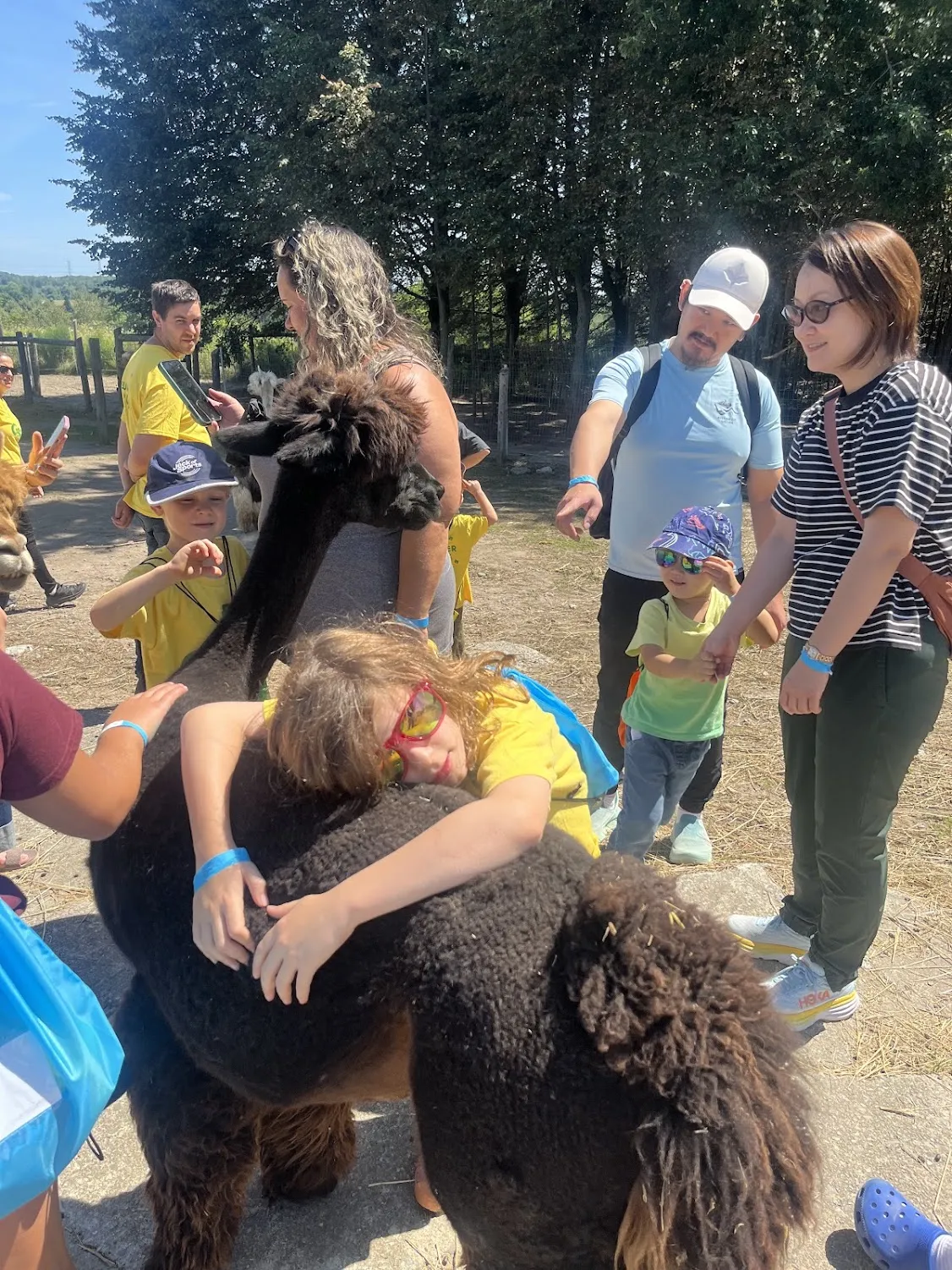
Encouraging a sense of belonging and connection across ages. Wisdom flows in every direction.
You’re part of this too. Children, parents and teachers learn alongside each other, especially at our Family Festival Weekend, where you join your child at Haute Goat Farm.
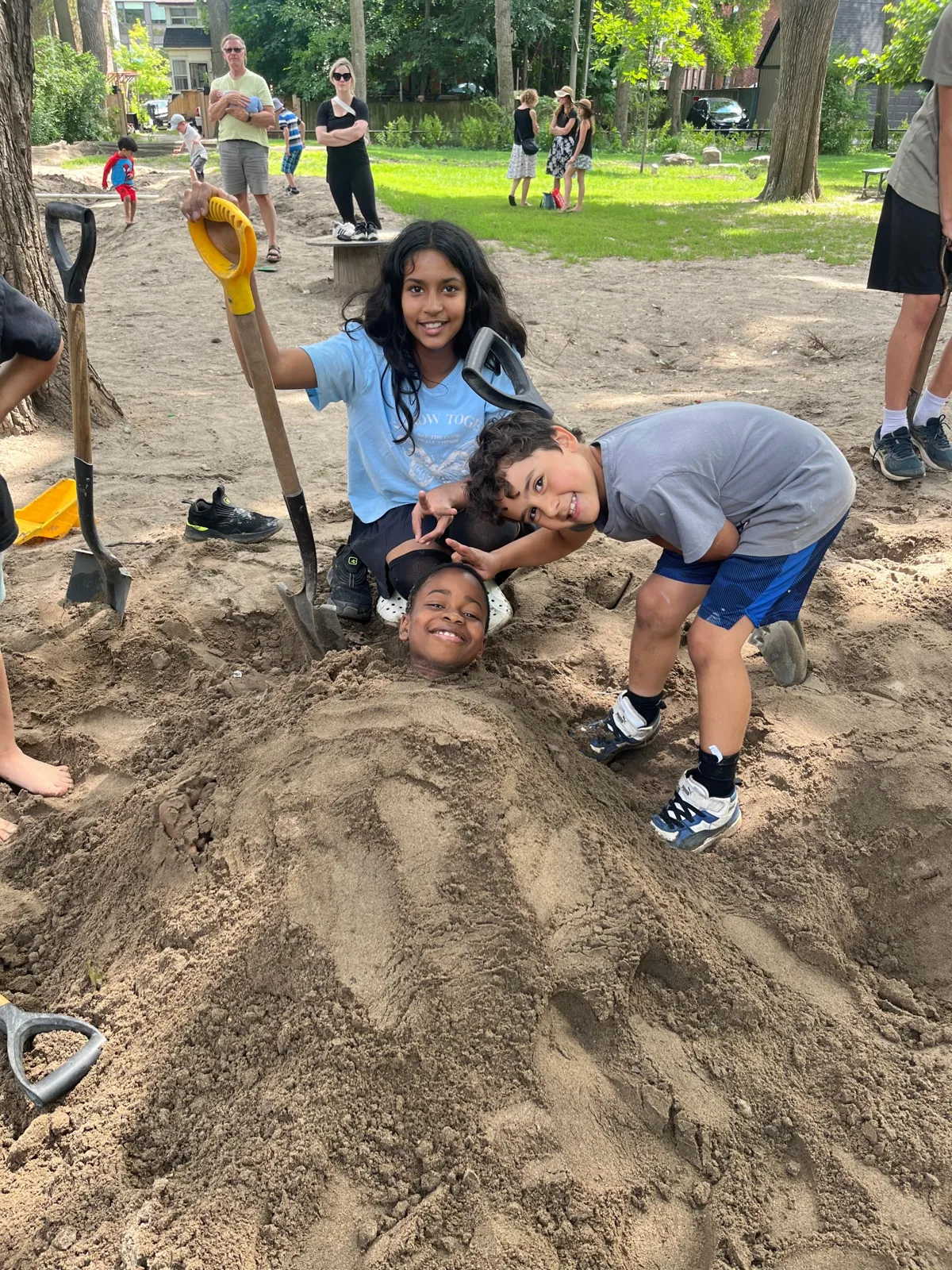
Asking questions with kindness and understanding to promote exploration and discovery. We choose curiosity over compliance.
Instead of being told what to do, your child is asked what they think. Our staff coach with curious questions, and campers practise asking them of each other.
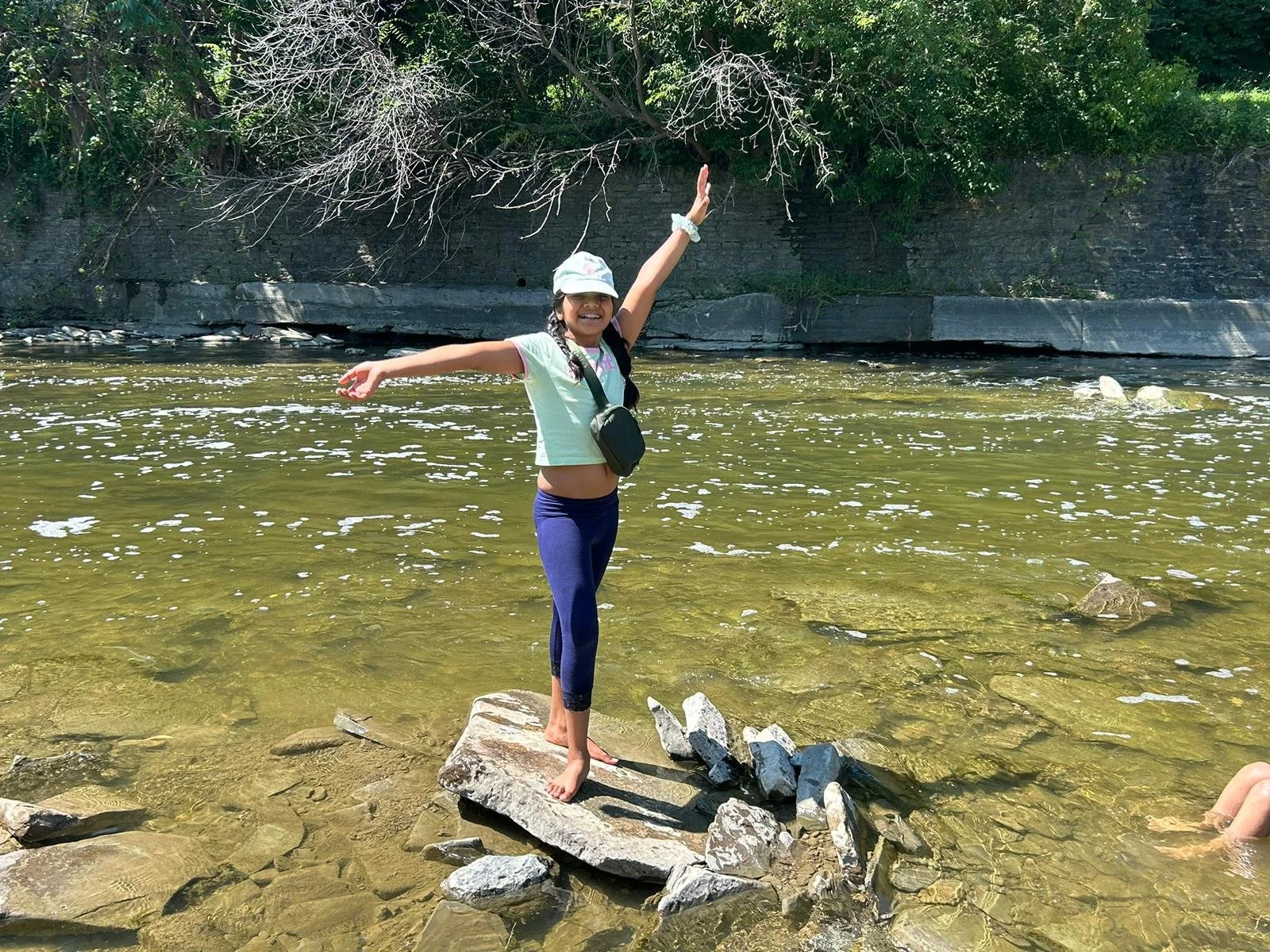
Learning through hands-on experiences and active participation. Children learn best by doing.
Your child learns by doing: exploring the ravine, building and filmmaking, and visiting a new part of the city every day in Week 3. Camp Gedi is not only about windows and mirrors, it’s also about doors.
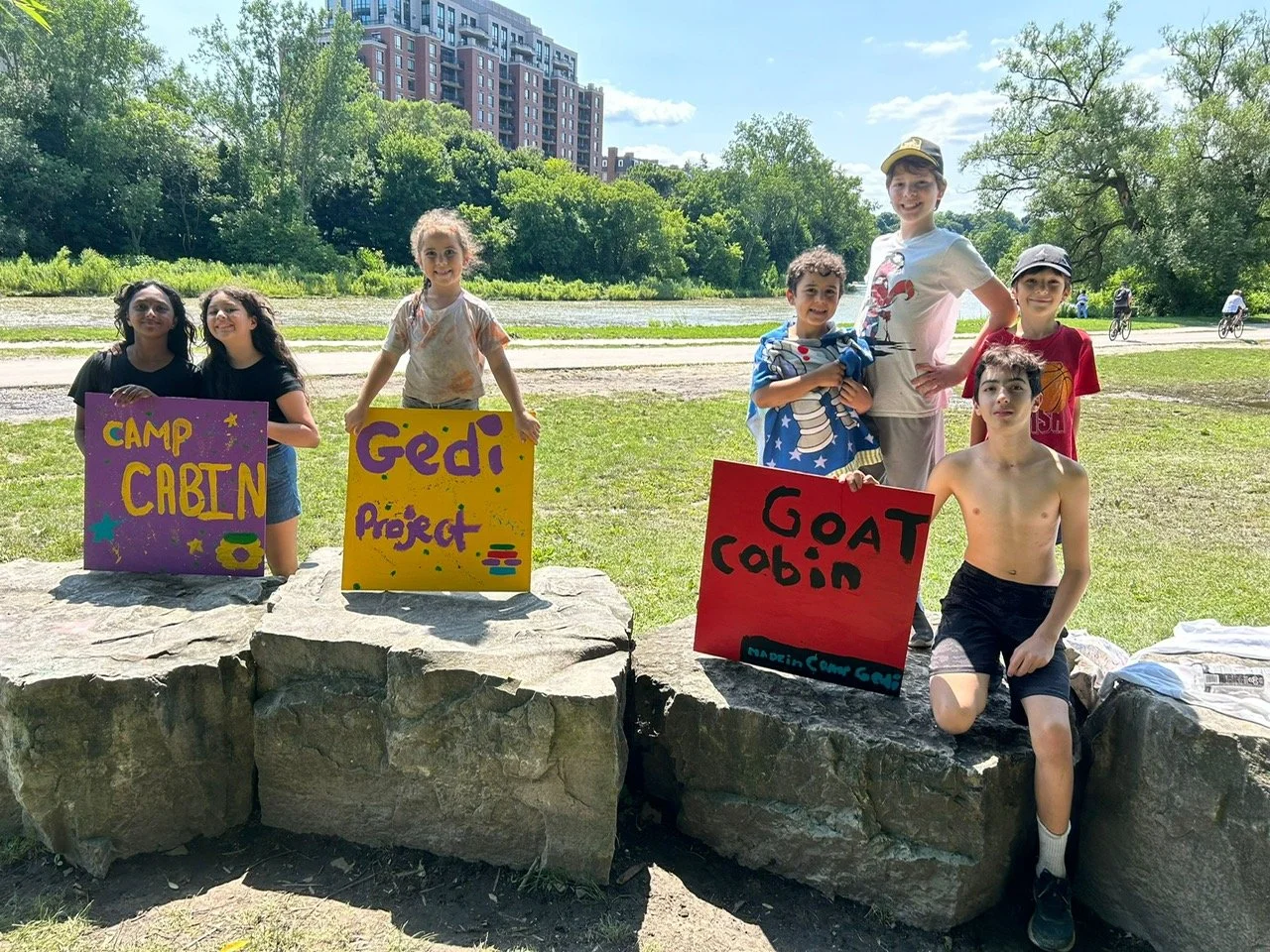
Working together with campers, teachers, and caregivers for shared success. No one does this alone.
Working in harmony is an often underestimated life skill. Your child learns teamwork and respect, and you stay connected through a daily email from the camp team.
At Gedi, the day is intentionally designed as a learning environment, not a schedule of activities. While the specific activities evolve from year to year, the underlying rhythm creates continuity and helps children know what to expect while still leaving room for curiosity, choice, and discovery.
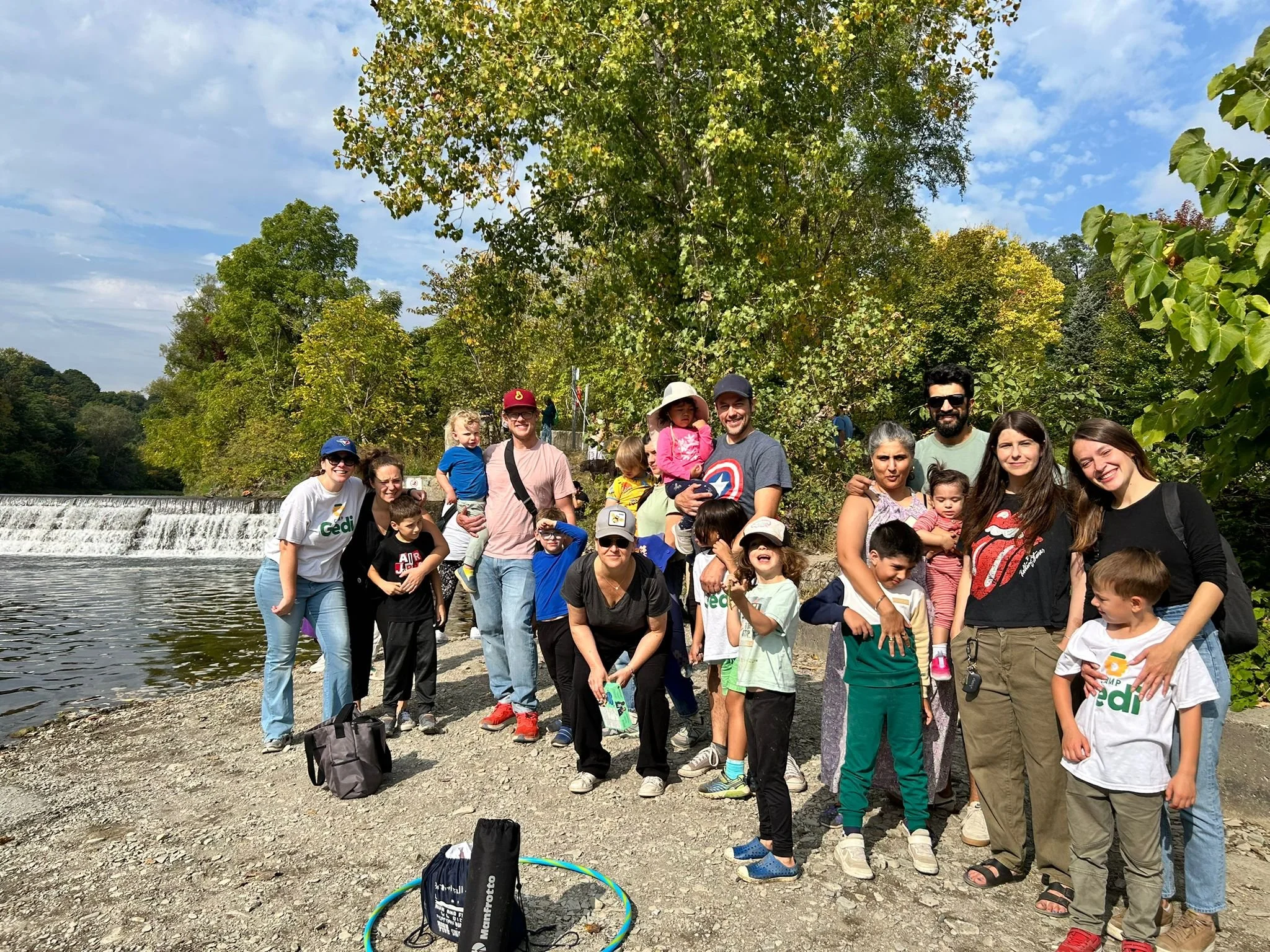
Our campers are the heart of the hive. Around them are our oldest campers, high school volunteers, assistant teachers, head teachers and our Camp Director, each with a role in helping every child explore, play, learn, connect and grow.
Meet everyone in the hiveA look back at our third summer, the experiences that brought our community together, the impact shared by campers and families, and what we’re learning as we continue to grow.
Camp Gedi began in 2024 as a three week pilot with a small group of families and one big question: What happens when a learning environment is built around relationships, agency, and belonging? We sought to understand the impact of a summer program focused primarily on the children understanding themselves and their community better.
By the end of that first summer, we had our answer. The children didn't want it to end, parents told us it had changed something at home, and staff shared it was transformative and unlike any school or camp they had worked in.
After collecting further data and feedback it was clear this couldn't be a one-time experiment. We decided, before the summer was even over, that Camp Gedi would become a permanent part of the ecosystem we're building.
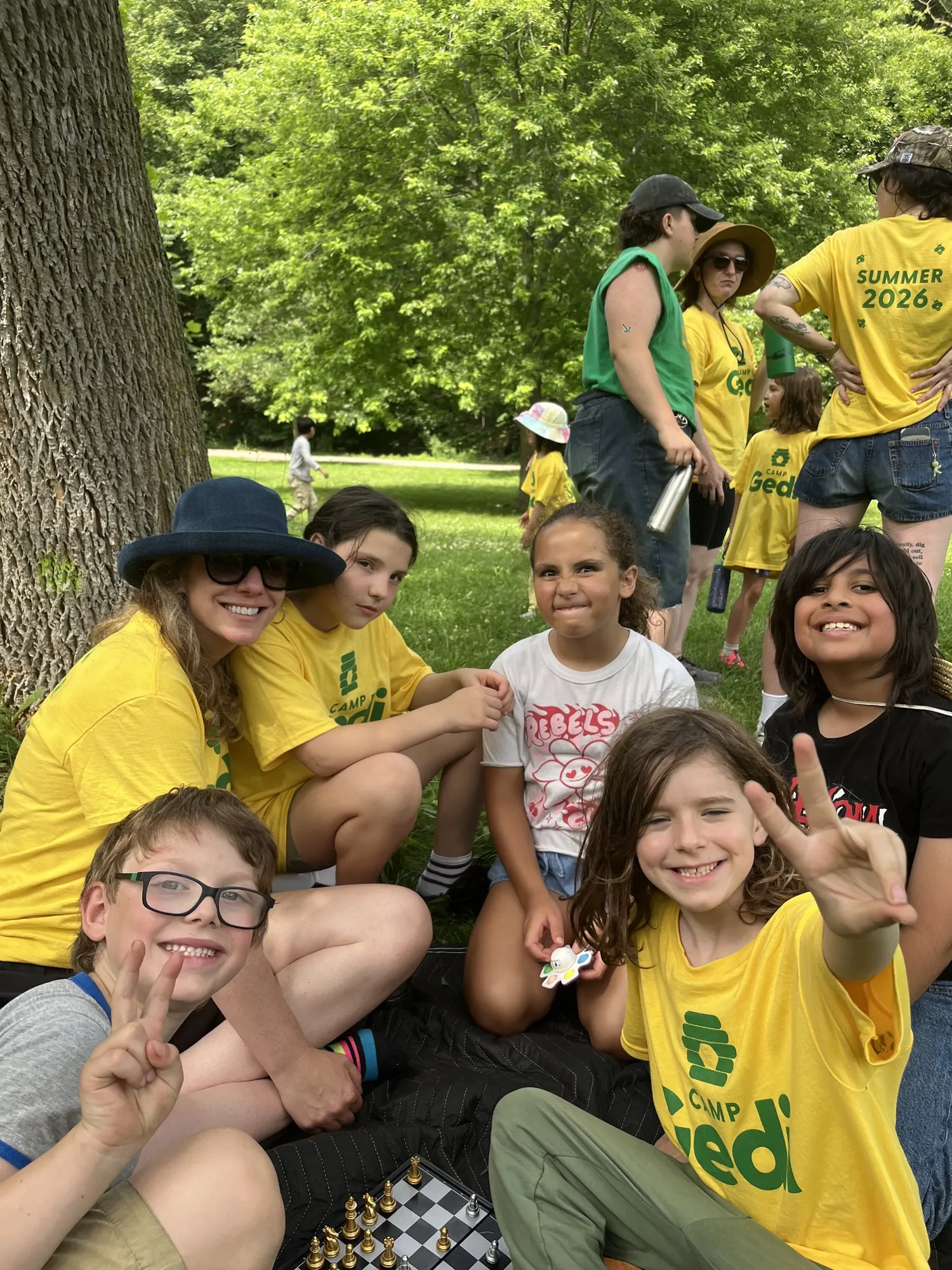
The structure has remained the same since our first year. It's intentionally small so that every camper can be genuinely known. But the experience itself is never fixed.
Camp Gedi is a research-focused, dynamic learning environment, and we continually evolve what we do based on what we are learning from children, families, educators, and one another. One-to-one and group coaching, individual and collaborative projects and our unique approach to staff training are not static programs or components we simply layer onto camp. They are part of an evolving model that we test, study, refine, and sometimes rethink entirely.
Our goal is not to arrive at a perfect structure and replicate it year after year, but to build a learning environment capable of changing as our understanding deepens.
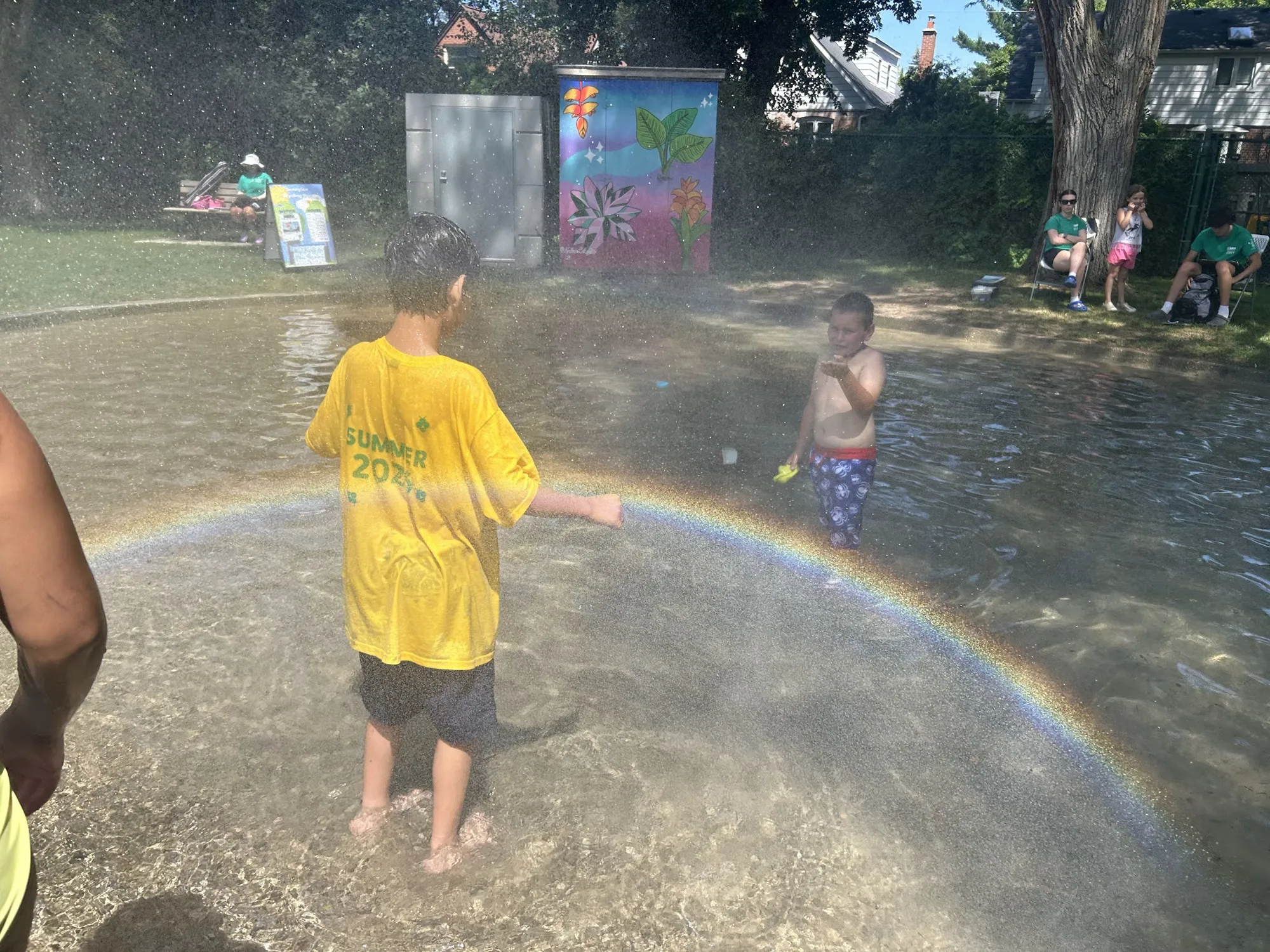
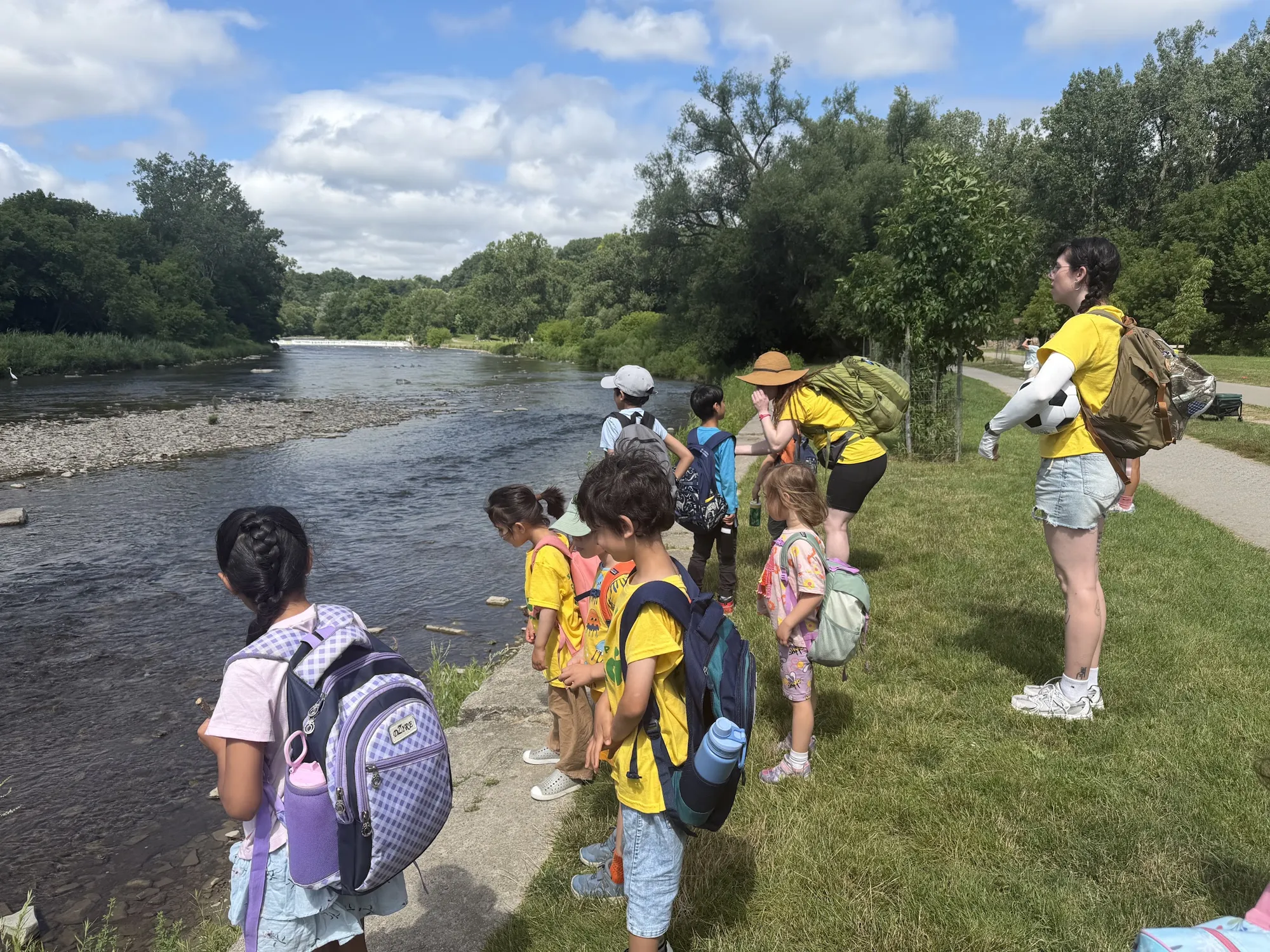
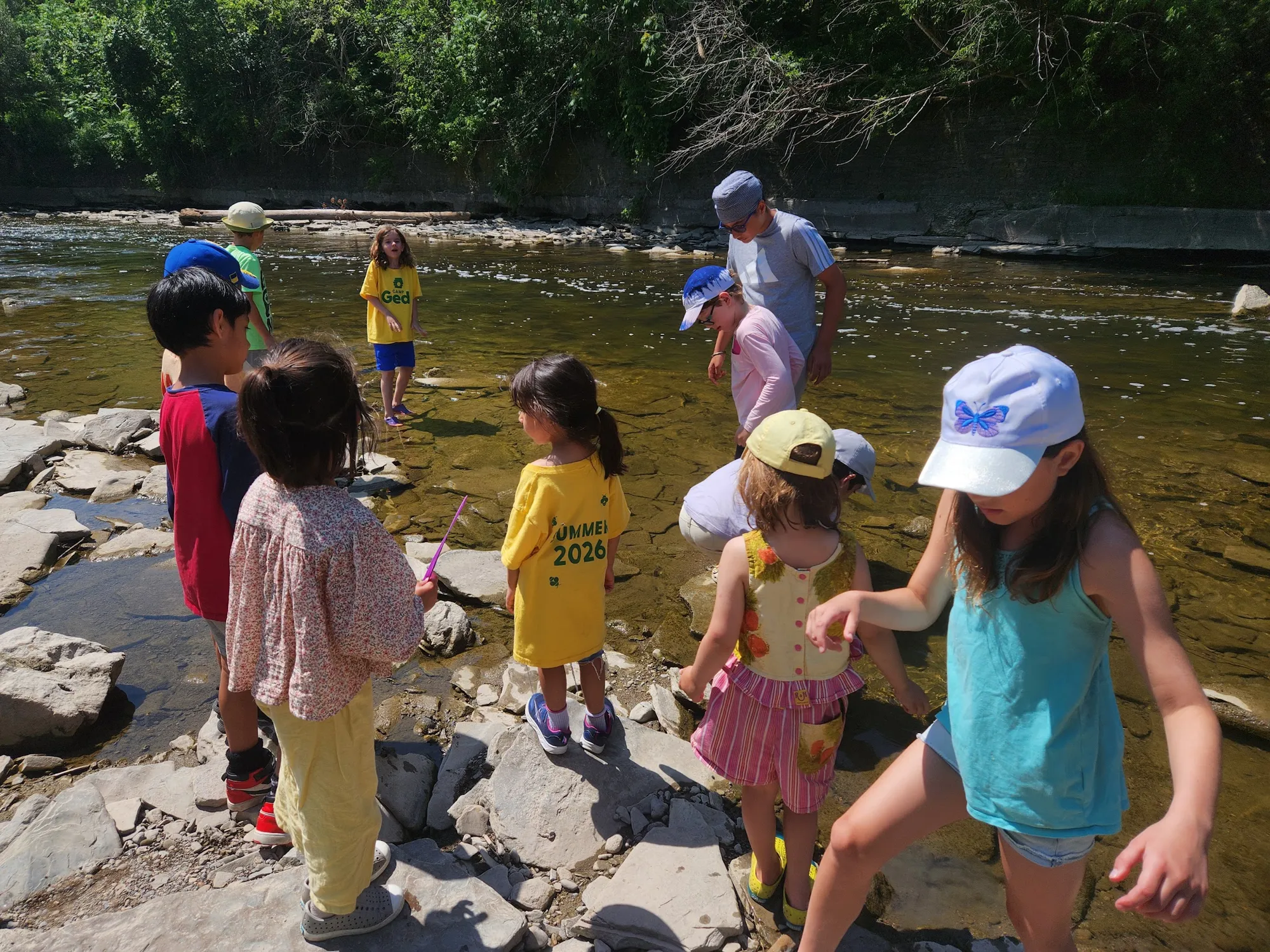
Camp Gedi is rooted in Étienne Brûlé Park, a stretch of ravine along the Humber River in Toronto's west end. The landscape gives children daily opportunities to move through trees and trails, explore the river, and build a relationship with the land, while still being deeply connected to the life of the city around them. Our home base is not a traditional camp property or a contained campus. It's a place within the city where nature, community, and urban life meet.
Old Mill subway station is used for pickup and drop-off. When weather or air quality makes the ravine unsafe, we move to our indoor location. This summer we partnered with The Lane School of Music. During Community Week, the third week of each session, we intentionally expand beyond our home base, spending time learning from local businesses, and experiencing different neighbourhoods and parks across Toronto.
The city itself is the learning environment.
Camp Gedi's mission is to create extraordinary summer experiences that celebrate unique identities and build strong, inclusive communities, while integrating social-emotional learning with hands-on, child-led exploration.
Fostering deep compassion and understanding for oneself and others.
Belonging and connection across ages.
Asking questions with kindness to promote exploration.
Learning through hands-on experience and active participation.
Working together with campers, families, and staff for shared success.
Every staff member is trained to hold a coaching stance as their approach to conversations with campers, with families, and with each other. That training deepens every summer: this year's staff team built on two prior years of findings about what actually helps a child feel safe enough to grow.
At Camp Gedi, we seek to understand each child before meeting them on day one. Every family completes a detailed registration form, and we invite families to complete a voluntary research survey that helps us understand the broader community we are serving.
Our registration process helps us understand the child in front of us. We ask about:
Our research survey helps us understand the community and learn from the experience. We ask families about:
We asked families what they hope their child will experience or develop through their time at Gedi.
These responses are not simply collected and filed away. Together with what we learn through registration, daily observation, staff reflection, and conversations with families, they become part of Gedi's ongoing learning cycle. Every family who enters Gedi contributes to our understanding of what children need to feel known, safe, connected, and capable of growth.
At Gedi, the day is intentionally designed as a learning environment, not a schedule of activities. While the specific activities evolve from year to year, the underlying rhythm creates continuity and helps children know what to expect while still leaving room for curiosity, choice, and discovery.
Connect
The day begins in circle, giving campers and staff a chance to reconnect, check in, and arrive together.
Imagine
A short creative or reflective prompt invites curiosity, imagination, and engagement while setting the tone for the day.
Explore
Campers move into the ravine for nature-based exploration alongside experiences designed to develop social-emotional awareness and skills.
Belong
We eat together as a whole community, followed by a grounding meditation and the Gedi Mantra. Shared meals are part of how we build belonging, not simply a break between activities.
Reflect
A picture book and guided questions connect the day's themes to stories, perspectives, and opportunities for reflection.
Create
Campers contribute to the Hive Project, a collaborative project created by the whole camp, while also working on their individual Bee Projects, which give each child space to explore personal interests and growth.
Practice
Campers develop and practise foundational coaching skills with one another in pairs and small groups. This is distinct from the individual coaching conversations each camper has with a staff member at least once a week.
Play
Movement and play create opportunities to practise collaboration, communication, persistence, and joy in less structured contexts.
Close
The day ends in a circle, giving the community an opportunity to reflect, reconnect, and close together. Families are welcomed into this final gathering.
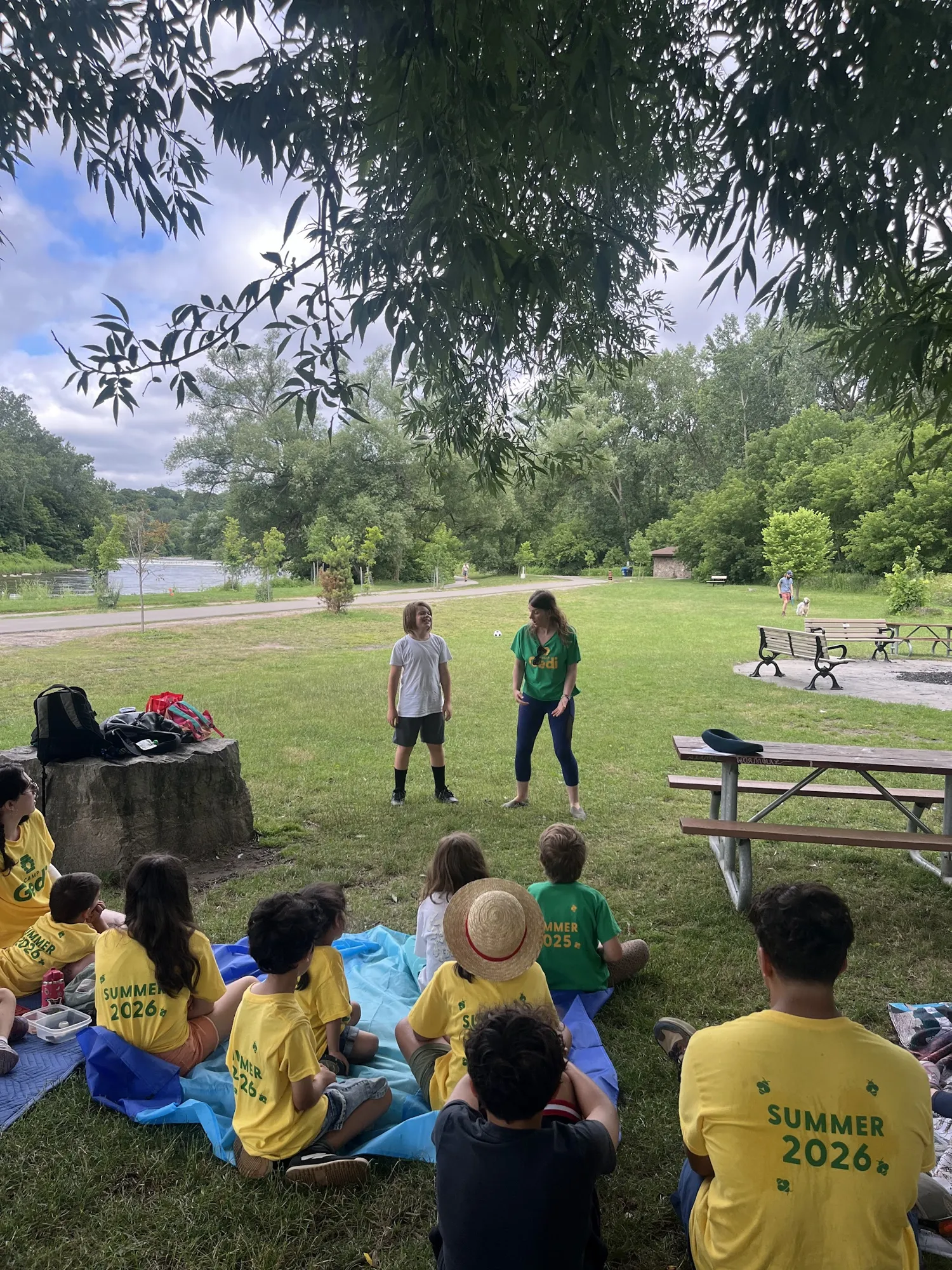
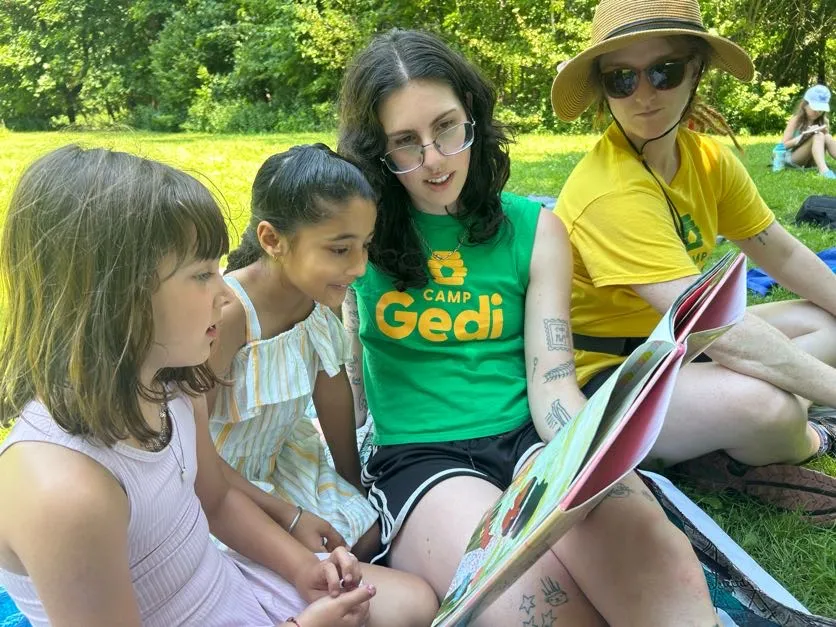
Coach & Connect is intentionally developmental. Campers are not expected to know how to coach one another. Staff first introduce foundational skills such as active listening, asking open “what” questions, and staying curious rather than immediately offering advice or solutions.
The following day, campers begin practising these skills with one another in small groups. They might start with something familiar and low-stakes, such as talking about a favourite book or video game, before gradually applying the skills to more meaningful questions and situations.
Children learn by doing.
We do not simply teach concepts like listening, collaboration, self-awareness, or agency. We create repeated opportunities for children to experience, practise, reflect on, and apply them.
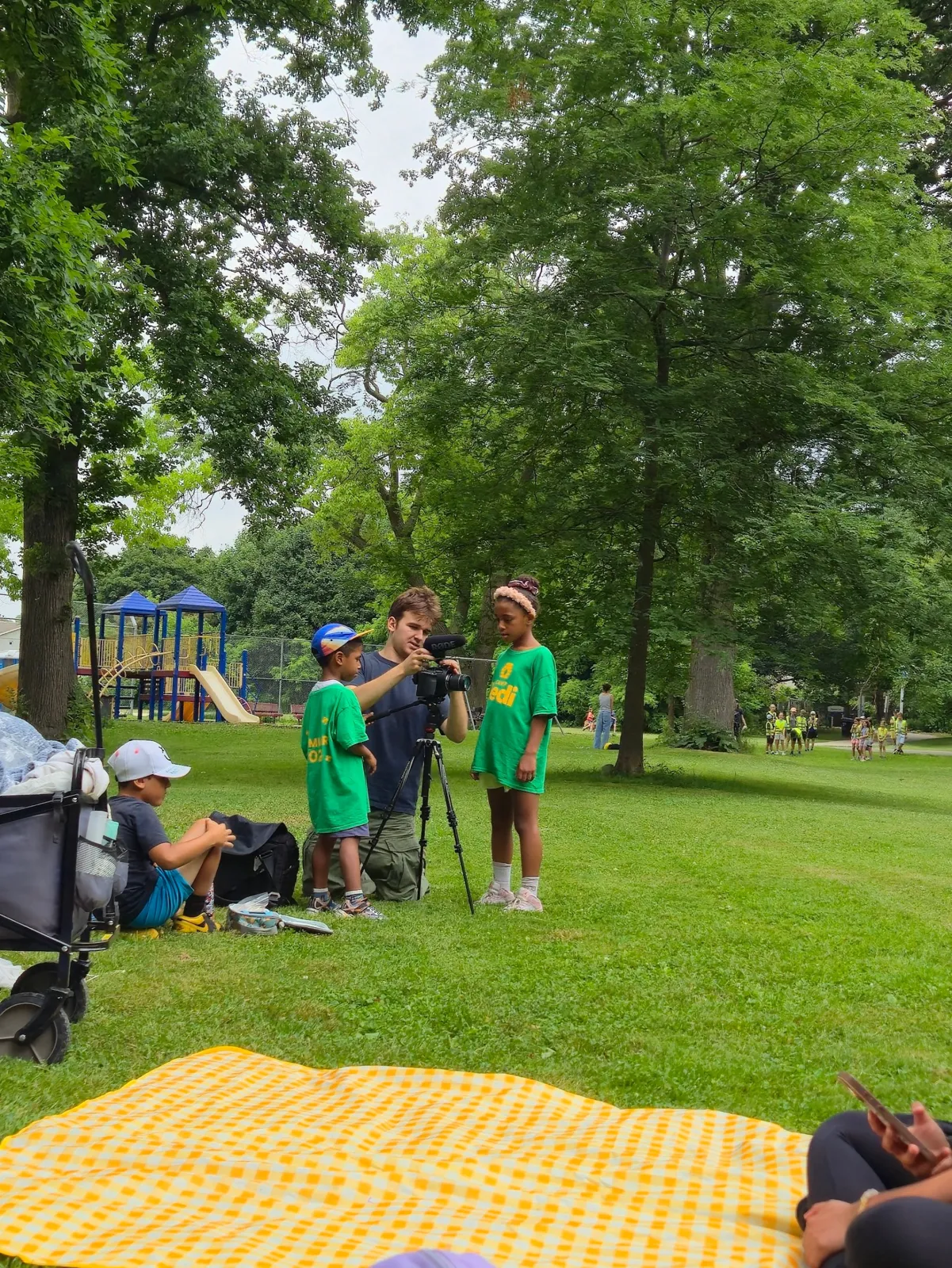
Two complementary parts of Gedi's learning model: individual agency within a collaborative community.
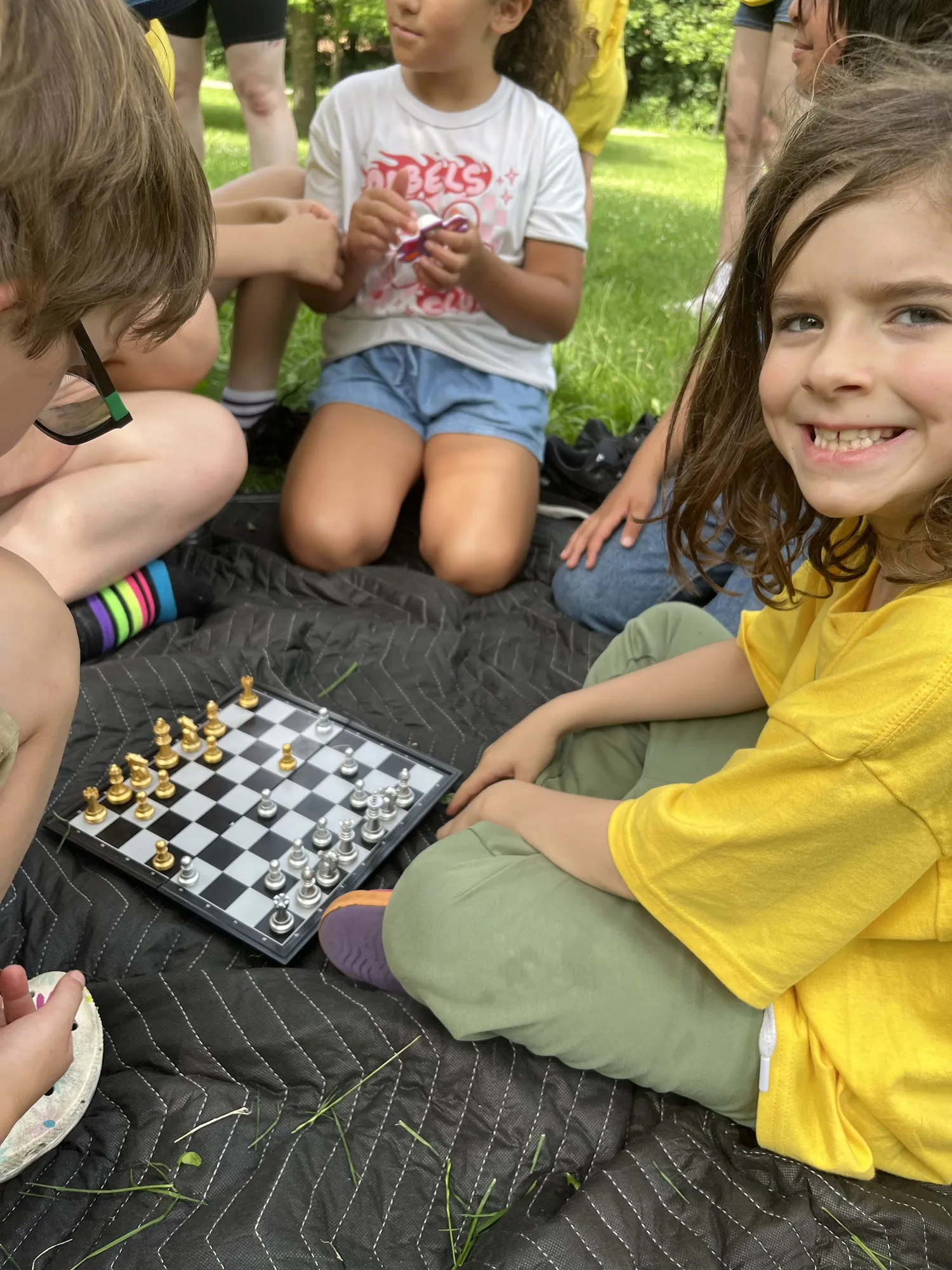
Each camper chooses a Bee Project: something they want to learn, improve, create, or practise. Projects begin with the child's own interests and give them opportunities to set goals, make choices, navigate challenges, and experience their own growth.
In 2026, projects included building a chess board for a dad who loves chess, learning a fishtail braid, creating LEGO structures from natural materials, learning stop-motion animation well enough to teach a friend, and practising nail art. The goal is not the finished product. Bee Projects give us a window into how children approach learning when it matters to them: how they persist, adapt, seek help, and recognize their own progress.
The Hive Project is a collaborative project created by the whole camp. Every camper has a meaningful role, creating opportunities to practise communication, collaboration, decision-making, and making space for different strengths.
In July, campers created a stop-motion film about a child who discovers an AI robot that separates him from his friend group, leaving him with the decision between an artificial creation that seems to understand him deeply or his human friends. In August, campers created a superhero Bee story that was staged as a play with a complementary book.
Each session closes with Community Week, five days when Gedi leaves Étienne Brûlé and expands into the city. The shift creates more movement, new environments, and opportunities for campers to practise what they have been learning in real-world community settings.
Community Week ends with a Farewell Gathering built around three questions:
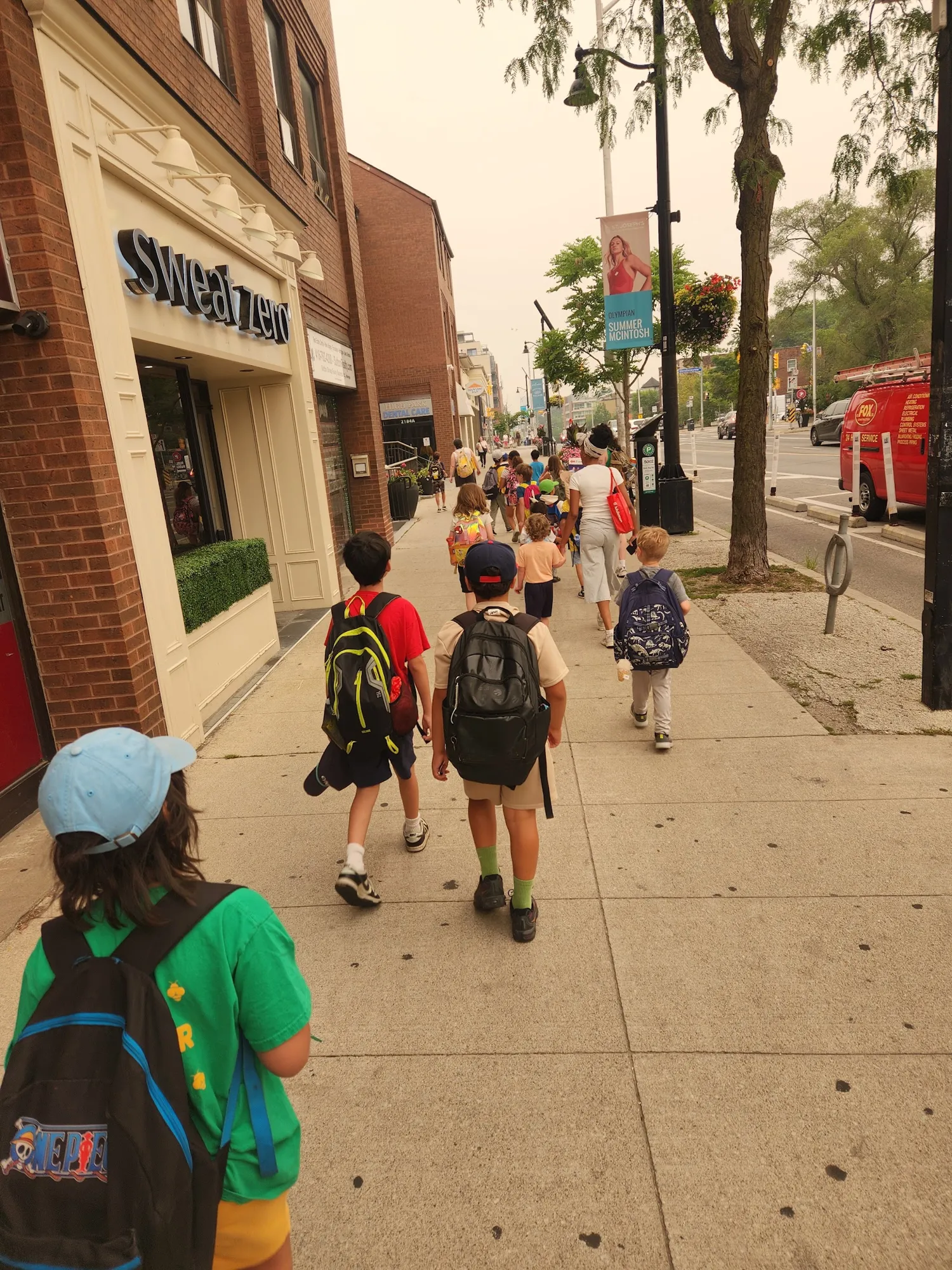
Gedi is built on the belief that children grow within communities, not in isolation.
The Family Festival Weekend brings campers, families, and staff together for an overnight experience at Haute Goat Farm, designed to extend the Gedi learning environment beyond the camp day. Families learn, create, eat, explore, and reflect together through activities that draw on Gedi's core practices of curiosity, connection, experiential learning, and collaborative partnership.
Rather than simply telling parents what their children have been learning, we invite them to participate in the same kinds of experiences that ask us to listen differently, stay curious, collaborate, and make space for different perspectives. The Festival culminates in a shared closing gathering where children and families reflect on what they have experienced and what they are taking with them.
Creating a positive experience is important to us, but what matters more is the network of relationships around each child. When families, educators, and children are learning alongside one another, the principles of Gedi can move beyond the camp environment and become part of a larger, intergenerational community.
At Gedi, adults are not positioned as the people with all the answers. They are trained to help children develop the capacity to find their own.
Staff are trained in coaching practices that emphasize active listening, curious questions, reflection, and agency rather than instruction or advice. In 2026, campers began learning these same foundational skills through Coach & Connect, practising how to listen, ask questions, and support one another.
Together, coaching and restorative practice create a consistent philosophy across the Gedi environment: children are capable of insight, responsibility, repair, and growth, and our role is to create the conditions that help them develop those capacities.
When conflict occurs, staff use a restorative approach rather than a punitive one. The focus shifts from determining who should be punished to understanding what happened, who was affected, what needs to be repaired, and how everyone can move forward. Gedi's protocol follows six stages:
The 2026 Post-Camp Survey opened on August 24. As of this report, 16 families have responded, and the picture that's emerging is remarkably consistent: families are telling us, in their own words, that Camp Gedi didn't just fill three weeks of summer. It changed how their kids see themselves, and how their families talk to each other.
9.25/ 10
Average rating of their child's overall experience
9.75/ 10
Average rating of the family's overall experience
9.5/ 10
Average likelihood of recommending Camp Gedi to another family
11 of 16 families said the experience exceeded or far exceeded what they had hoped for. The remaining 5 said it met their hopes fully (these 5 are returning families, so they know what to expect from Gedi!). 0 families, at any point, in any response, said Camp Gedi fell short.
Across 16 families, every single one agreed that:
On every other belonging and safety statement we asked about (respect for differences, open communication when problems arose, feeling comfortable raising a concern, staff attentiveness), 15 of the 16 families agreed.
Every family reported growth in how their child communicates needs and feelings, how they identify and express emotions, and how independently they solve problems.
When we asked which areas stood out most, two rose to the top: confidence and communication, followed closely by emotional awareness, emotion regulation, and independence.
All families said what their child practiced this summer will “definitely” or “probably” carry into school, friendships, or family life.
Three weeks did this. Three weeks gave a shy child the words for her feelings, gave a neurodivergent camper a place to build real friendships, gave a newcomer family a bridge past a language barrier.
Our Pay What Feels Good model means every family pays what they can.
C$382
Average family contribution this summer
C$1,550
Suggested cost per camper
Funded in part by the Kassam Equity Fund, the Fresh Air Fund, the Aqueduct Foundation, several individual donors, and a handful of major camp-specific donors, alongside what families themselves contributed through Pay What Feels Good.
Farm activities, food, bus, tent rentals, project materials and port-a-potty rental. Typically this number is doubled, but our July Family Festival was cancelled due to wildfire air quality.
Funded fully by the Moez & Marissa Kassam Equity Fund.
Rain, heat and air quality backup.
Camp Gedi began in 2024 as a three-week pilot with an open question: could a different approach to learning, built around relationships, agency, and community, create a meaningful difference for children and families? Three seasons later, the answer is strong enough to move beyond the camp itself.
The model remains intentionally small, with 25 campers per session, but it is not static. What we learn through Camp Gedi continues to shape how we think about coaching, restorative practice, social-emotional learning, agency, and what children need to thrive within a community.
Coaching practices, restorative approaches, and learning environments built around connection are now informing active partnerships and pilots with:
In Guatemala, with Antigua Global Explorers, we are testing our first Micro Village. These partnerships allow us to ask a larger research question: what elements of the Gedi model are transferable across different schools, communities, cultures, and learning environments?
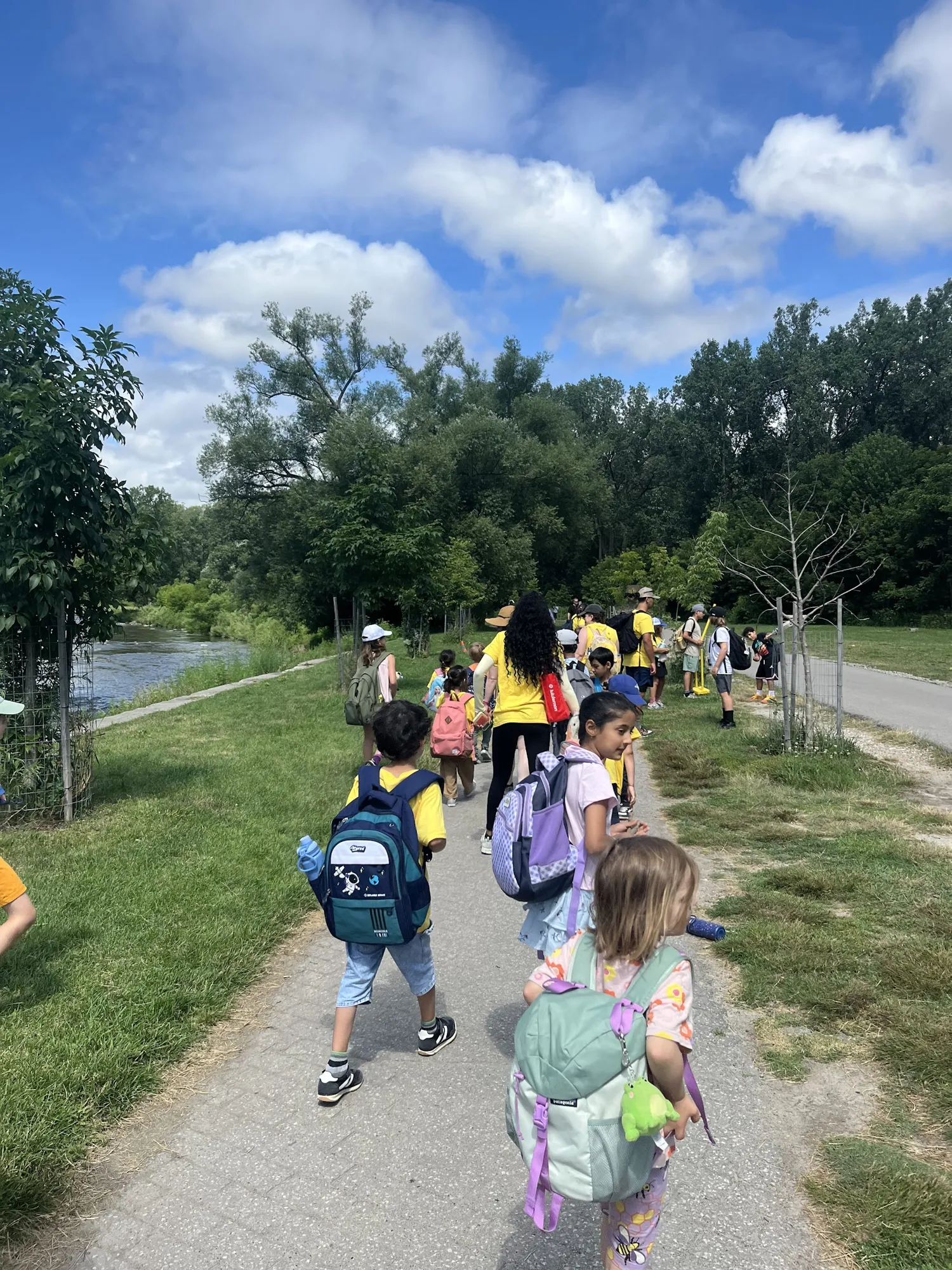
The long-term vision is Gedi Village, a permanent campus in Toronto that looks different than what we've seen before: a research and learning ecosystem where we can continue developing the model and share what we learn with learning communities in Canada and beyond.
Since 2024
Where this work began. Our living laboratory.
By 2028
A smaller-scale environment to test what a year-round Gedi community might look like.
The vision
A permanent research and learning campus in Toronto.
We are not trying to build a program and replicate it unchanged. We are building an approach to learning that can keep learning itself.
We're looking to grow and build our camp model into a micro village and ensure our camp continues to impact the lives of children every summer. If this resonates, we'd love to talk about what a deeper partnership could look like.
Offer a workshop or learning experience for the children, or introduce a local business our campers could learn from during Community Week.
Help fund a camper's spot directly, so that a family who cannot afford C$1,550 does not have to choose between Camp Gedi and something else.
Support our nutrition program, which fed nearly fifty children across six weeks this summer.
Become an ongoing contributor and help us reach our next concrete milestone: opening our Micro Village by 2028.
We are three years into building something we believe matters: a learning environment that treats children's emotional and social development with the same care and intentionality we expect in academics, and a model that is now being tested and refined in schools, camps, and communities beyond Toronto.
We are also committed to being honest about what we are learning. Some of our numbers are strong. Others are still early. Some questions remain unanswered. That is part of the work.
Thank you for trusting us with your children. Camp Gedi only works because families are part of it.”
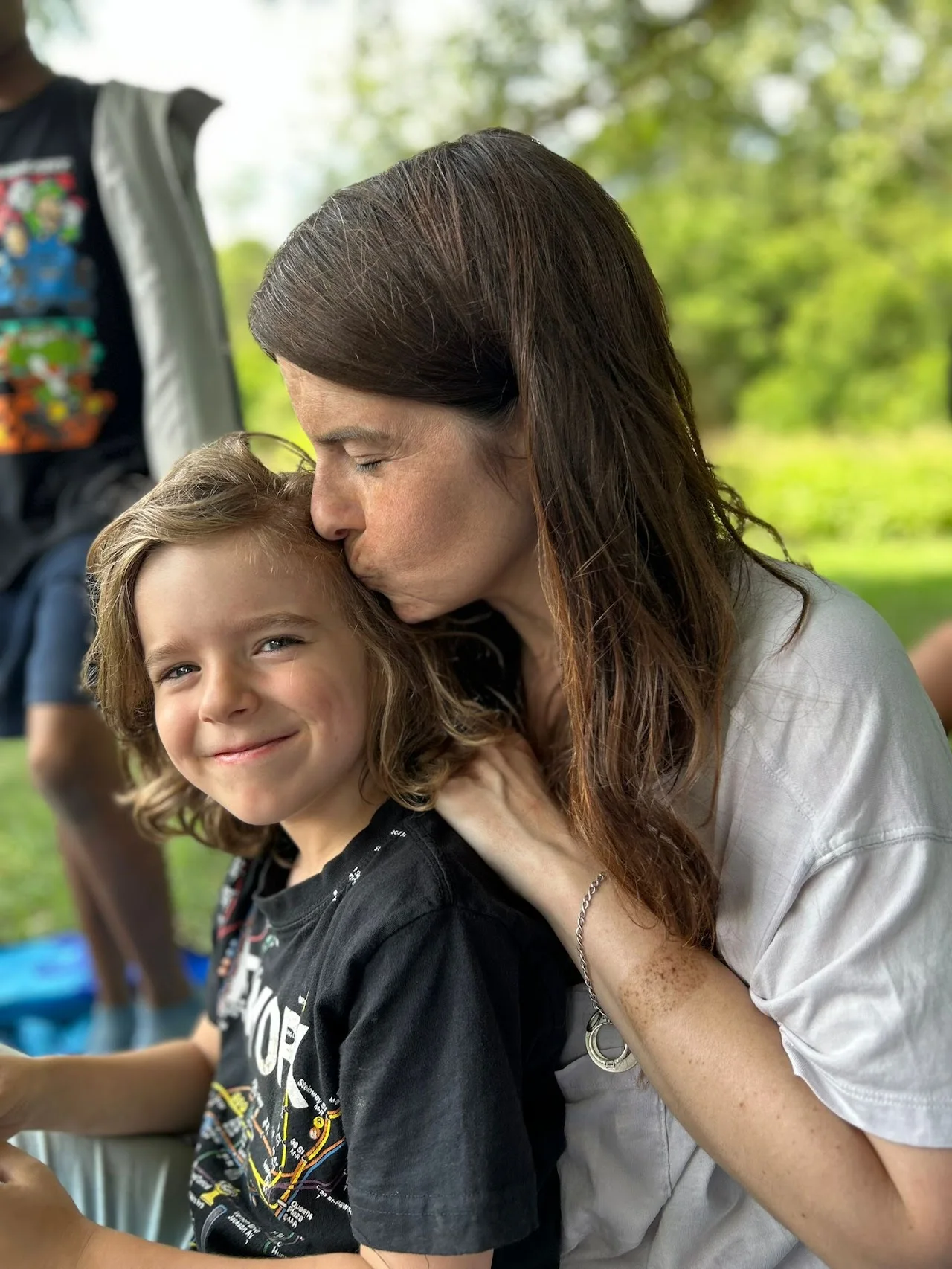
Ashley BaylenCofounder, Gedi Village Foundation
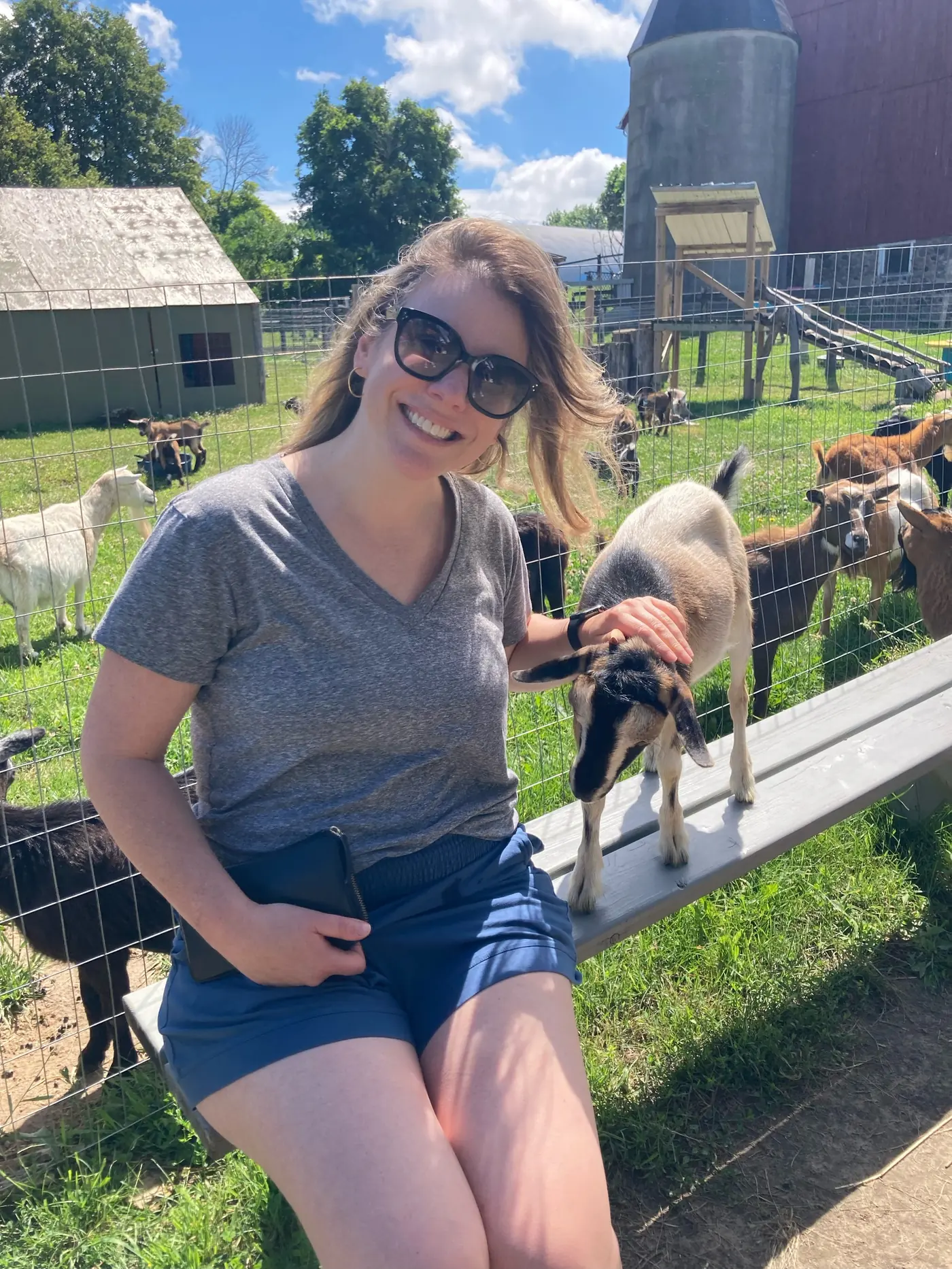
Quinn SimpsonCofounder, Gedi Village Foundation
Every camper is an integral part of the Camp Gedi community, bringing their own ideas, perspectives and experiences to the Hive. From our high school volunteers to our Camp Director, everyone has a role to play in creating a place where we learn from one another, build meaningful relationships and grow together.
Honey Bees, our youngest campers, are the reason the Hive exists. Scout Bees, our oldest campers, take on greater responsibility, helping younger campers feel welcome, supported and included. Builder Bees, our high school volunteers, help strengthen the community and bring everyone together. Forager Bees and Guardian Bees, our assistant and head teachers, nurture curiosity, connection and a sense of safety. And our Beekeeper, the Camp Director, helps the whole Hive thrive.
Everyone has an important role to play, with opportunities for leadership and responsibility growing along the way.
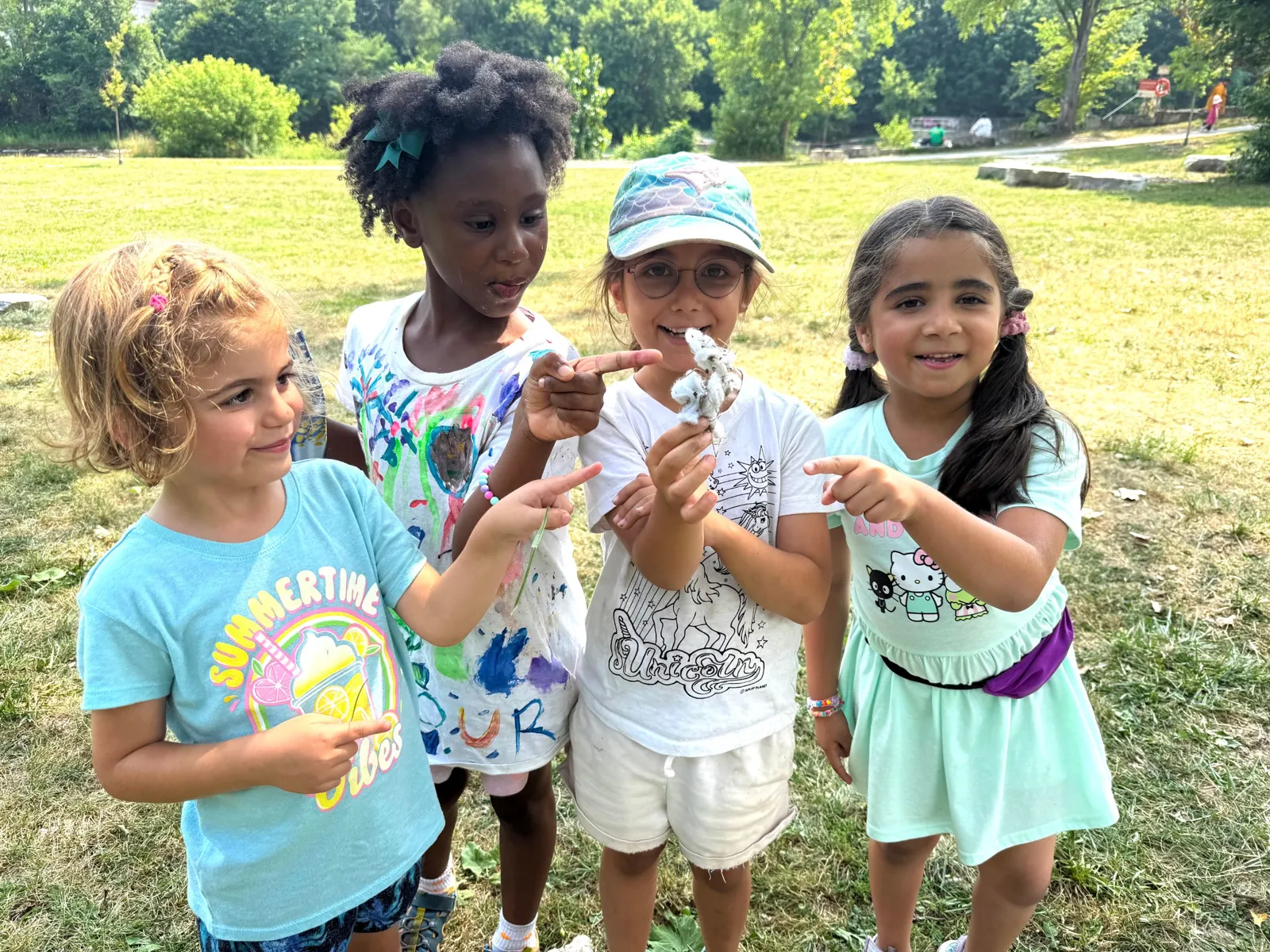
Our youngest campers fill the Hive with questions, ideas and energy as they explore, play, learn, connect and grow together.
Our oldest campers, in their final year at Camp Gedi, take on a special leadership role within the hive. They help support younger Honey Bees, share what they’ve learned and practise being thoughtful mentors while still fully being campers themselves.
Our high school volunteers bring energy, creativity and a fresh perspective to the hive. They help build the kind of community where everyone feels welcome, connected and ready to participate.
Volunteer with us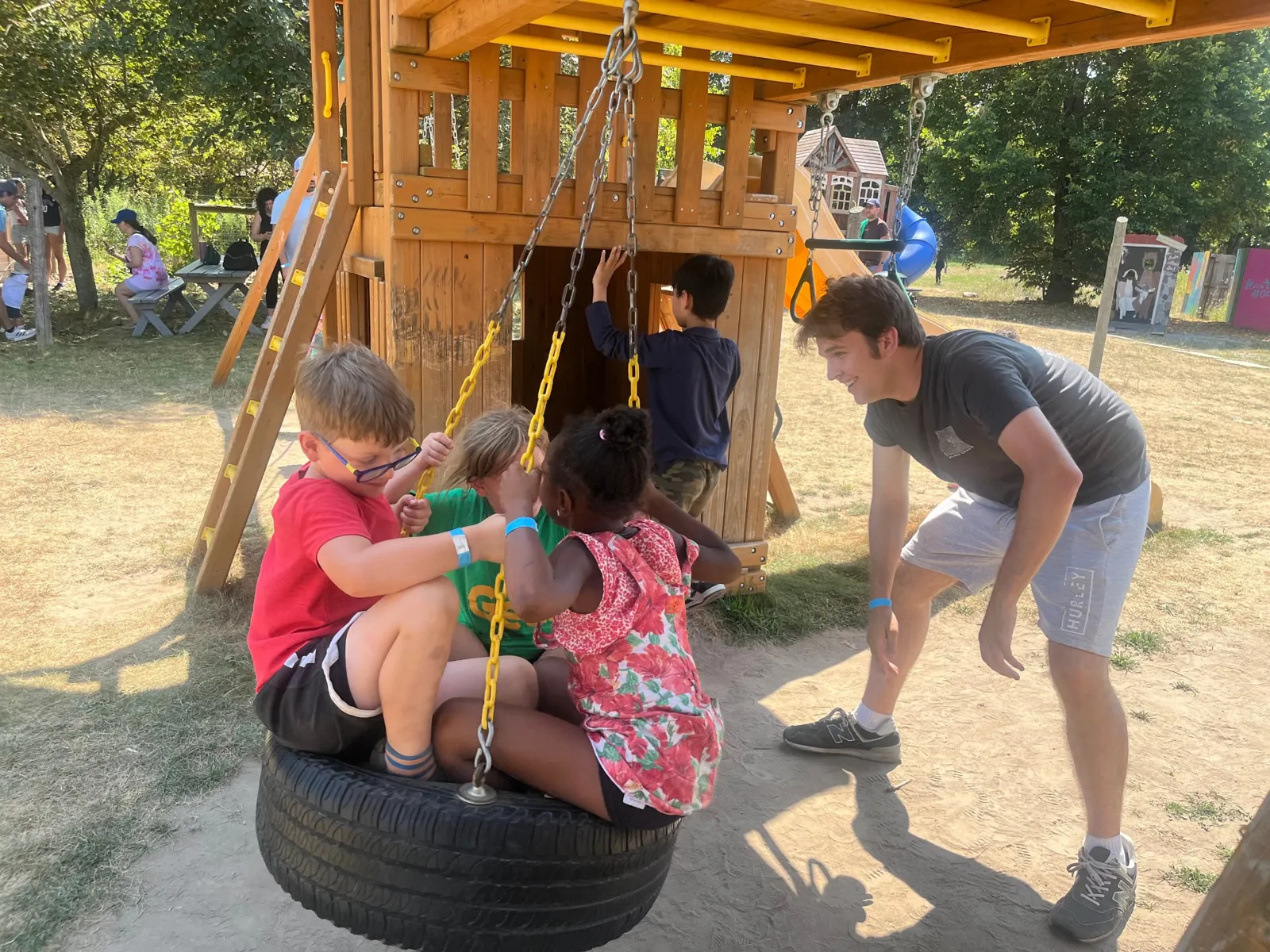
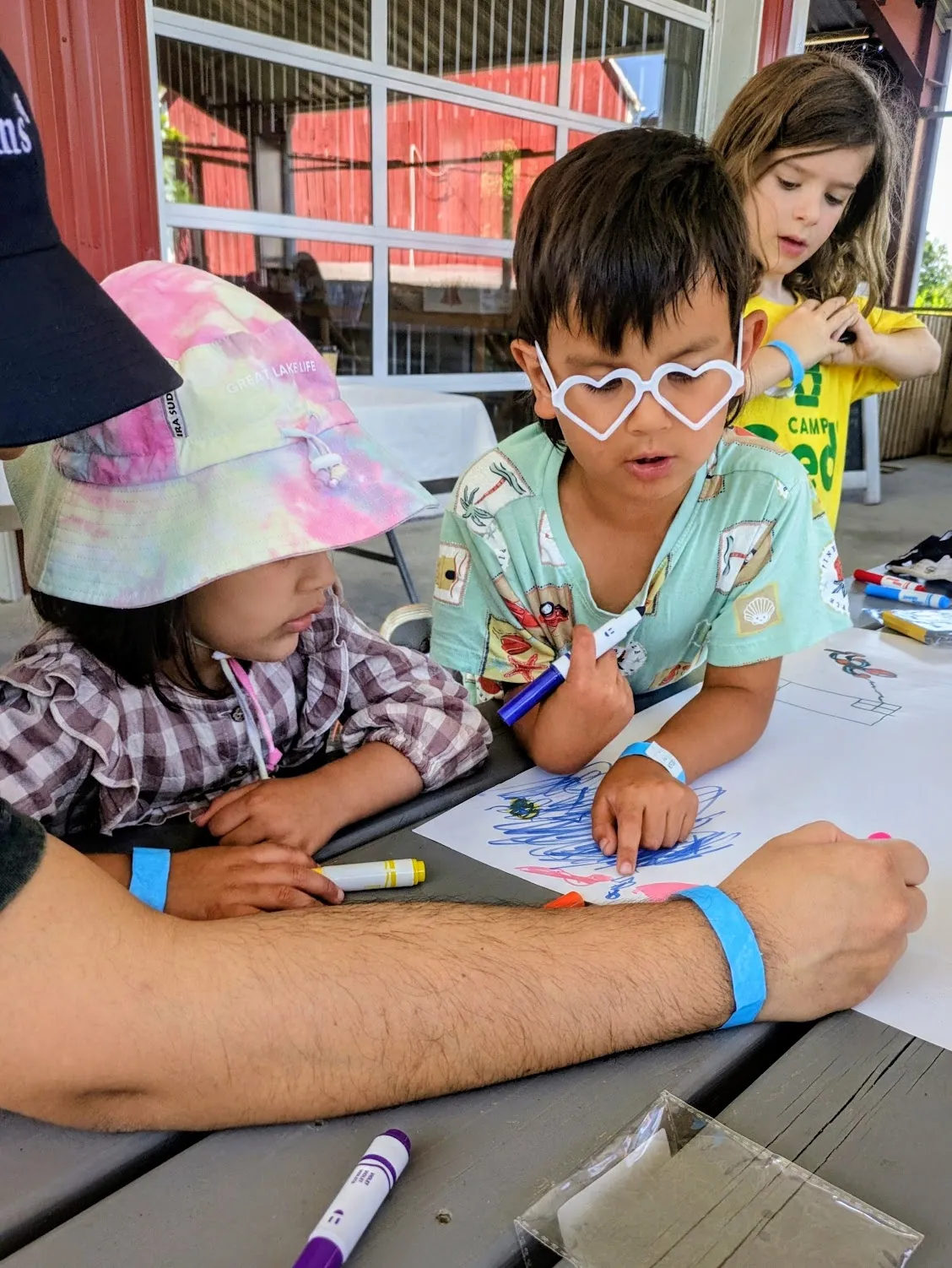
Our assistant teachers help the hive thrive by supporting campers throughout the day. They notice what is needed, jump in where they can and help create opportunities for curiosity, connection and fun.
Our head teachers are responsible for helping keep the hive emotionally and physically safe. They guide the team, support campers through challenges and help create an environment where everyone can feel a sense of belonging.
The Camp Director is the keeper of the hive, holding the big picture while supporting the people within it. They help guide the team, nurture the culture and make sure the whole hive is buzzing in the same direction.
Email Ashley, our Camp Director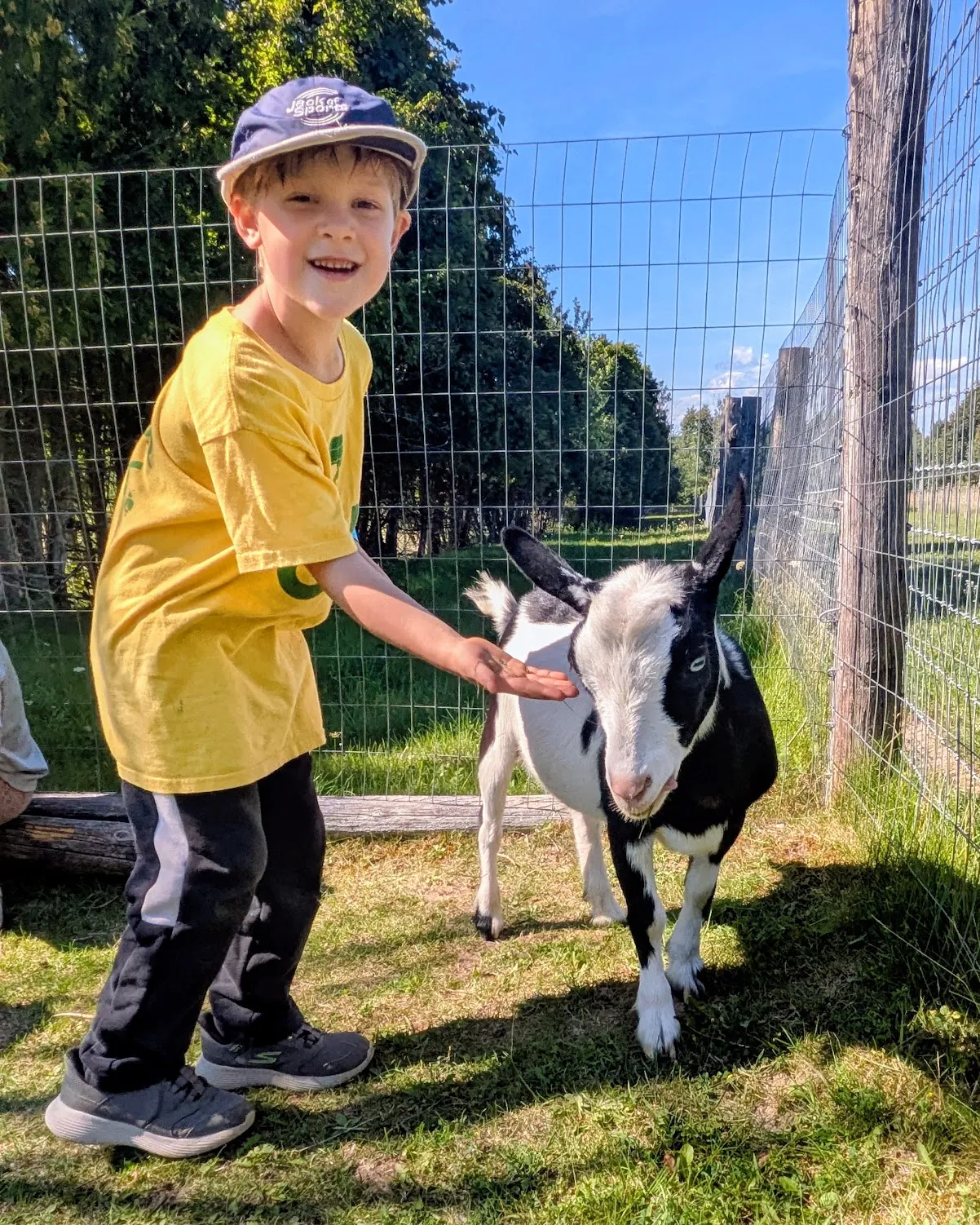
Whether you’re a family, a high school student or an educator, there’s a place for you in the Hive.
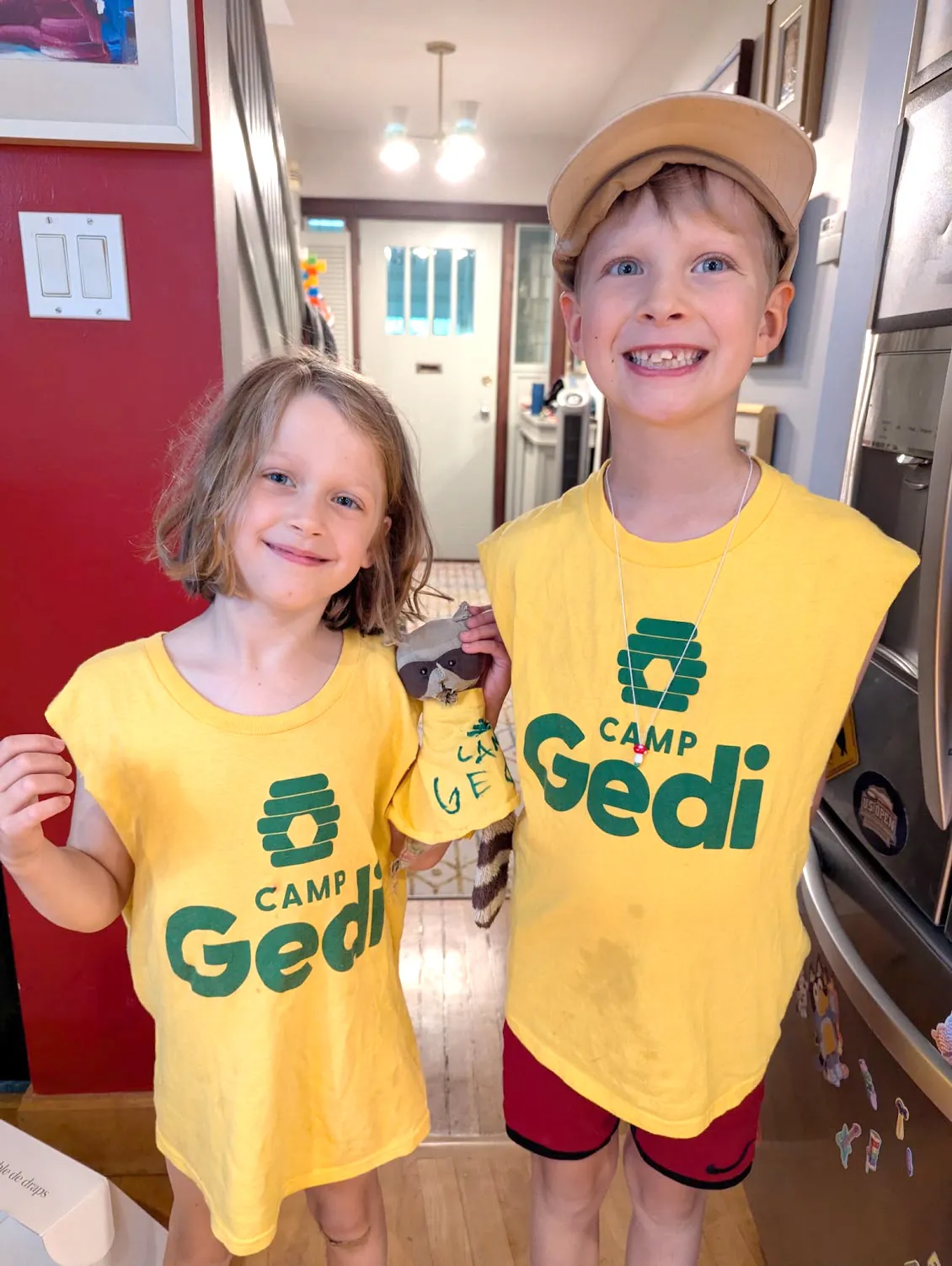
Children entering SK through Grade 8 join the Hive as Honey Bees, growing, exploring and learning together. In their final summer, they become Scout Bees, taking on new responsibilities and helping younger campers find their place in the Hive.
Register now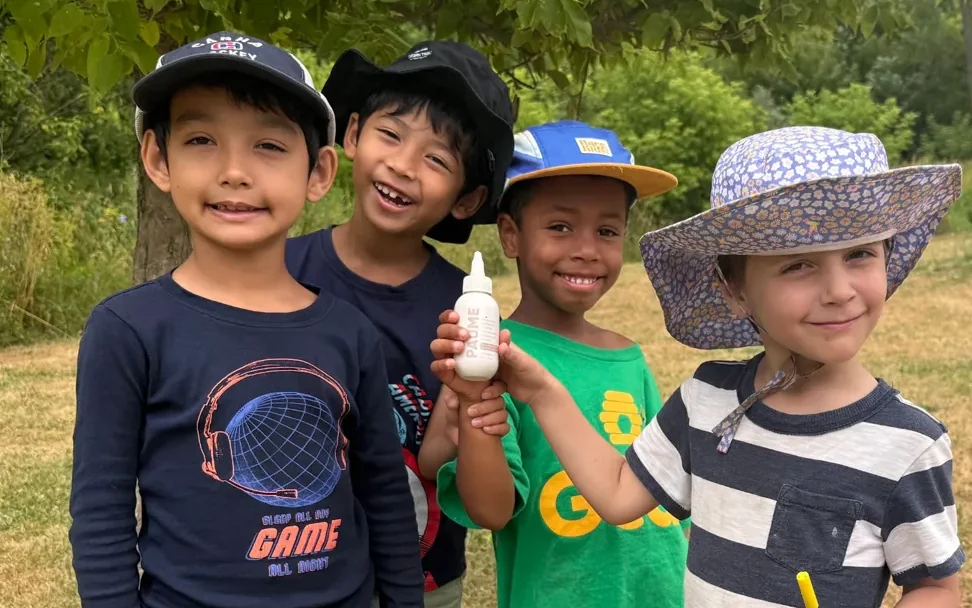
For high school students who want to challenge themselves, make meaningful connections and discover the difference they can make in someone else’s life.
Volunteer with us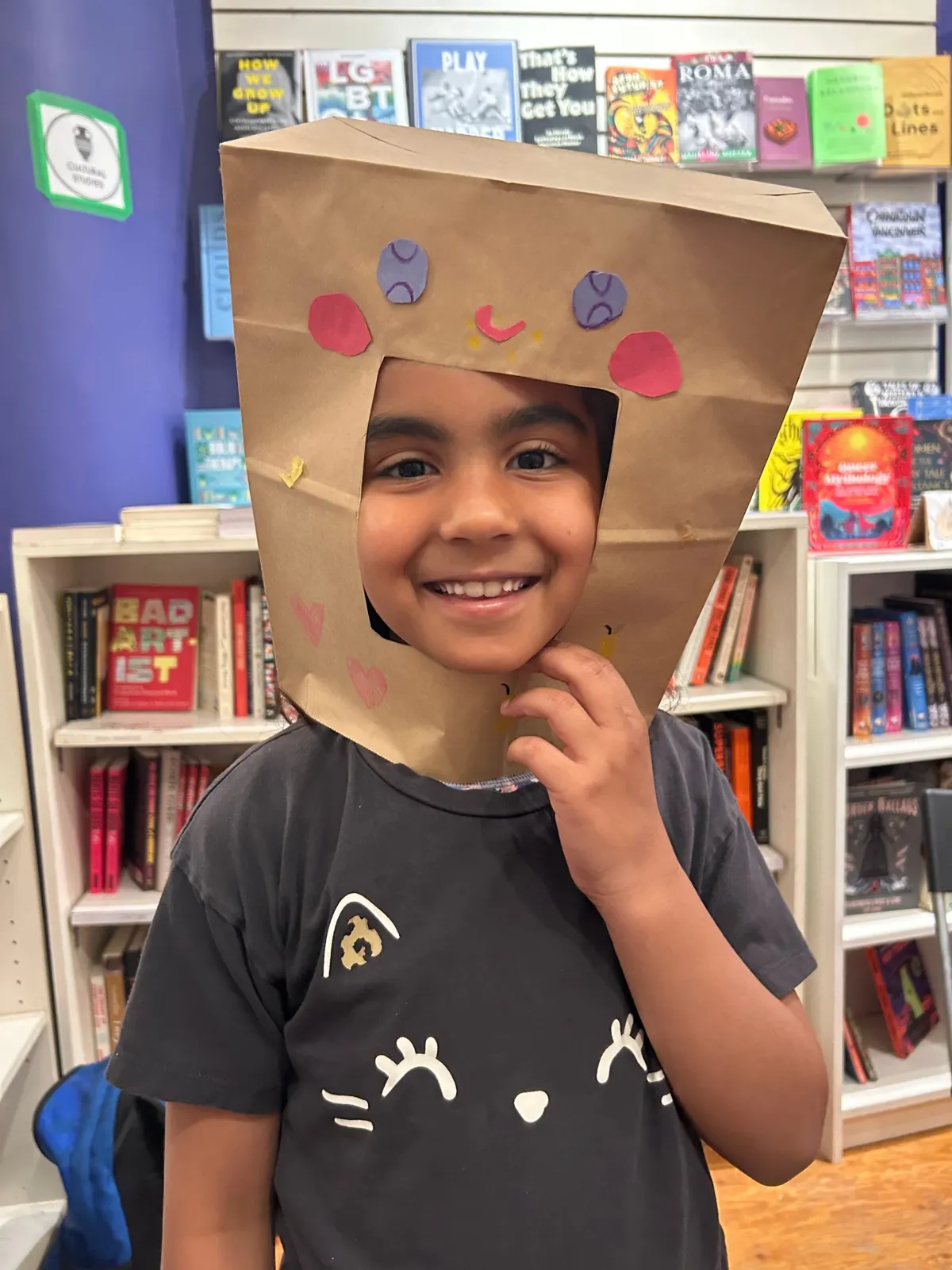
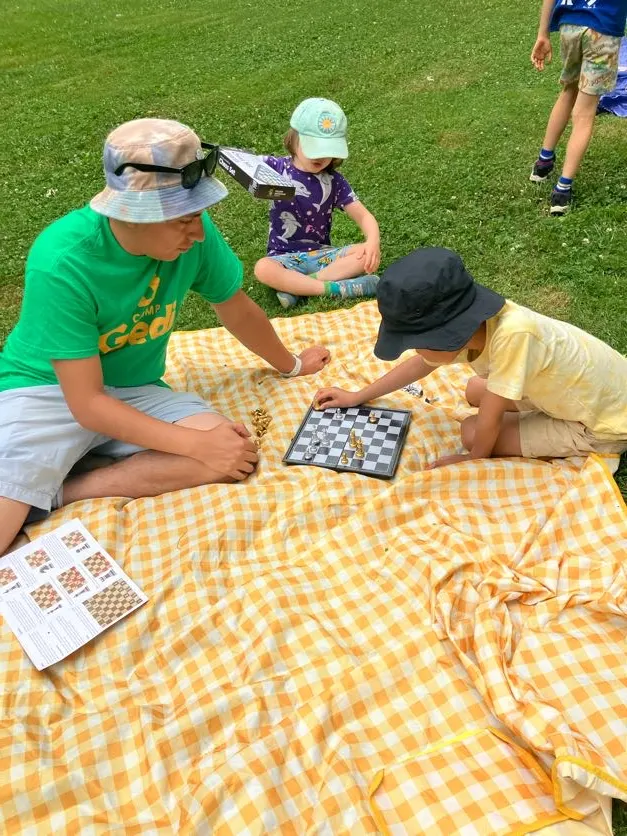
For educators who love learning alongside children. Assistant teachers (18+) join the Hive as Forager Bees, and head teachers (21+) as Guardian Bees.
Apply to work with usCamp Gedi runs two three-week sessions that are completely outdoors in Toronto’s west end. The primary goal is for a small community of children to learn, in real time, how to know themselves, navigate relationships, solve problems, make decisions, and be part of something bigger than themselves.
You’ll help with games, adventures, creative projects, nature exploration and all the wonderfully chaotic things that make summer camp feel like summer camp.
But you’ll also sit beside a nine-year-old who is frustrated because a friend won’t play with them. You’ll help a group work through a disagreement without solving it for them. You’ll notice when a child who usually hangs back is ready to step forward. You’ll ask a question instead of giving an answer. And sometimes, you’ll just sit on the grass and wait with a child until they find the words for what they’re feeling.
Our volunteers are part of the village around each child, with a real role in it. We’re looking for people who are curious about children, comfortable not having all the answers, willing to reflect on their own practice, and excited to learn alongside a community.
You’ll give a lot. You’ll most likely learn a lot, too. And you might leave with a different idea of what summer camp can be.
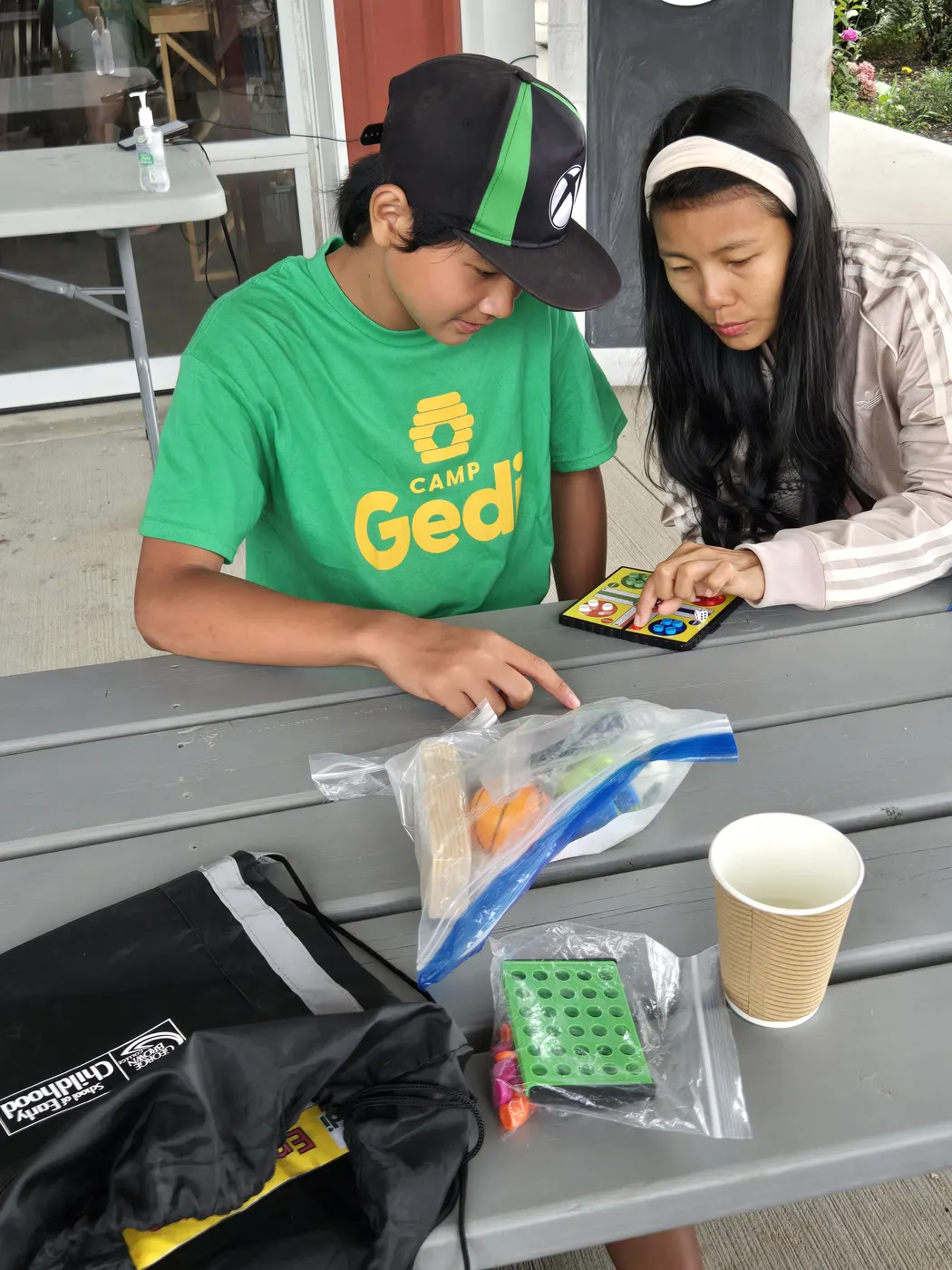
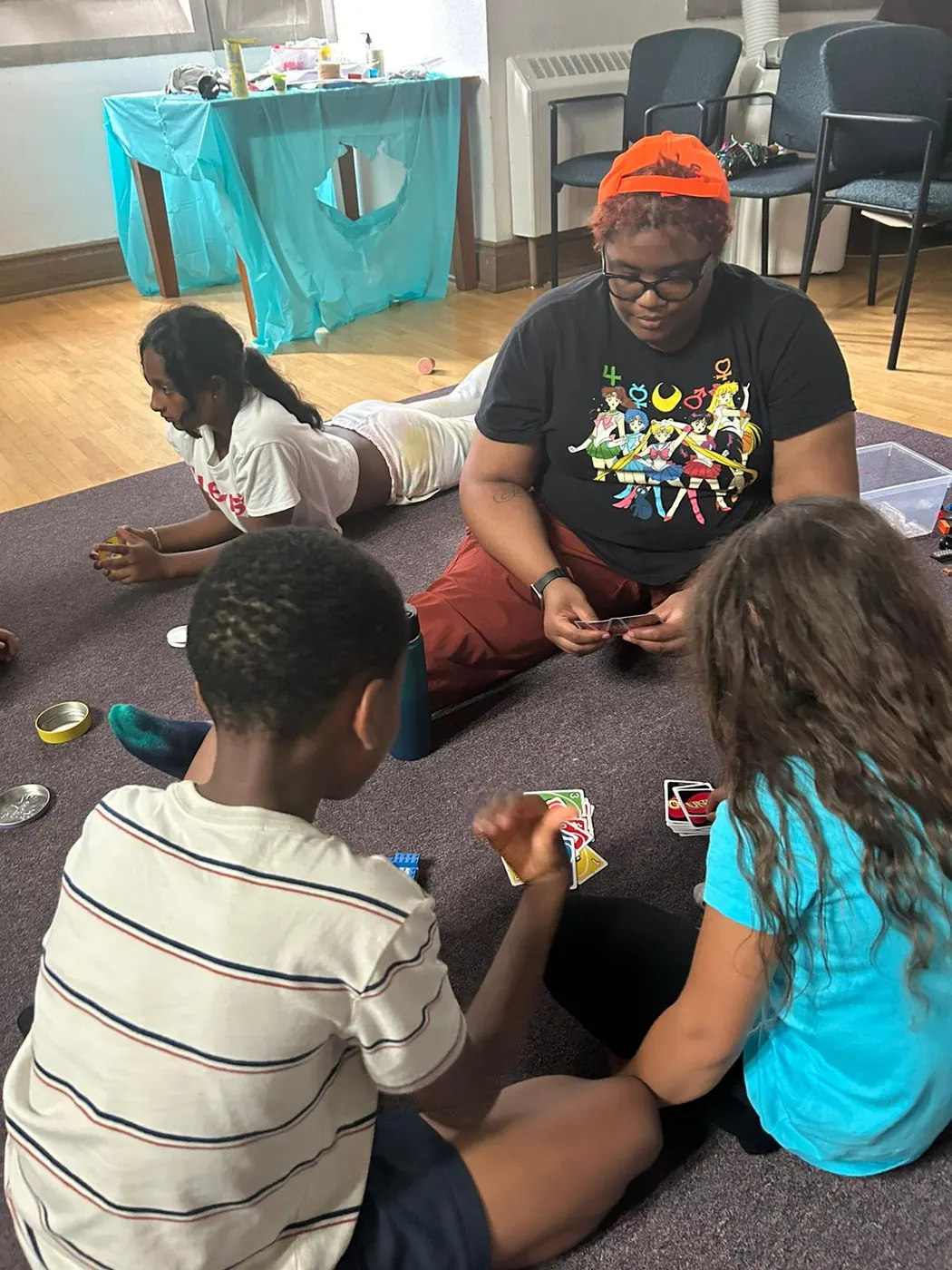
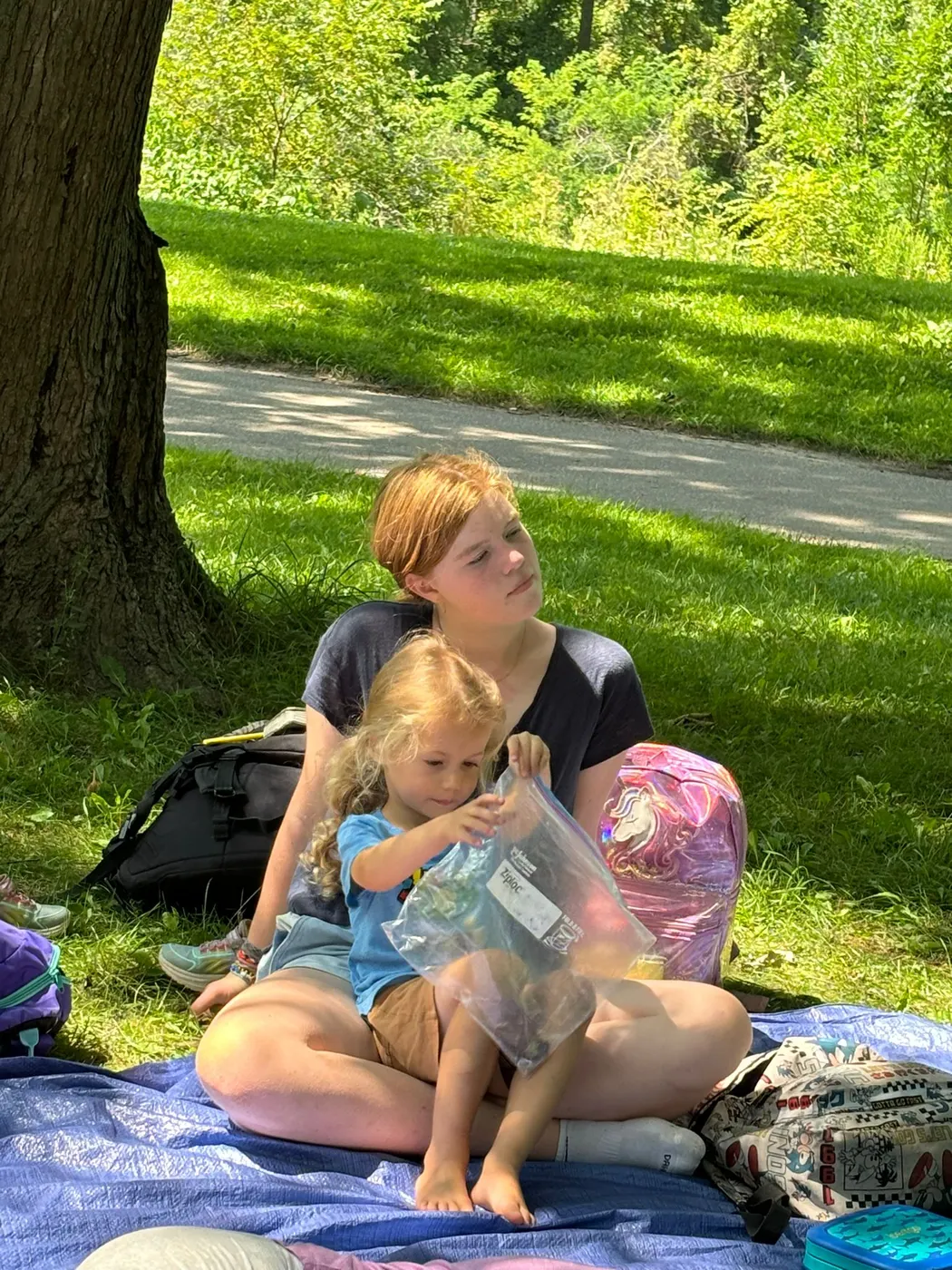
At Camp Gedi, social-emotional learning isn't a lesson on the schedule. It's the foundation of everything we do.
Across two three-week summer sessions in Toronto's west end, children of different ages come together to explore nature, create, play, solve problems, and build meaningful relationships. Each session also includes a Family Festival Weekend on a farm in Port Hope, bringing our wider village together.
Our days begin and end with Gedi Gatherings, where every voice matters. In between, campers share meals across age groups, choose projects that spark their curiosity, practise coaching one another, navigate disagreements, and discover what they're capable of, individually and together.
Every experience is an opportunity to develop empathy, self-awareness, communication, confidence, and a deeper sense of belonging. And those opportunities extend to our staff and volunteers, because we believe adults should be learning and growing right alongside children.
We don't believe children need to be taught how to become whole people. We believe they already are. Our job is to build the relationships and create the conditions that allow them to flourish.
Our volunteers receive extensive coaching and social-emotional learning training before camp begins. It is intensive, and because of that we accept a limited number of full-session volunteers each summer.
All staff and volunteers attend every training, virtual and in person, with no exceptions. Training is such an important part of how we prepare that, if you’re unable to attend, we unfortunately won’t be able to welcome you at camp that summer.
Can’t commit to a full session? There are many ways to help at our Family Festival Weekends and at events throughout the year.
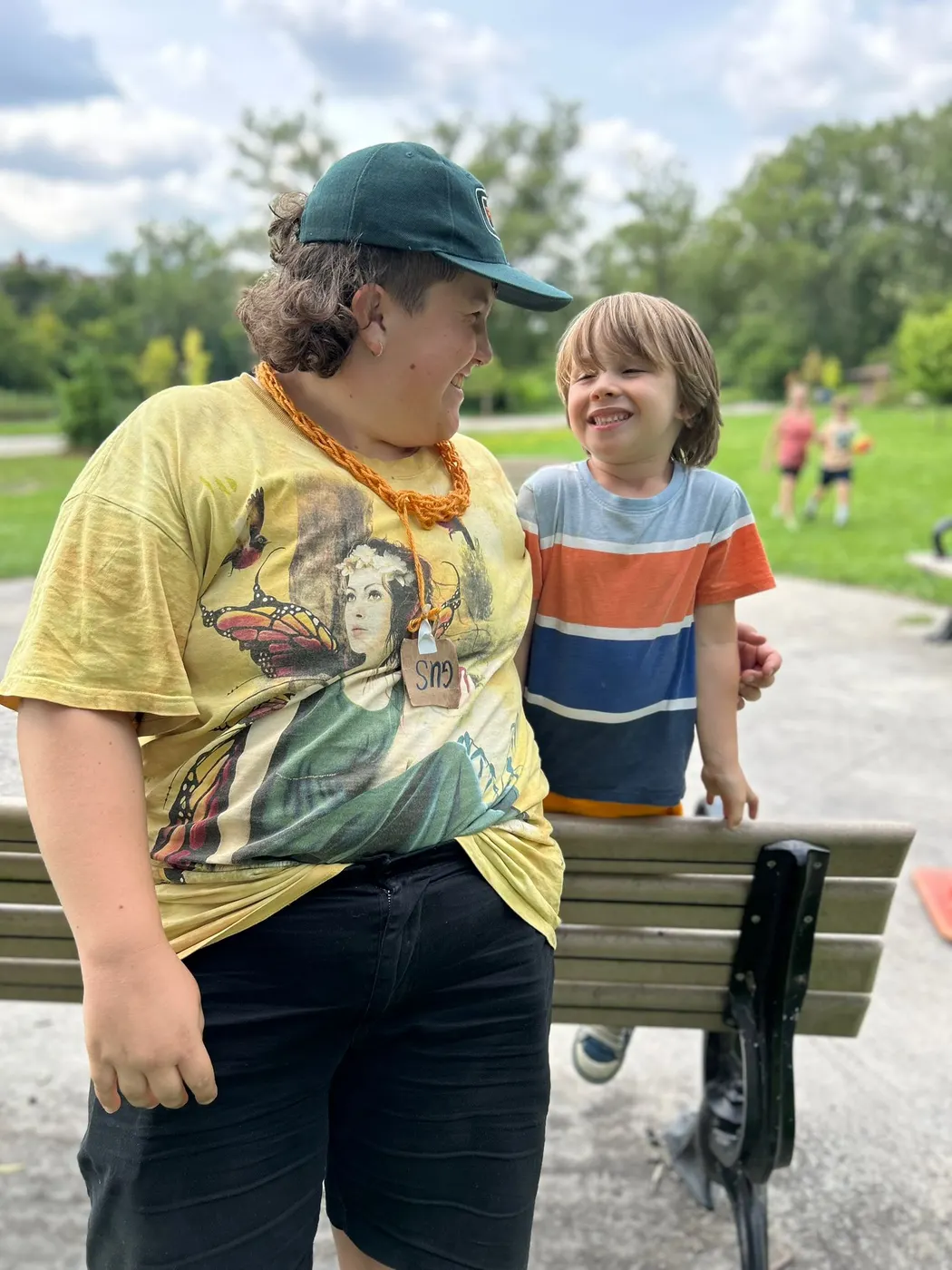
This comes from an exit interview with one of our Summer 2026 volunteers. He told us the most helpful thing we could do was be honest about what camp is really like before people arrive, so here’s what we’d want you to know.
Many of our campers are still figuring out how to handle big feelings, and camp can be a big, loud, busy and sometimes unpredictable place. Some days a camper will go along with everything, and some days they’ll make things really hard. Both are part of the work.
This is the thing every volunteer has to learn, and the sooner you learn it, the better your summer will be. A camper who is shouting at you, refusing you or ignoring you is frustrated, and they’d react the same way to anyone standing where you are. It can feel personal, but it isn’t. We’ll help you hold onto that, as long as you’re willing to try.
We’re an outdoor camp, which is a gift and also means kids can go anywhere. They run, they hide behind the bathrooms to jump out and scare you, and they wander toward the trees. Counting heads isn’t something you do now and then. You’ll be doing it all day, every day.
You’ll walk and run more than you expect, and you’ll probably get climbed on. Kids who like you will want hugs, so you’ll need to know how to give and turn down physical contact in a way that respects everyone’s consent, including your own.
Almost everyone says this. The first few days can feel strange, loud and hard to read, and then somewhere around day four it clicks. Knowing that ahead of time makes those first days a lot easier.
Most of our volunteers are in high school, and some of our campers are twelve. That gap is smaller than it looks, and it’s the trickiest part of the job. We plan for it now, starting with how we introduce you on the first day, and we’ll go through it together in training.
Your day runs from about 8:45 to 4:15, Monday to Friday, with two protected breaks. Here’s what weeks 1 and 2 look like. Week 3 is different because we head out into the city.
You don’t need camp experience, a certification or to be an extrovert.
It especially helps if you are curious about people and willing to reflect on your own experiences. Some of our best volunteers have recognised something of themselves in the kids they work with. You don’t need to have everything figured out, and honestly, we’d rather you didn’t.
We're especially eager to welcome more male volunteers to our team. In summer 2026, we had just one, and he naturally became the go-to person for rough-and-tumble play, physical challenges, and campers seeking connection with a male role model. That is too much to put on one person, and our campers benefit from a volunteer team that reflects a wider range of people, experiences and ways of being.
We are a registered charity. Our volunteers are unpaid. We want to be upfront about that.
Questions before you apply? Get in touch!
Camp Gedi runs two three-week sessions outdoors in Toronto’s west end. We’re looking for educators who want to help a small community of children learn how to know themselves, navigate relationships, solve problems and be part of something bigger than themselves.
You’ll lead games, adventures, creative projects and nature exploration, and you’ll be part of all the wonderfully chaotic moments that make summer camp feel like summer camp.
You’ll also be the steady adult in the middle of a hard moment. You’ll help a camper find the words for a big feeling, coach a group through a disagreement without solving it for them, and notice when a quiet child is ready to step forward. Most days, you’ll ask more questions than you answer.
We’re looking for educators who are curious about children, comfortable not having all the answers, willing to reflect on their own practice, and excited to keep learning alongside a team that does the same.
You’ll give a lot. You’ll grow a lot, too. And you might leave with a different idea of what teaching can be.
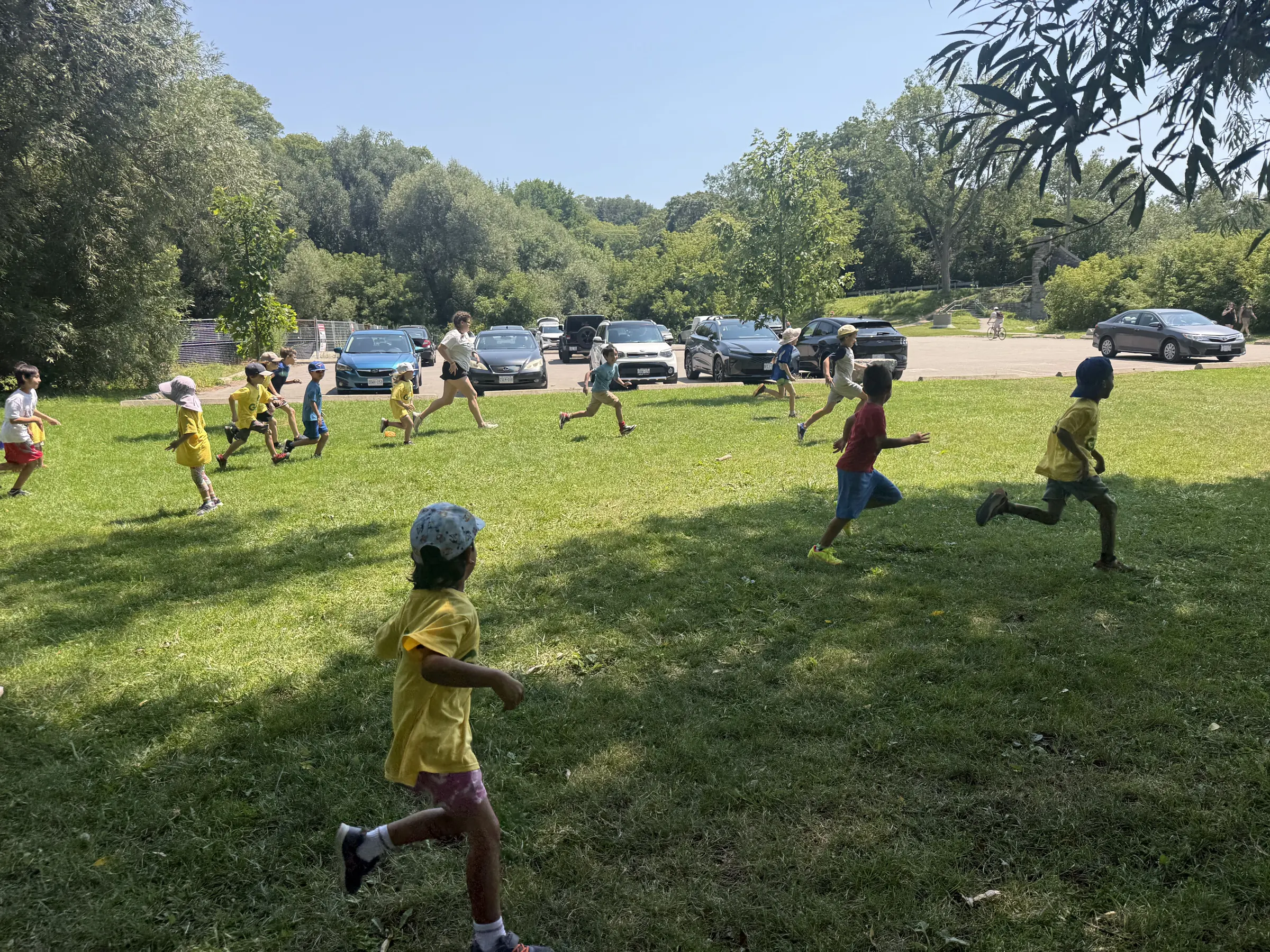
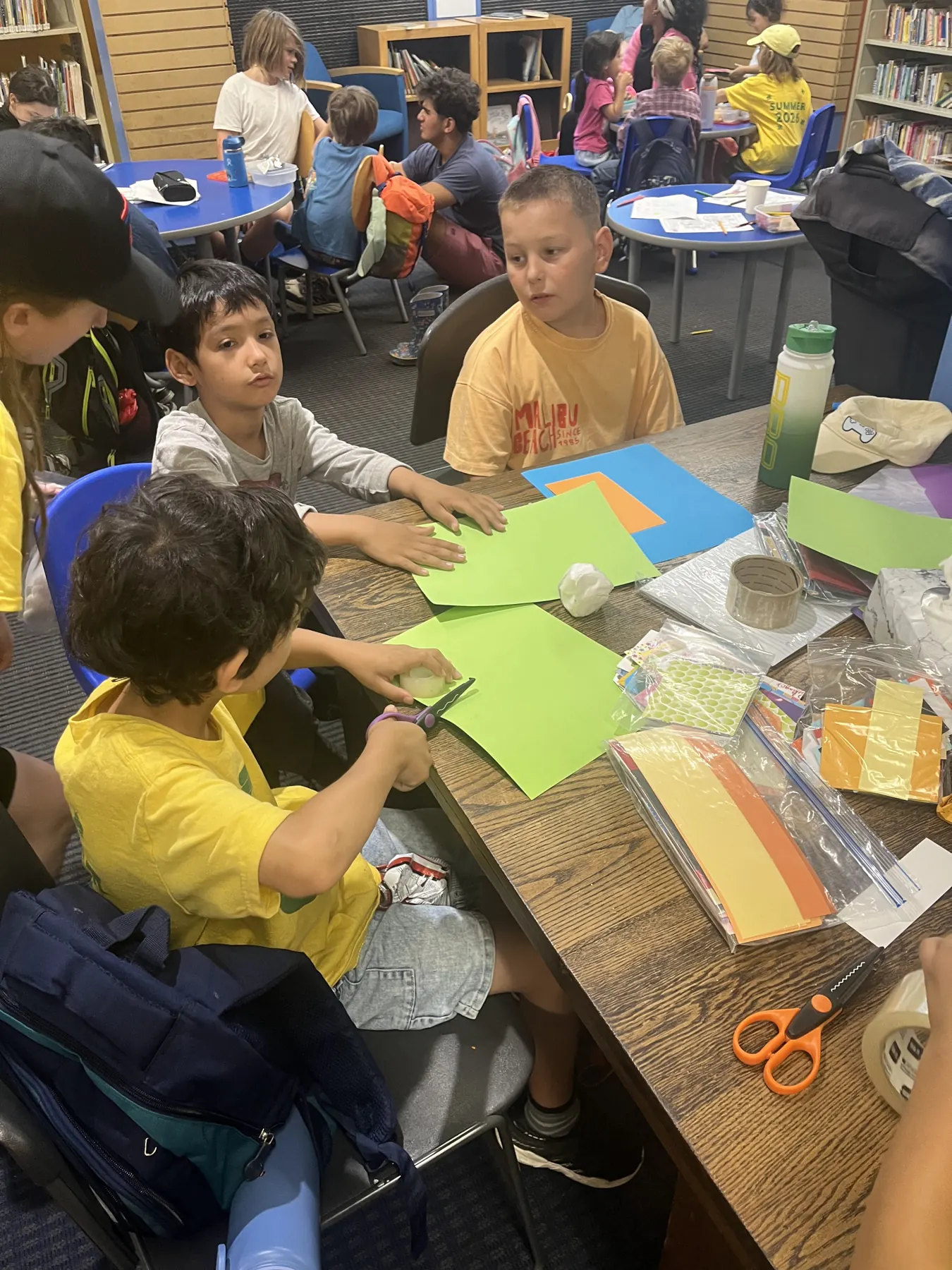
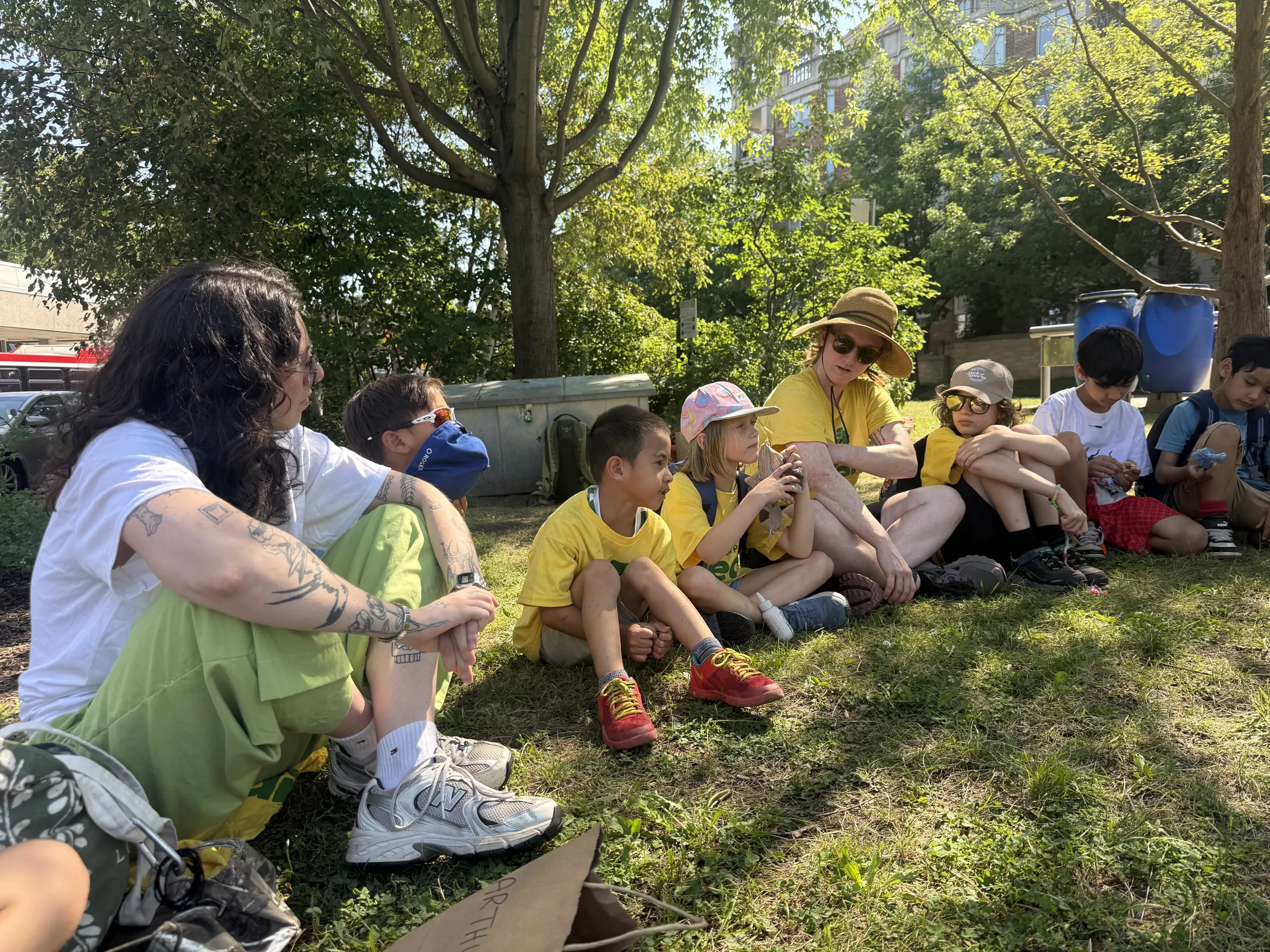
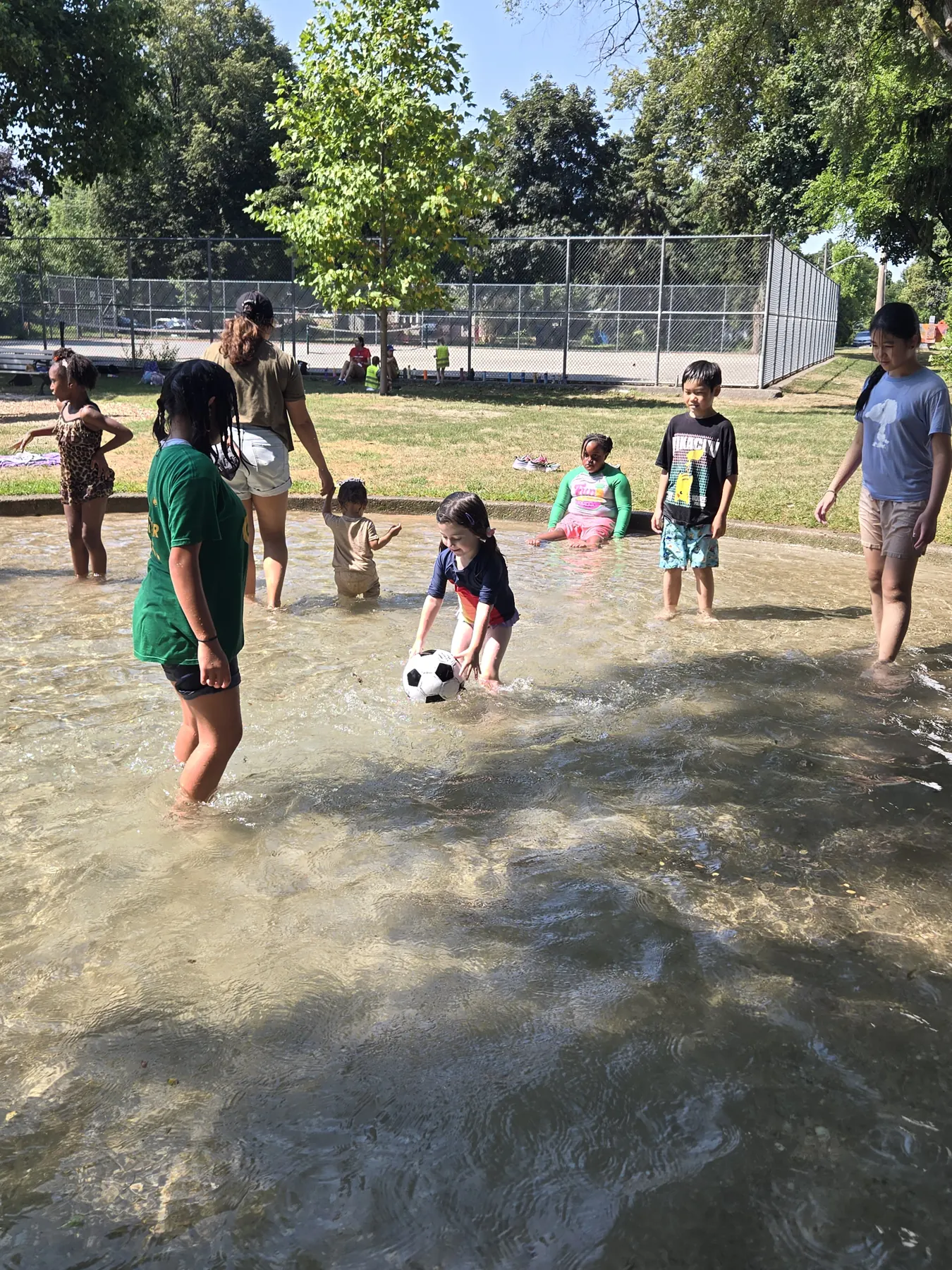
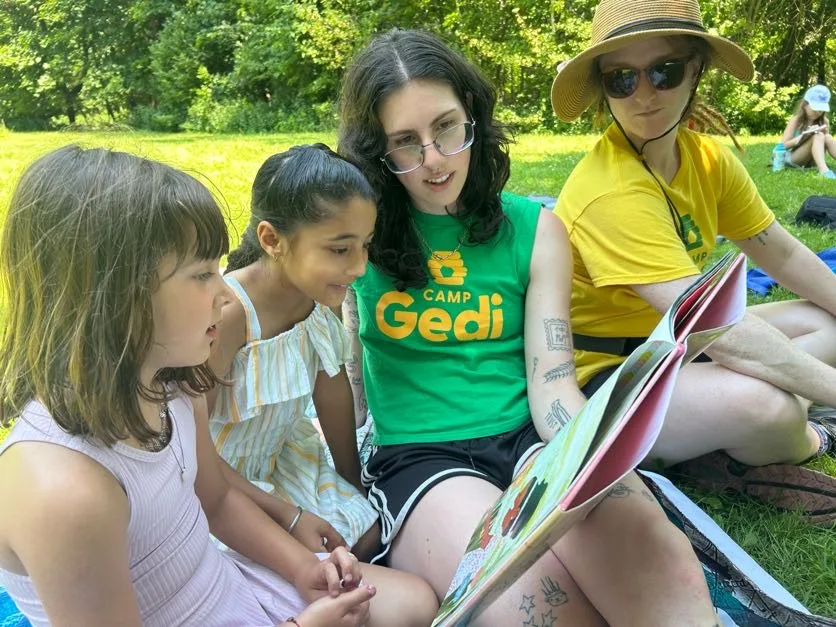
At Camp Gedi, social-emotional learning isn't a lesson on the schedule. It's the foundation of everything we do.
Across two three-week summer sessions in Toronto's west end, children of different ages come together to explore nature, create, play, solve problems, and build meaningful relationships. Each session also includes a Family Festival Weekend on a farm in Port Hope, bringing our wider village together.
Our days begin and end with Gedi Gatherings, where every voice matters. In between, campers share meals across age groups, choose projects that spark their curiosity, practise coaching one another, navigate disagreements, and discover what they're capable of, individually and together.
Every experience is an opportunity to develop empathy, self-awareness, communication, confidence, and a deeper sense of belonging. And those opportunities extend to our staff and volunteers, because we believe adults should be learning and growing right alongside children.
We don't believe children need to be taught how to become whole people. We believe they already are. Our job is to build the relationships and create the conditions that allow them to flourish.
Before camp, every educator completes our online coaching course and joins our in-person training on June 7, 2027. Training is where we build a shared language for coaching, social-emotional learning and keeping the hive safe, so it’s mandatory for everyone.
Once camp begins, you’re never doing it alone. You’ll work alongside our Camp Director and a team that reflects together, learns together and has each other’s backs.
Can’t commit to a full session? There are many ways to help at our Family Festival Weekends and at events throughout the year.
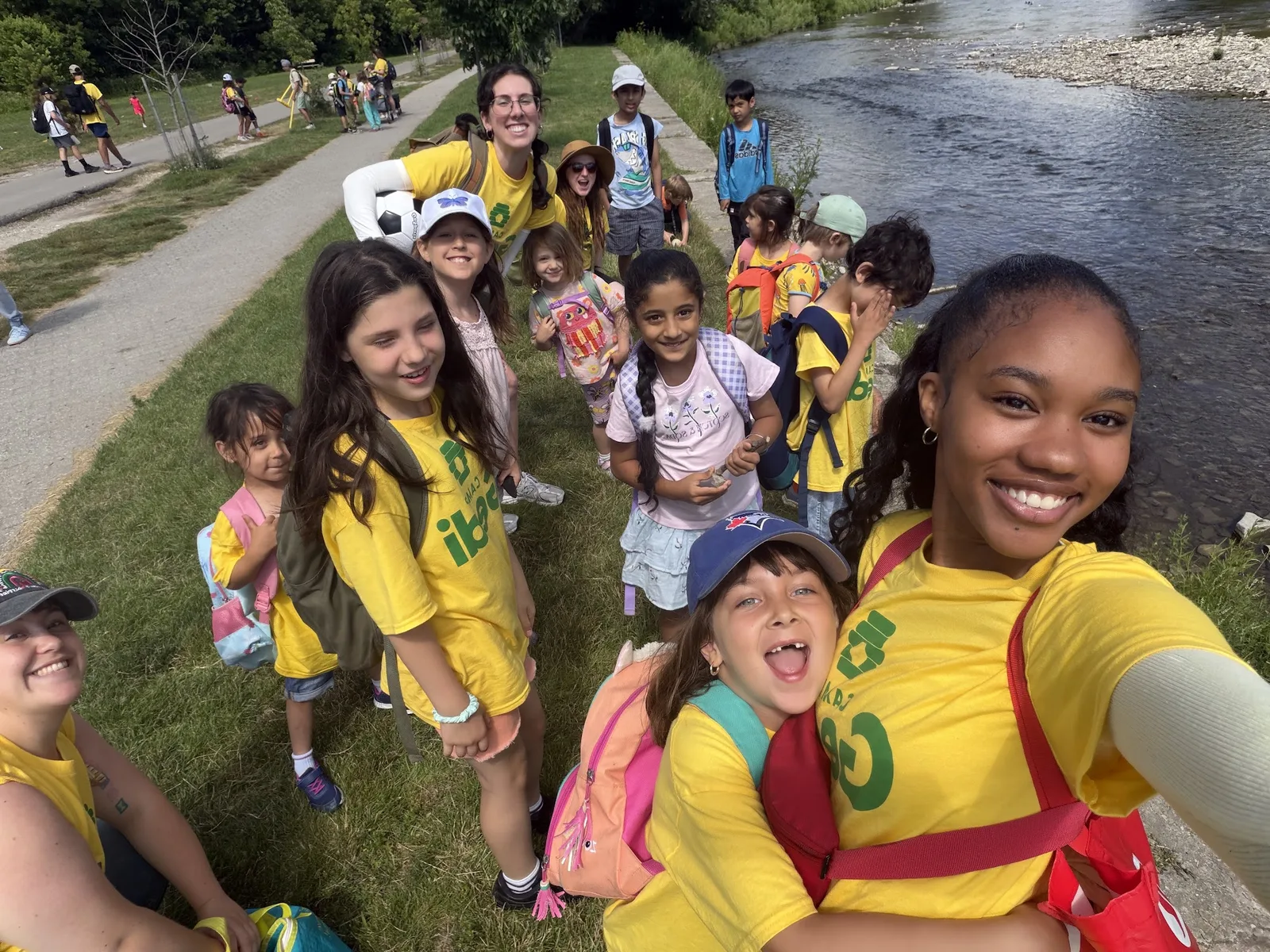
Session One runs July 5 to 23 and Session Two runs August 3 to 20, 2027. Each session includes a Family Festival Weekend at Haute Goat Farm in Port Hope.
Our assistant teachers help the hive thrive by supporting campers throughout the day. They notice what is needed, jump in where they can and help create opportunities for curiosity, connection and fun.
You’ll need: to be 18 or older by July 5, 2027, plus Standard First Aid, CPR and a Vulnerable Sector Check before May 2027.
Our head teachers are responsible for helping keep the hive emotionally and physically safe. They guide the team, support campers through challenges and help create an environment where everyone can feel a sense of belonging.
You’ll need: to be 21 or older by July 5, 2027, plus Standard First Aid, CPR and a Vulnerable Sector Check before May 2027. Ontario Certified Teacher (OCT) status is an asset, not a requirement.
You don’t need to have worked at a camp before. You do need to love being with kids.
It especially helps if you’ve worked in outdoor, experiential or child-led settings, or have supported neurodivergent kids (ADHD, autism, highly sensitive kids) in feeling like they belong.
Questions about the roles, hours or anything else? Get in touch!
Questions before you apply? Get in touch!
At Camp Gedi, volunteers aren't just an extra set of hands. You're an essential part of our village.
We believe meaningful learning happens through relationships across ages and experiences. When young people are trusted with real responsibility, they develop confidence and leadership while showing younger campers what's possible. Everyone has something to teach and something to learn.
You're not just here to help make camp happen. You're here to contribute, connect, and grow alongside us.
We are spelling this out because a volunteer told us that the gap between expectation and reality was the hardest part of Summer 2026.
De-escalation under pressure. The ability to hold a boundary without a power struggle. Coaching questions. Reading a room. Knowing your own limits and defending them. These are the skills that make someone good at management, teaching, medicine, parenting, and most of the rest of adult life. Volunteers have told us this is the part that lasted.
This is a formal part of the role, not a perk.
In Summer 2026 a volunteer went four weeks before realising he was allowed to create space for himself. That was on us, not him, so here’s how breaks work now:
| Situation | Who to go to |
|---|---|
| Right now, urgent, someone might get hurt | Nearest staff member, out loud. Then the SEL and Coaching Lead, who makes the final call in urgent situations. |
| A camper is escalating and you are out of ideas | Wave over any staff member. Do not wait until it is bad. |
| Something about a camper that a caregiver should know | Your mentor, then the daily report |
| You are exhausted, upset, or something a camper said stayed with you | Your mentor, or the Camp Director, any time |
| Something about the role, the schedule, or how you are being treated | Camp Director, or Quinn Simpson if you would rather go outside the camp team |
| Emergency | 911, then the Camp Director |
You will never be told you should have handled something yourself.
All volunteers are held to the Staff Code of Conduct in the staff manual, and to the community agreement the campers and staff write together on day one. In brief: radical empathy, consent always, everyone participates in their own way, care for the space and each other, speak up and listen in.
Beyond that: no photos of campers on personal devices or accounts, no contact with campers or families outside camp, no discussion of one camper’s situation with another family, phones away during programming.
Ask yourself honestly:
If the last answer is “smoothly,” this is not the right role, and we would much rather you know that in April than in July.
Assistant teachers, 18+
Our assistant teachers help the hive thrive by supporting campers throughout the day. They notice what is needed, jump in where they can and help create opportunities for curiosity, connection and fun.
At Camp Gedi, social-emotional learning isn’t a lesson on the schedule. It’s the foundation of everything we do. Forager Bees are the adults who make that real minute to minute: in the circle, at the project table, on the walk to the river and in the hard moments in between.
Most days, you’ll ask more questions than you answer.
You don’t need to have worked at a camp before. You do need to love being with kids.
Coaching language, social-emotional learning and keeping the hive safe. Training is where we build a shared way of working, so it’s mandatory for everyone.
| Situation | Who to go to |
|---|---|
| Right now, urgent, someone might get hurt | Nearest staff member, out loud. Then the Camp Director. |
| A camper is escalating and you are out of ideas | The Guardian Bee leading your group. Do not wait until it is bad. |
| Something about a camper that a caregiver should know | Your Guardian Bee, then the daily report |
| You are exhausted, upset, or something a camper said stayed with you | The Camp Director, any time |
| Something about the role, the schedule, or how you are being treated | Camp Director, or Quinn Simpson if you would rather go outside the camp team |
| Emergency | 911, then the Camp Director |
You’re never doing it alone.
All staff are held to the Staff Code of Conduct in the staff manual, and to the community agreement the campers and staff write together on day one. In brief: radical empathy, consent always, everyone participates in their own way, care for the space and each other, speak up and listen in.
Beyond that: no photos of campers on personal devices or accounts, no contact with campers or families outside camp, no personal social media connections with campers, no discussion of one camper’s situation with another family, and phones away during programming.
Ask yourself honestly:
If the last answer is “smoothly,” this is not the right role, and we would much rather you know that now than in July.
Questions before you apply? Get in touch!
Head teachers, 21+
Our head teachers are responsible for helping keep the hive emotionally and physically safe. They guide the team, support campers through challenges and help create an environment where everyone can feel a sense of belonging.
Guardian Bees hold the big picture for their group. You’ll lead the games, adventures and creative projects, and you’ll be the steady adult in the middle of a hard moment: helping a camper find the words for a big feeling, coaching a group through a disagreement without solving it for them, and noticing when a quiet child is ready to step forward.
We don’t believe children need to be taught how to become whole people. We believe they already are.
You don’t need to have worked at a camp before. You do need to love being with kids, and be ready to lead.
Coaching language, social-emotional learning and keeping the hive safe. Training is where we build a shared way of working, so it’s mandatory for everyone.
| Situation | Who to go to |
|---|---|
| Right now, urgent, someone might get hurt | Act, call it out loud, then the Camp Director |
| A camper or a team member needs more than you can give right now | The Camp Director |
| You are exhausted, upset, or something a camper said stayed with you | The Camp Director, any time |
| Something about the role, the schedule, or how you are being treated | Camp Director, or Quinn Simpson if you would rather go outside the camp team |
| Emergency | 911, then the Camp Director |
You’ll give a lot. You’ll grow a lot, too.
All staff are held to the Staff Code of Conduct in the staff manual, and to the community agreement the campers and staff write together on day one. In brief: radical empathy, consent always, everyone participates in their own way, care for the space and each other, speak up and listen in.
Beyond that: no photos of campers on personal devices or accounts, no contact with campers or families outside camp, no personal social media connections with campers, no discussion of one camper’s situation with another family, and phones away during programming.
Ask yourself honestly:
If the answers are yes, we’d love to hear from you.
Questions before you apply? Get in touch!
Camp is three weeks. The community is year round. Between summers we gather around fires, rivers and long tables to keep learning together. Our next gathering is being planned now, and Camp Gedi families hear about it first.
A look back at what we’ve built together, one season at a time.
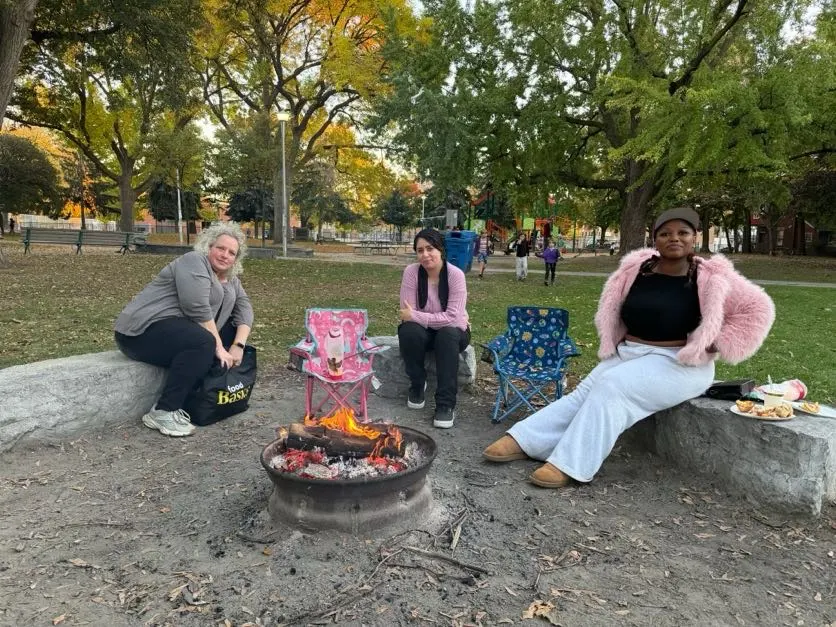
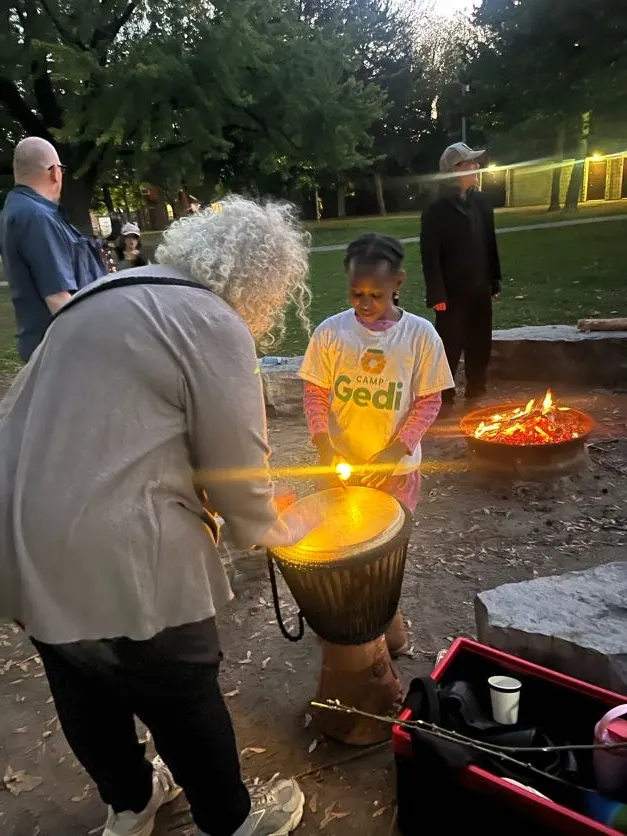
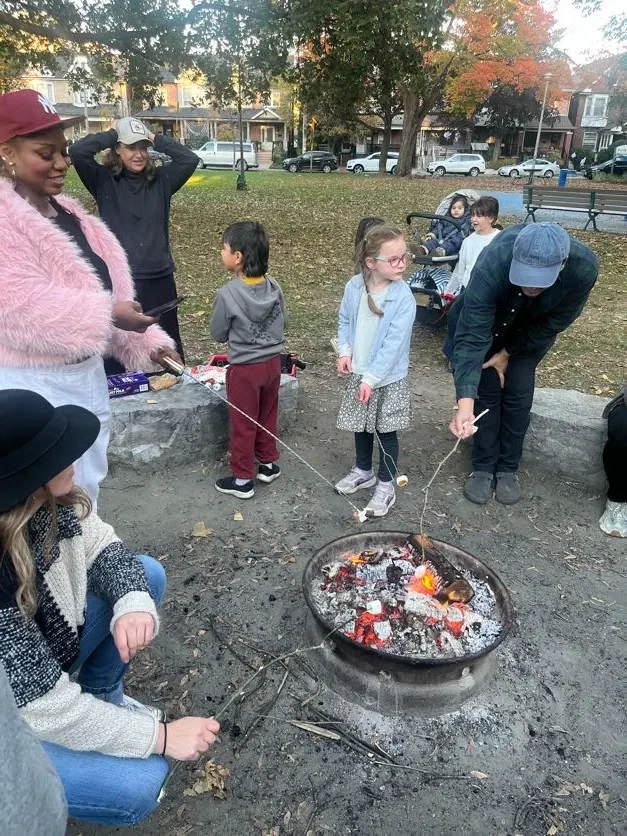
As the nights got cooler, families gathered for a potluck dinner around the fire. We made lanterns to light up the park after dark, roasted s’mores and settled in for stories, songs and music, with a community building activity to welcome new faces.
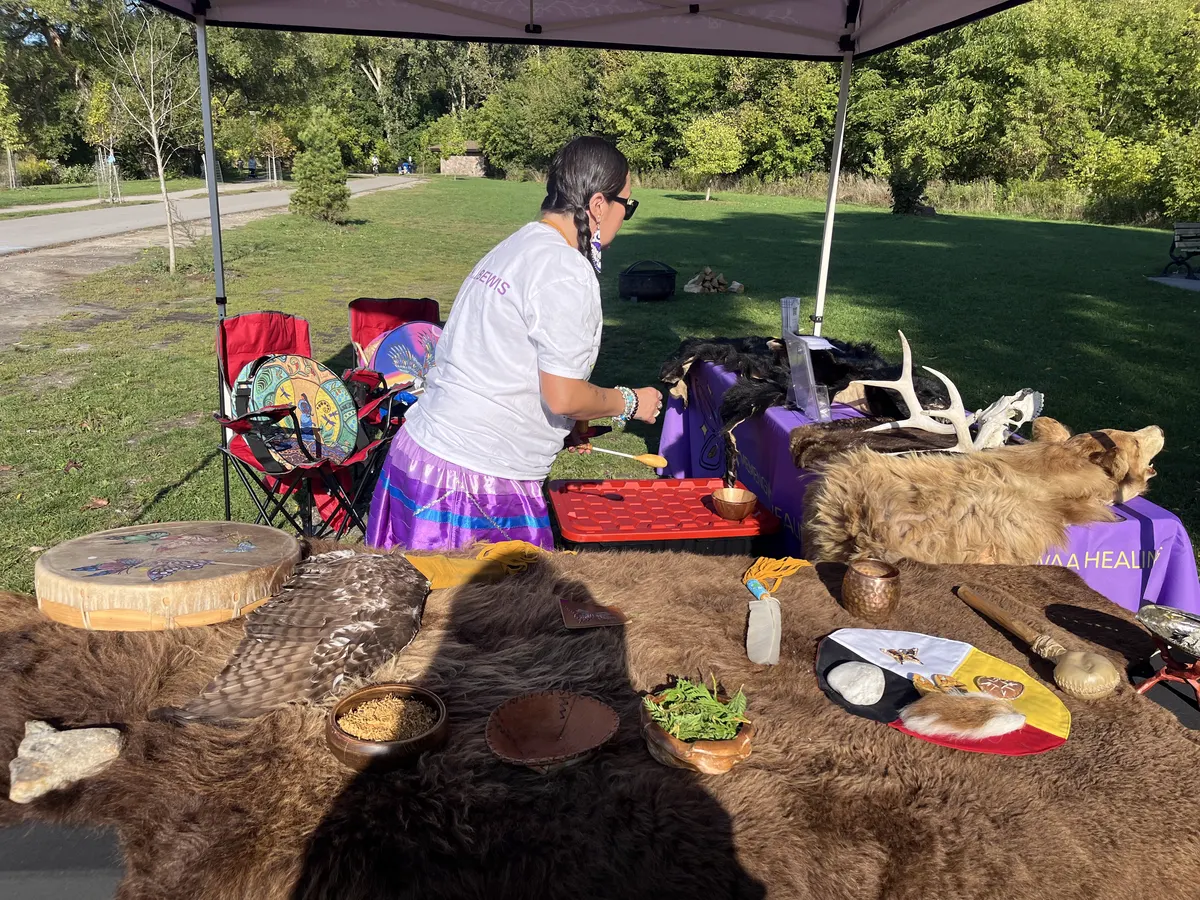
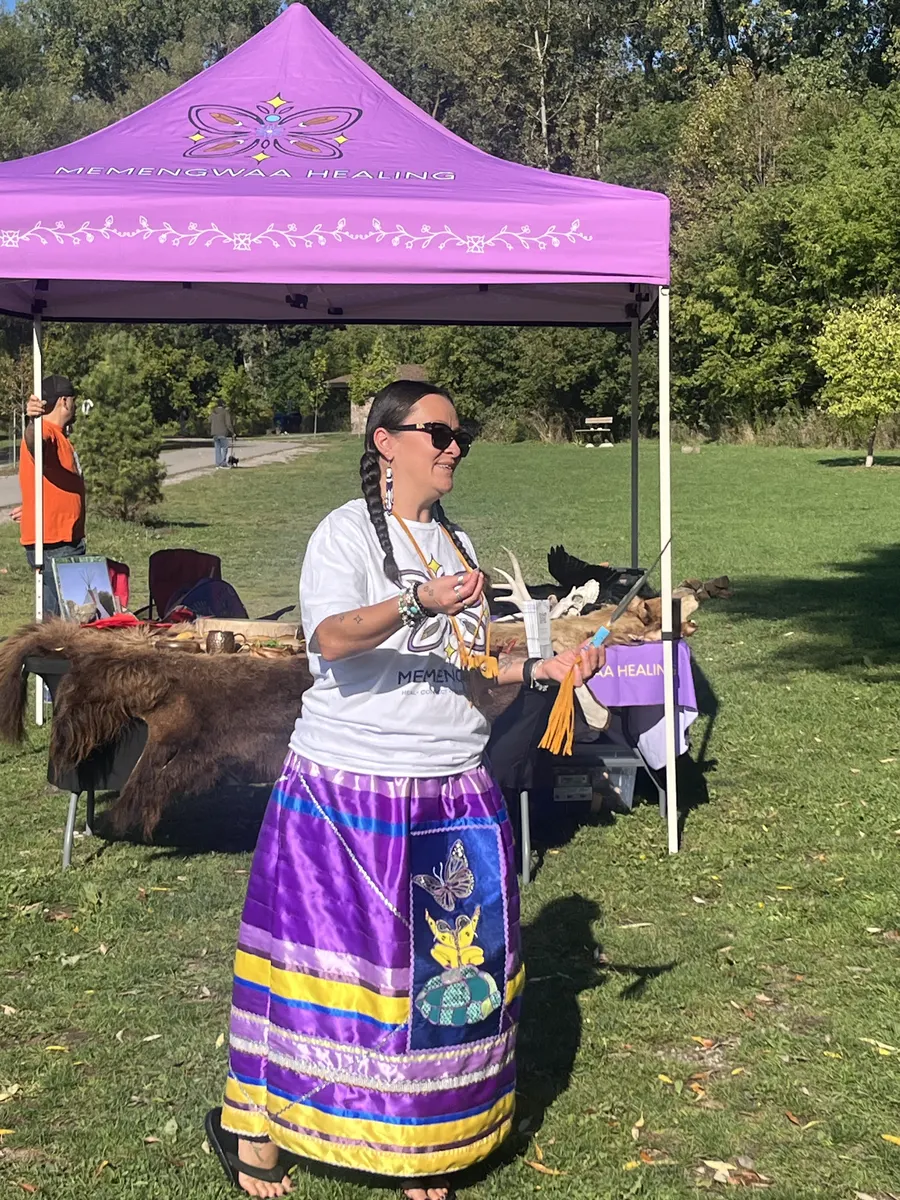
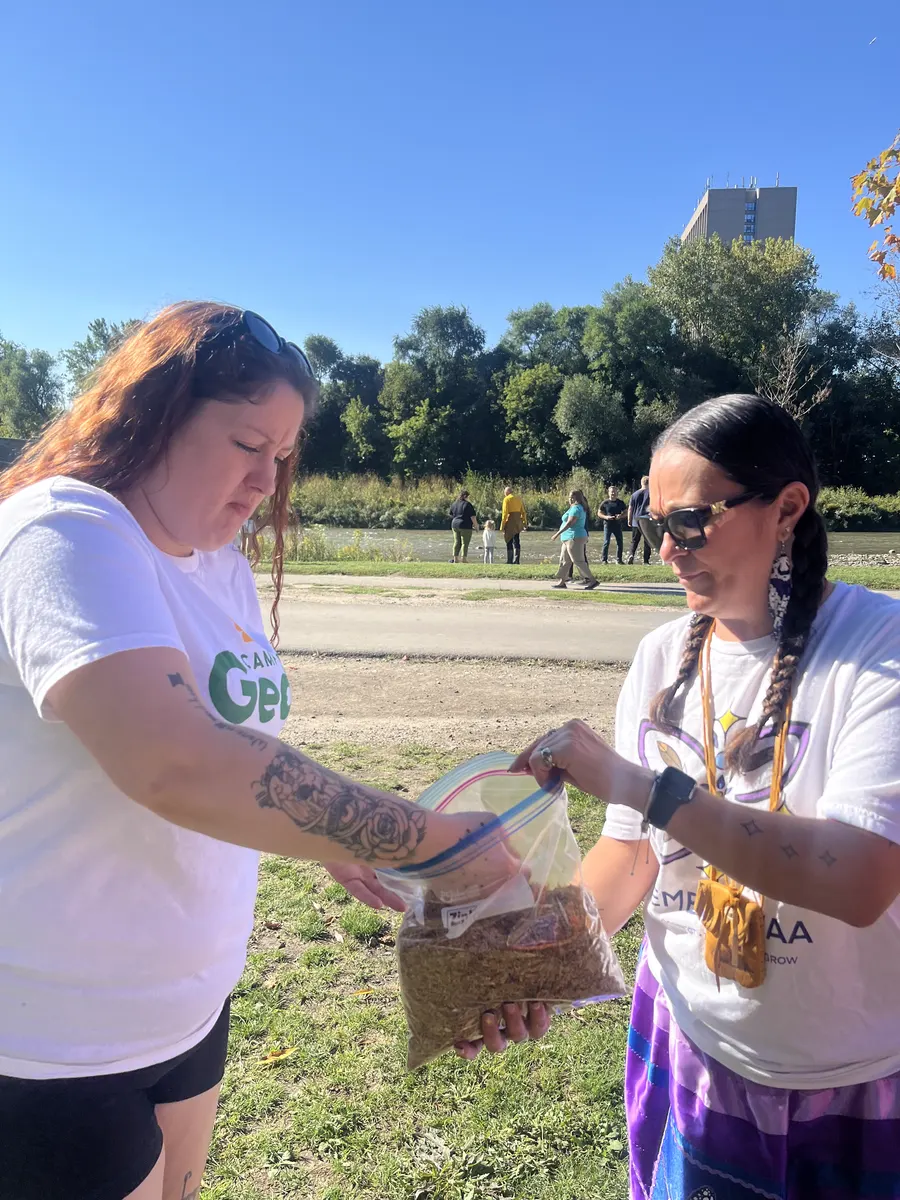
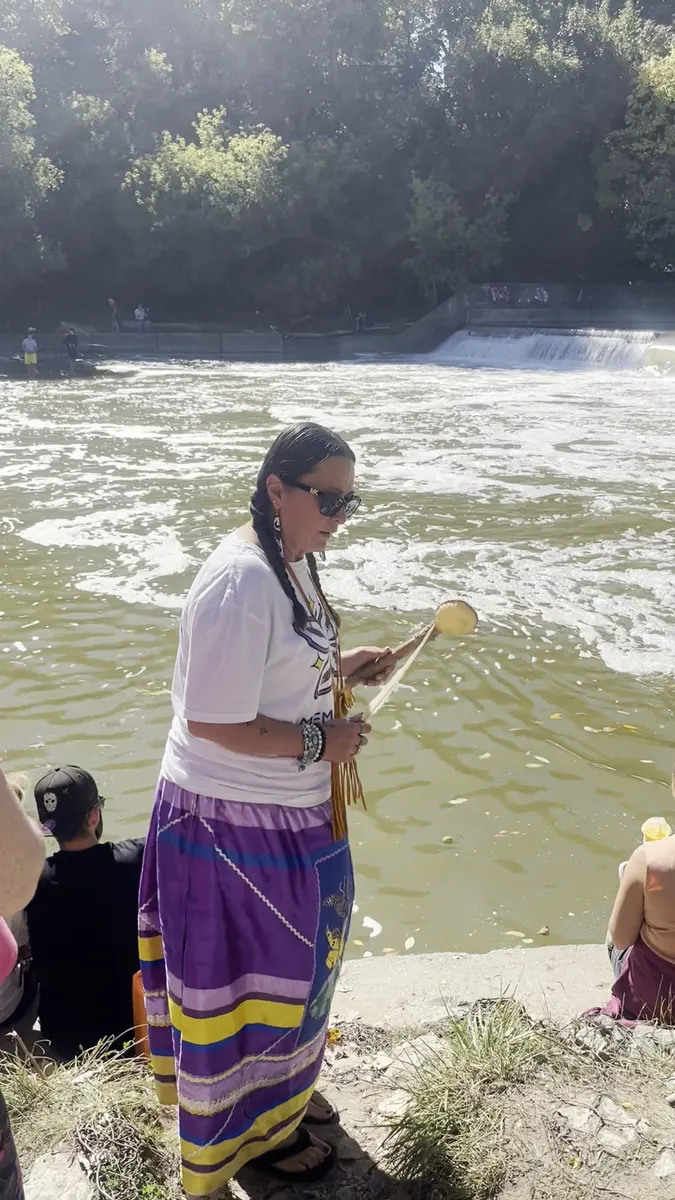
Kelly Lavallee of Memengwaa Healing led a morning of shared learning by the Humber River. Families explored teachings on tobacco, water, fire and animals, handled bear, buffalo and elk hides, made tobacco ties to share prayers of gratitude at a sacred fire, and reflected on the salmon run beside the water.
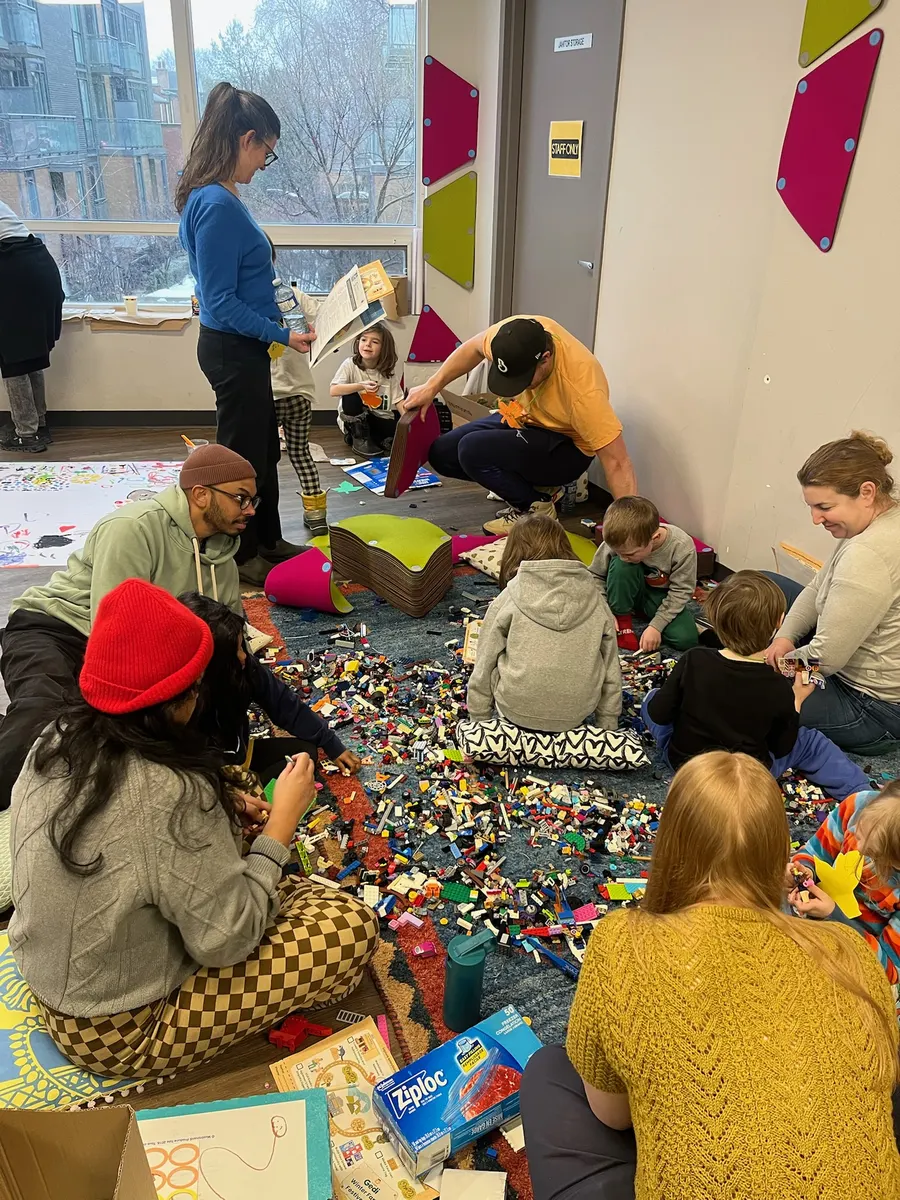
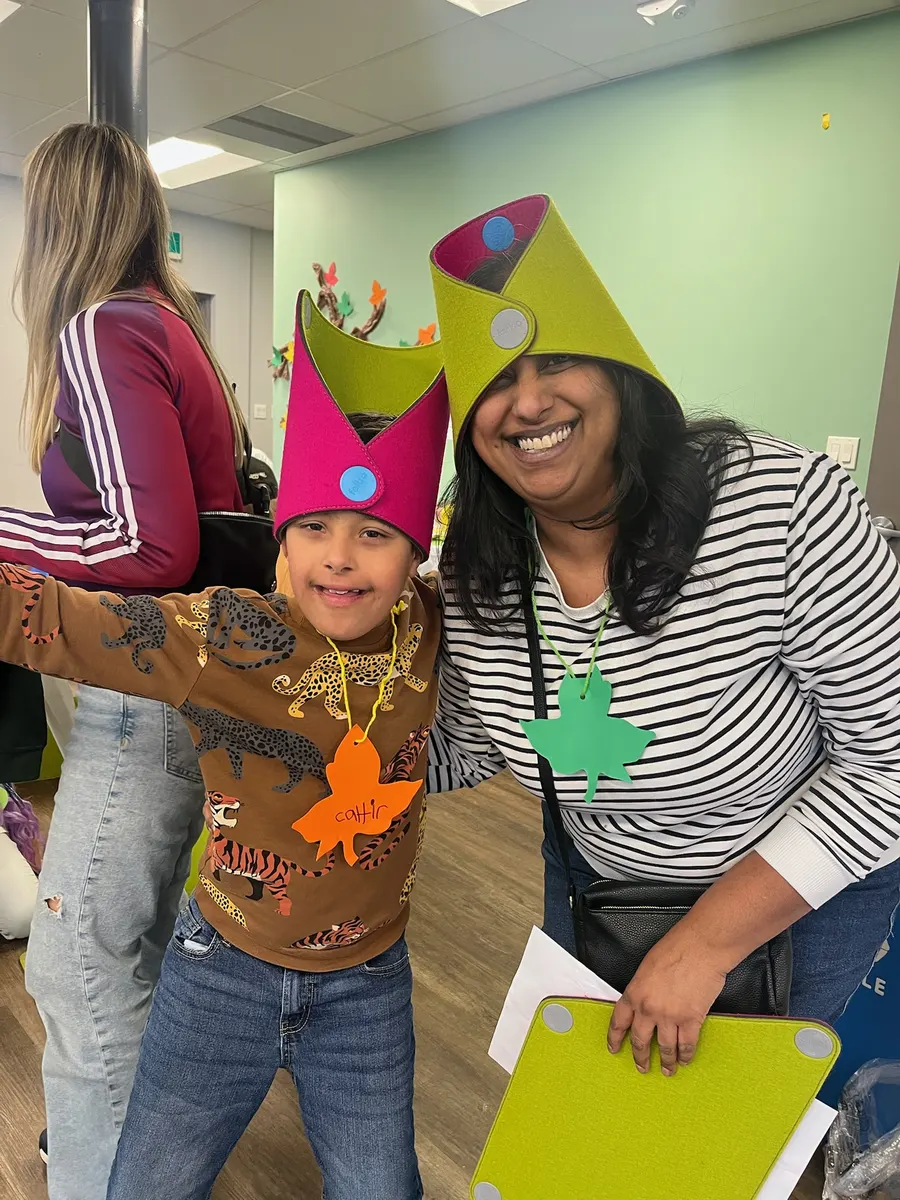
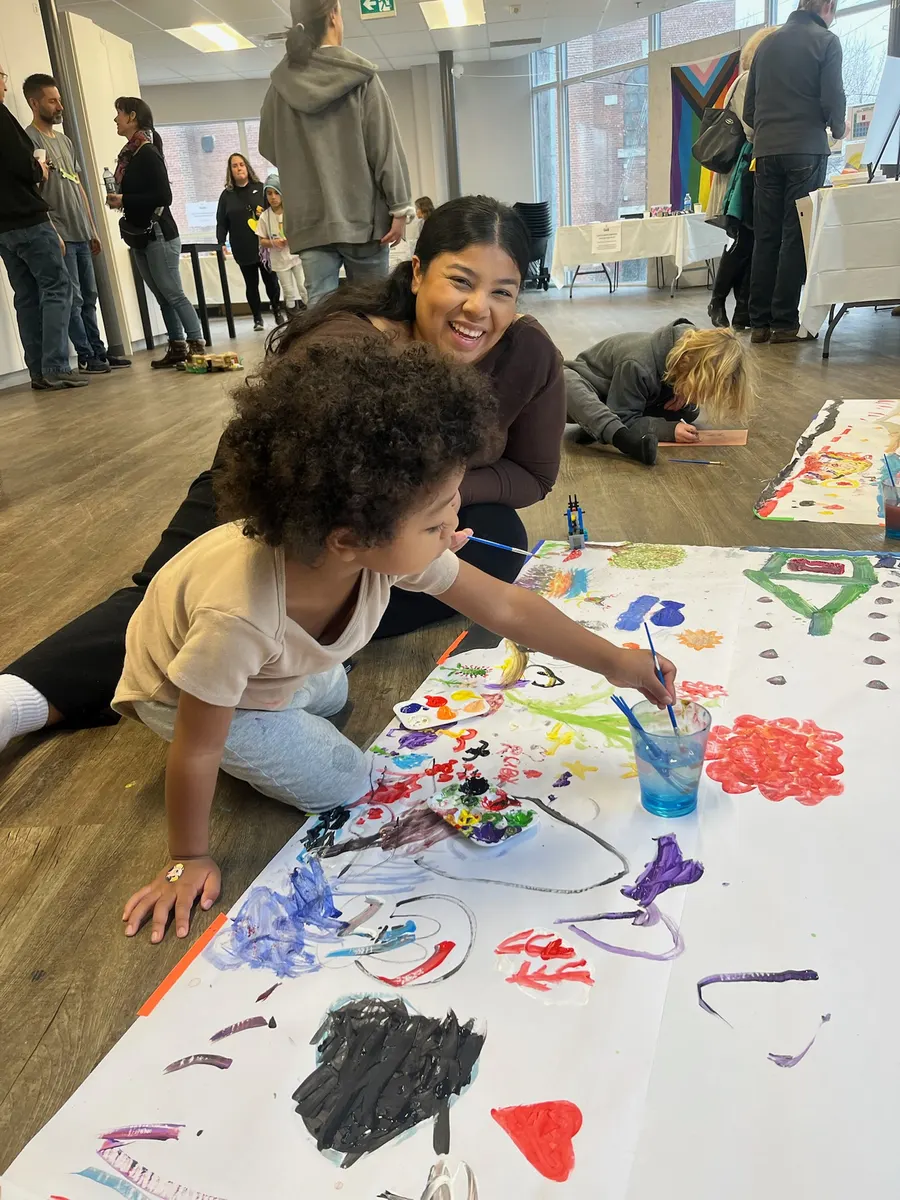
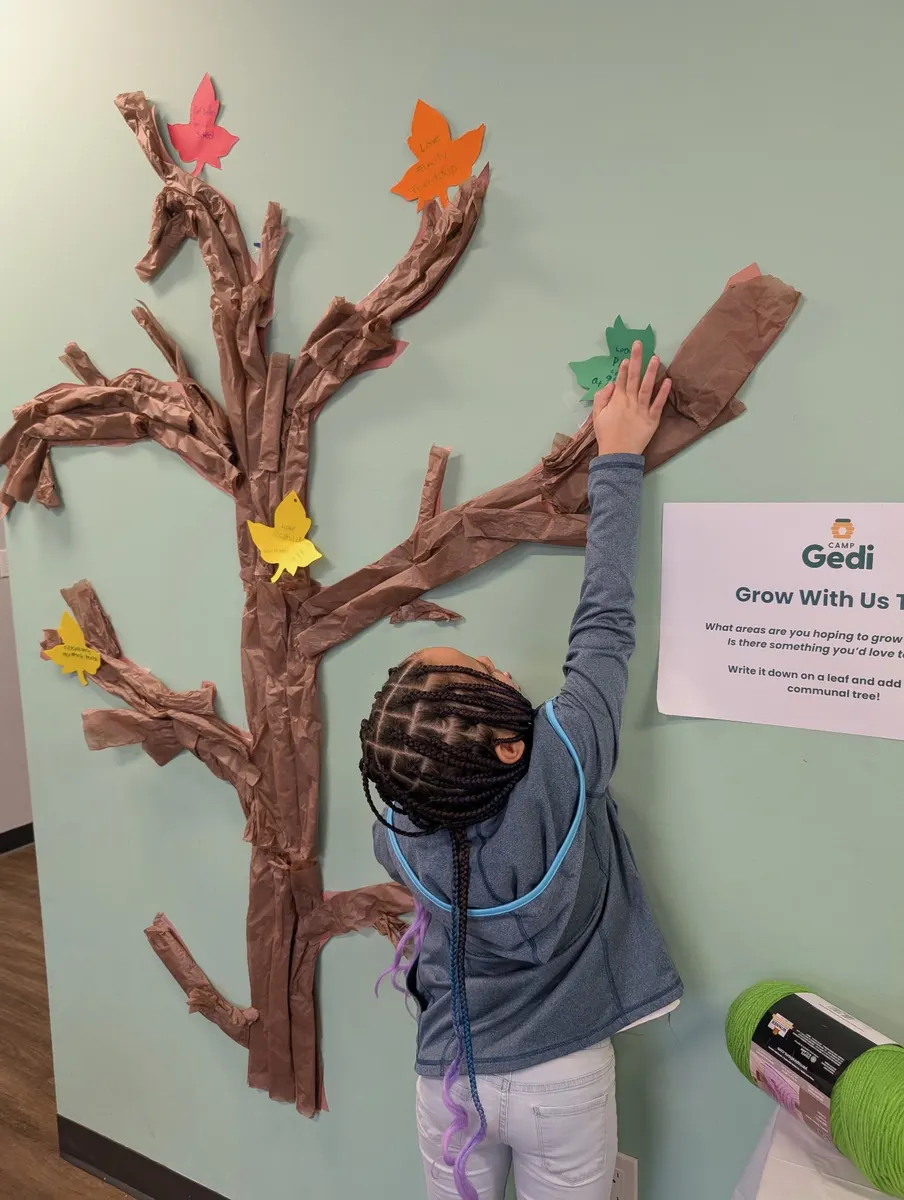
An afternoon of hands-on workshops in the middle of winter. Kids and grown-ups built their dream community out of blocks, painted a community mural, added leaves to our Grow With Us tree and joined an Indigenous-led nature workshop. Parents and caregivers took part in a coaching workshop while kids learned the same skills in their own session.
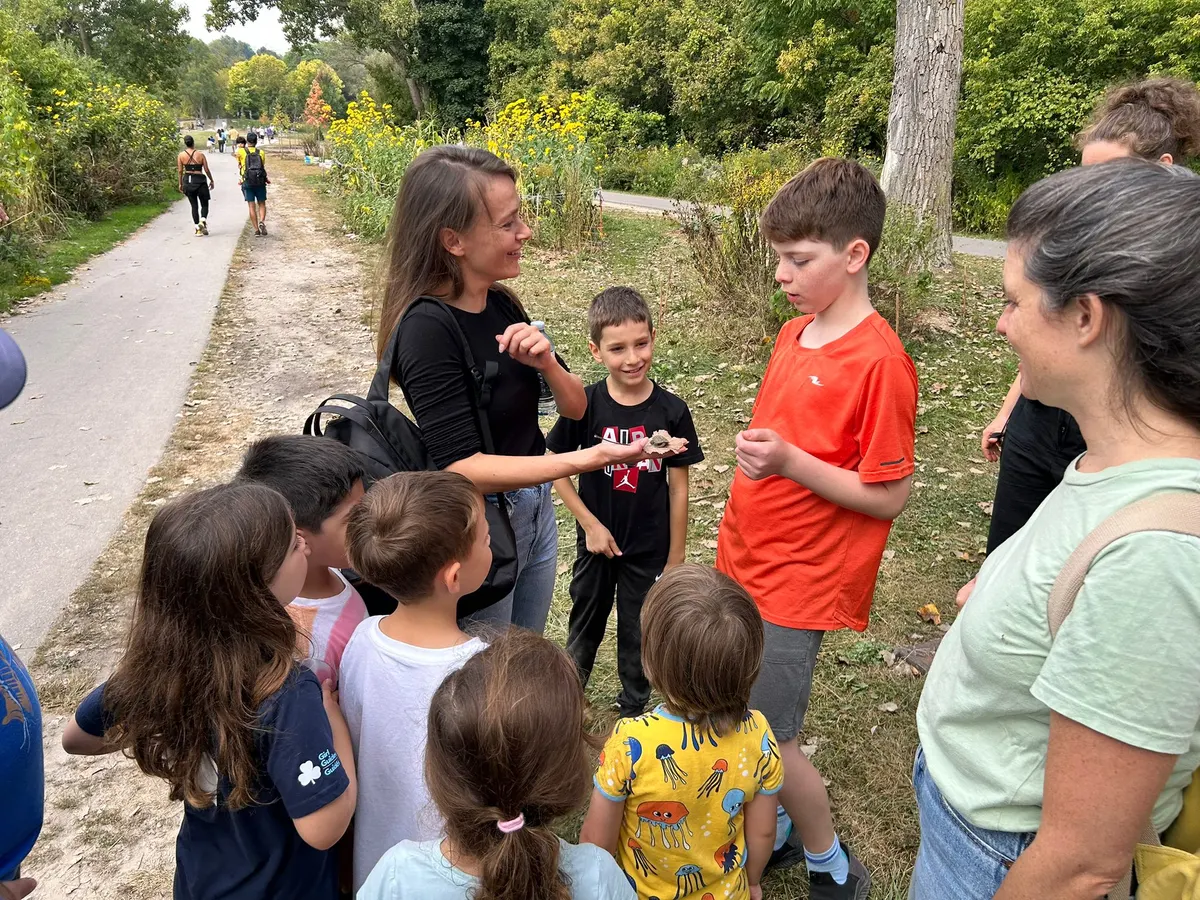
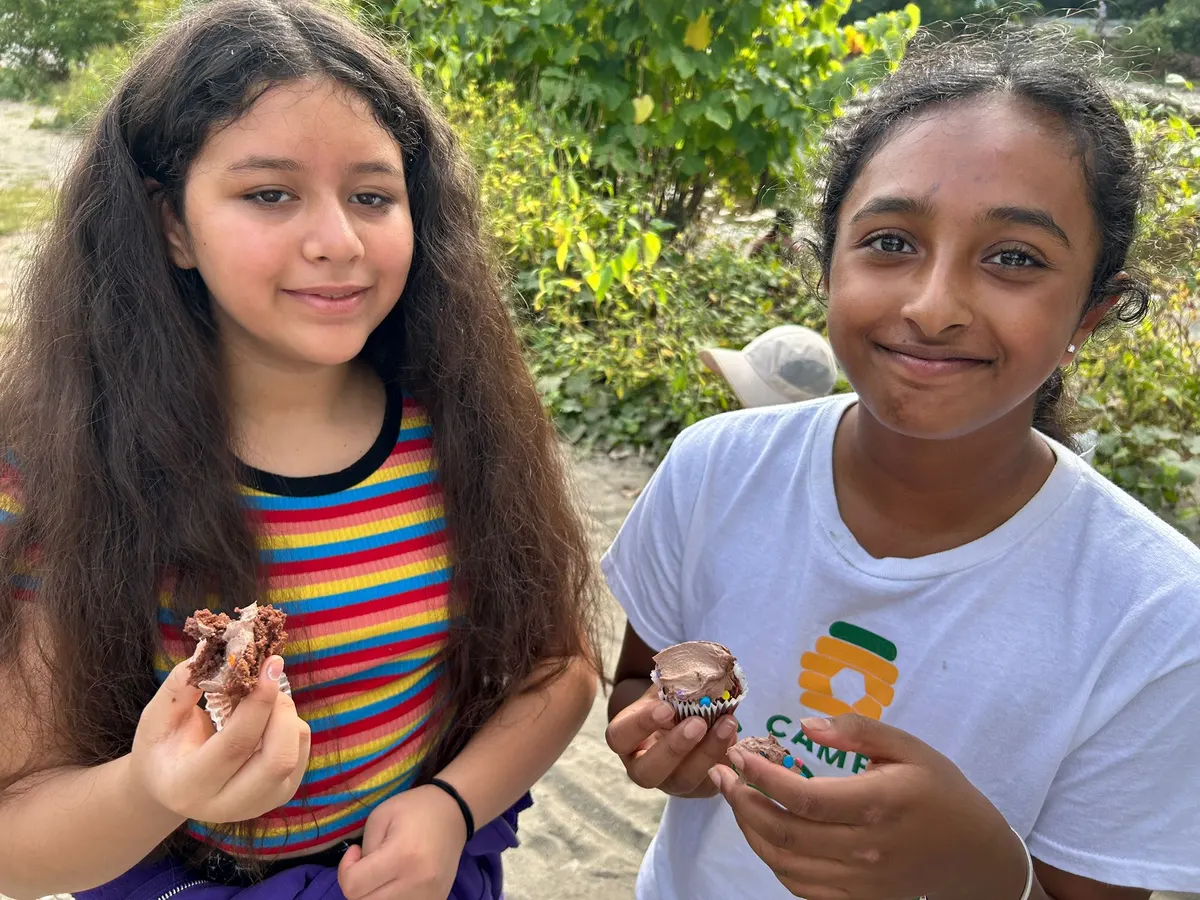
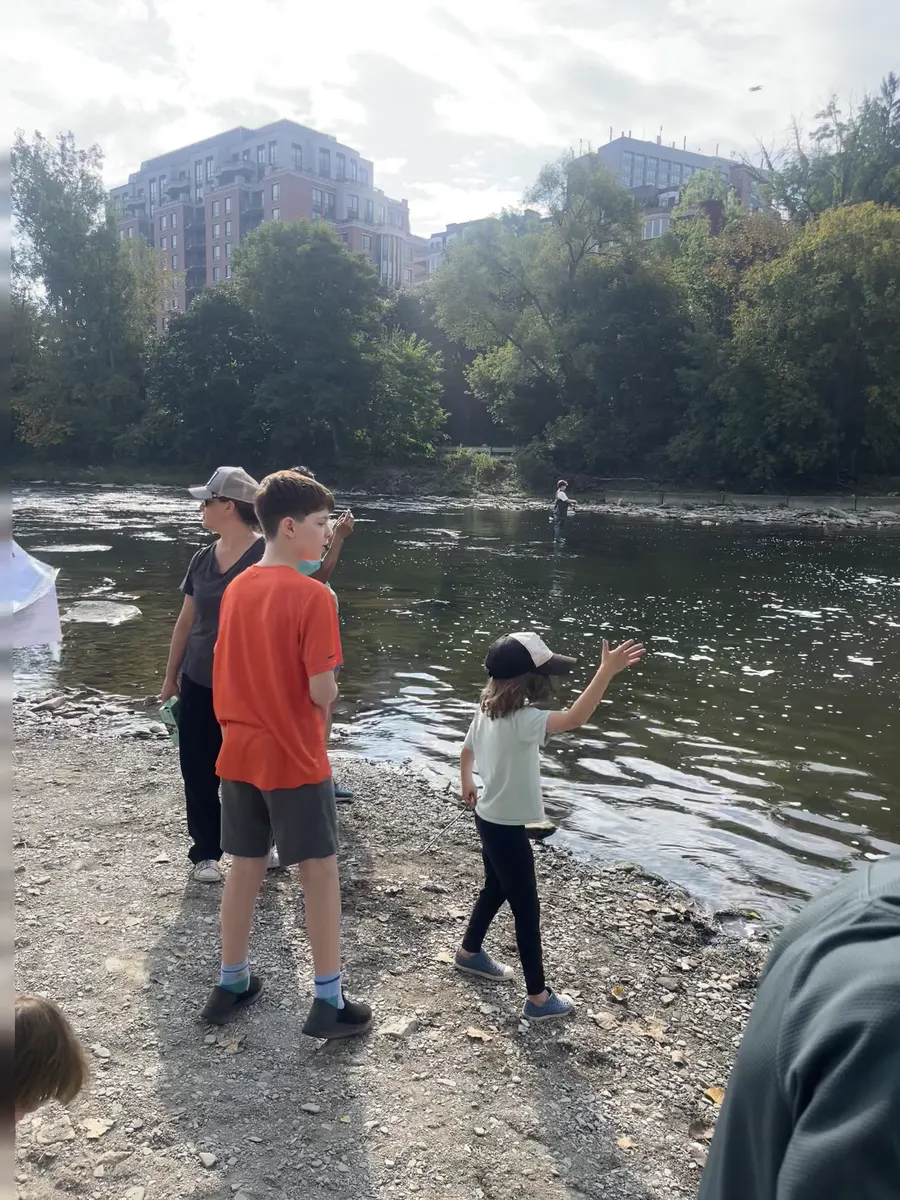
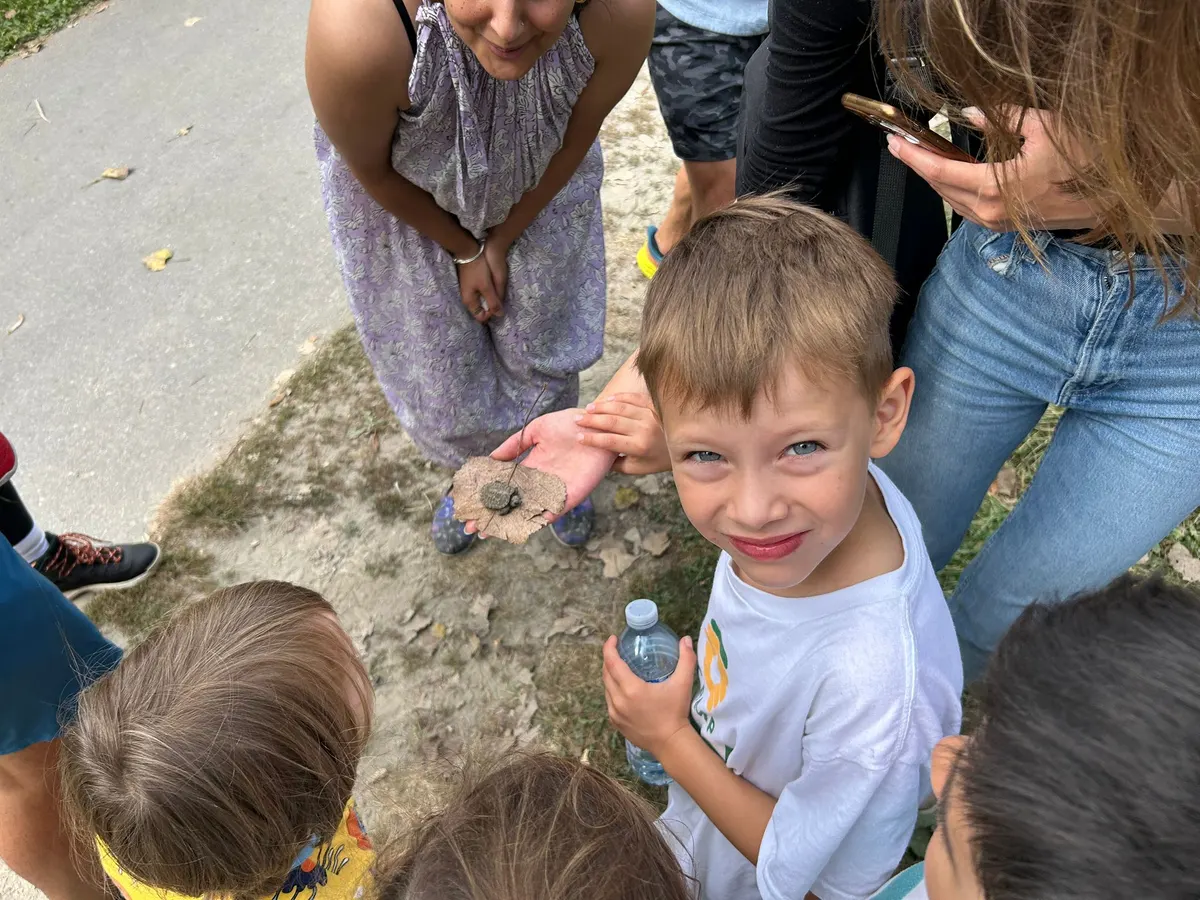
Campers and families met back on the banks of the Humber to watch the salmon run, hunt for river treasures and catch up after summer.
An open conversation for parents and caregivers on navigating big feelings, conflict and collaboration with empathy, using restorative conversations instead of punishment, while kids played and created nearby.
Campers and families for our July and August 2026 sessions met each other before the first day of camp.
Our July and August 2025 campers and families met in the park ahead of summer.
Registration for Summer 2027 is now open! Fill out the form below and Ashley will be in touch soon to talk through next steps.
We’ve received your registration for Summer 2027. A confirmation email is on its way, and Ashley will be in touch soon to talk through next steps.
Imagine a place built to hold them all.
Quinn Simpson, Co-Founder and Board Chair, Gedi Village Foundation

Gedi Village Foundation is a Canadian nonprofit building the community conditions children and young people need to learn, grow, belong and flourish.
We believe a child's learning can't be separated from the people around them. The educator who sees them. The family who holds them at home. The friends who shape what feels possible. The community that tells them who they are. Education works best when the whole community holds it together, not when it's delivered to children in isolation.
Our work is guided by the Beehive Model. A beehive doesn't make honey. It creates the conditions in which bees can. We tend five of them: safety, belonging, capability, connection and purpose. When those are in place, children thrive, and so do the adults who care for them.
Camp Gedi is where it began. Since 2024, camp has been our living model. Each summer we put the Beehive Model into practice, listen closely to children and families, and keep improving. What we learn here shapes everything Gedi builds next.
Gedi Village is where it's going. We are building a community learning campus in Toronto, a place where children learn and grow, and where families and educators learn and grow alongside them. It will be open to the wider community and designed so belonging is built in from the start.
We would love for you to be part of it. Send your child to camp, join us at a Festival Weekend, or help us build Gedi Village. Every child deserves the relationships and places that help them flourish, and every community can learn to create them.
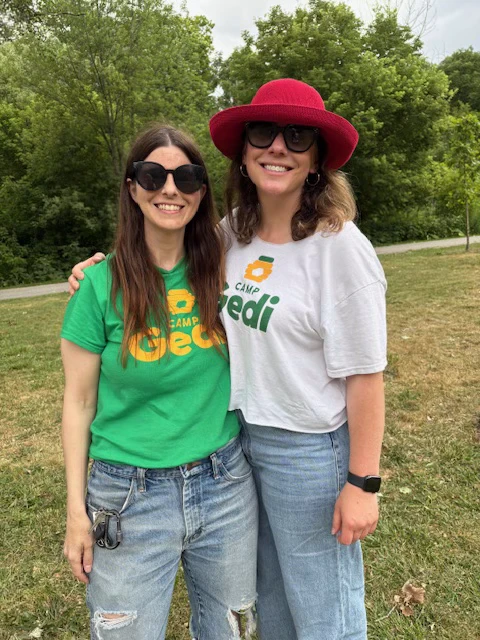
Ashley Baylen is one of the co-founders of Camp Gedi and is the Camp Director. She is a serial entrepreneur and community organizer, starting at age eight and continuing to present day. After graduating from film school, Ashley founded a social media strategy company where she quickly established a reputation for cultivating local and global partnerships prior to the days of influencer marketing. Entering motherhood in 2017 inspired Ashley’s career transition to educate, make positive change, and increase justice for both kids and caregivers. At the beginning of COVID, recognizing the devastating loss of connection and community, Ashley co-founded ByUs Box: educational Toolkits to guide parents in raising anti-racist and inclusive kids. Ashley’s work with ByUs Box led to her joining Lovevery as their Senior Advisor to E&I. Driven by research in anti-bias education, social emotional learning and early childhood development, Ashley develops educational products and courses through an equity lens.
Quinn Simpson is one of the co-founders of Camp Gedi and heads up Staff Development. Over the last decade she has been building Graydin, an organisation working to revolutionize the ways we support, empower and connect with our next generations so they can thrive at school and at home. Together with more than 300 schools and Universities world-wide, Graydin has been at the forefront of the coaching movement in education since 2011. Quinn has 15 years of experience in coaching, teacher-training and learning content creation for teachers, students and caregivers. She is a certified Co-Active Coach and NLP Coach Practitioner, and at the age of 24, she co-founded a small charity called Akosia that operated for 10 years using coaching as a facilitation technique in filmmaking projects for underprivileged children and women.
For educators who love learning alongside children. Assistant teachers (18+) join the Hive as Forager Bees, and head teachers (21+) as Guardian Bees.
Questions before you apply? Get in touch!
We’ve received your application to teach at Camp Gedi. A confirmation email is on its way, and Ashley will be in touch soon.
Back to Camp GediFor high school students who want to challenge themselves, make meaningful connections and discover the difference they can make in someone else’s life.
Questions before you apply? Get in touch!
We’ve received your application to volunteer at Camp Gedi. A confirmation email is on its way, and Ashley will be in touch soon.
Back to Camp Gedi


